Showing posts with label synopsis. Show all posts

Tuesday, September 3, 2019

The Tale of Genji

The Tale of Genji (Penguin Classics) The Tale of Genji is a Japanese masterpiece of literature [considered the first novel] from the Heian period, roughly (794-1185). Written by a woman named Murasaki Shikibu. She was born into a minor branch of the Fujiwara clan. Her father was a governor. Men wrote in Chinese. Women wrote and read in Japanese, which led to female writers of Japanese, highborn women. She started writing this novel, which is over a thousand pages after her husband died. Scholars tend to disagree on the writer. Some say it was the work of many authors, as says Royall Tyler, who's translation [only 300 pages] I read. Others say its solely Muraski's work. The actual story itself has a continuity that suggests there is only one writer, her. 

The original manuscript is gone. This brings up the issue of translation. Heian Japanese is so different from modern Japanese. Translating Heian Japanese into English is a daunting task unto itself. However, a literal translation of Genji is impossible. Not only that but each English translation of Genji is so remarkably different. Consider these renderings of the same sentence by different English translators. 

In Chapter 4, titled “Yugao,” Genji comes across a run-down house, the abode of a young woman he is about to seduce. Waley describes the entrance like this: “There was a wattled fence over which some ivy-like creeper spread its cool green leaves, and among the leaves were white flowers with petals half-unfolded like the lips of people smiling at their own thoughts.” Seidensticker: “A pleasantly green vine was climbing a board wall. The white flowers, he thought, had a rather self-satisfied look about them.” Tyler: “A bright green vine, its white flowers smiling to themselves, was clambering merrily over what looked like a board fence.” Washburn: “A pleasant-looking green vine was creeping luxuriantly up a horizontal trellis, which resembled a board fence. White flowers were blooming on the vine, looking extremely self-satisfied and apparently without a care in the world.” [newyorker] 

Each version is so different, yet say the same thing in their own inimitable way. It's remarkable. The act of translating itself is a science. One could write an entire treatise on the art of translating. It would be worth the read. Genji made me realize how important a good translation of a book is. Before that, I was in the dark about it.

What is The Tale of Genji about? A noble and his concubines. It's about the art of seduction. But even simpler I would say it's about relationships. A man and his relationships with women. In this society, the way to a woman's heart was through poems, delivered by a go-between, who was elegantly dressed, and of appropriate social standing.

Courtly lovers didn't see each other face to face often, certainly not naked. Women of the upper class sat behind screens, and sliding doors. Women were protected by screens even when they spoke with males in their own family. A guy could be driven wild if he saw a woman's sleeve spill out or the sound of silk rustling behind the screen.

But people still got it on. Nobles and their ladies were promiscuous. Affairs with court ladies and ladies in waiting were perks of an aristocrat's life. So was adultery sometimes. Genji, when he's still young, has an affair with his father's [the Emperor] mistress. And both father and son lust after a young girl, that Genji adopted as his daughter. 

The requirement of a gentleman was style. You could be forgiven for seducing a man's wife. But you had to know how to write good poetry, have good handwriting, and wear the right perfume. Despite the influence of Buddhism, Heian society was governed by style rather than virtue. Good looks meant everything, virtue be damned. 

The ideal man wasn't too much different from the ideal woman in Heian society: highly perfumed, smooth-skinned, moon-faced, extravagantly dressed. The decadence of the times led to what Genji called a time “where everything seems to be in a state of decline." A state of decadence.

All of this had a strong sense of hierarchy of course. Also, Heian politics was marriage politics.  

Three important takeaways from reading Tyler's translation of Genji. 

First, this book gave me my first real look at Japanese culture that wasn't from anime or movies. I understand Japanese culture and society a lot better than I did in the past, and am grateful for the experience of reading world literature. It opened up my mind to the literature of other cultures [non-western canon], and that is an amazing gift to oneself, and for anyone who cares to discuss the book with me or listen to me explain it.

Second, the idea of translation. Lost in translation is a big possibility here. But the fact that the first novel can be somewhat preserved and rendered into modern readable English from Heian Japanese is fascinating to me. How do they do it? It's like nuclear physics. The translations in English are all vastly different. The book is 1300 pages, and the version I read and bought is only 300 pages. Obviously, Tyler's version is heavily edited, abridged, and he took out many passages, but I still found the book to be thrilling. 

Third, the sense of style. The elegance of this book is vast. You don't need action and fast-paced fiction writing to create a sense of depth. As a writer, this is very liberating to see, read, and experience. In fact, I had to read this book very slowly because each page is annotated, there's more than one poem on every page, and if you don't read the footnotes at the bottom of the page, you don't quite understand the poems. However, when you realize that the poems aren't literal translations, and don't quite mean much to you, the reader, you realize that you should focus on the story itself, rather than trying to find meanings in the poems. Going through that was a tedious yet rewarding experience. 

I plan on going back through Tyler's version again. Because I was so impressed with it, I bought my own used copy. Definitely worth it. Although the book took me almost a week to read, it was a very fruitful experience. At the very least, now I know where Overwatch's Genji got his inspiration. Of course, the real, yet fictional Genji is so much cooler. 

Saturday, May 4, 2019

End Game


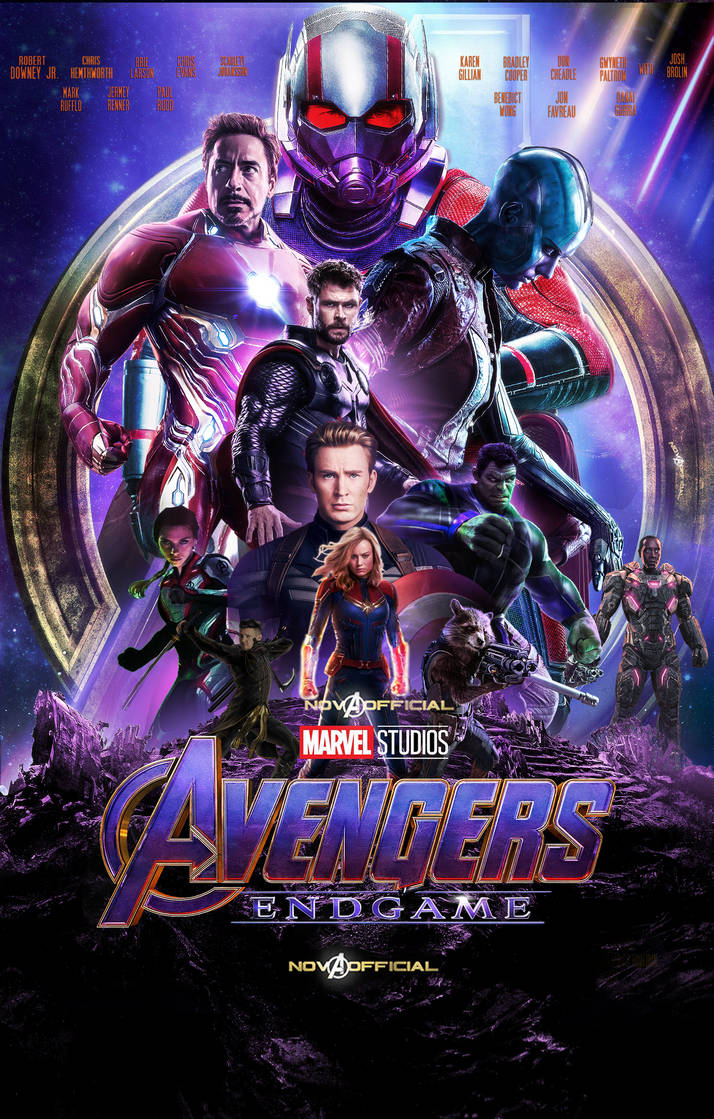
Image result for endgame posterI just saw End Game today and what a show it was. After my friends cancelled three times I decided to break out on my own and watch an early morning 10am showing in Dolby at AMC. The seats were very comfortable, and they reclined, perfect and much needed saying since this movie is clocking in over three hours.

This movie is the movie that ends most of the Marvel Cinematic Universe. Chances are you might have missed a couple of the Marvel movies before you saw this one. You definitely need to see Avengers, Avengers Age of Ultron, and Avengers Infinity War before you see this movie. Now before we get into the nitty-gritty, stop reading this if you don't want spoilers. 

Okay, a brief synopsis. So half of the population has been wiped out by Thanos. Ant-Man gets out of his quantum realm with the help of a rat [funny, nice touch]. He comes to the present time-line only to find out that a lot of people are dead, including himself. He teams up with the Avengers and they come up with the idea of a time machine. It's actually Ant-Man's idea.

Captain Marvel brings Stark [Iron Man] back to Earth and Stark helps them develop the time machine. Time travel is always messy and it definitely doesn't make sense in this movie, but hey, who am I to argue? It's very cliche, and its a super old science fiction trope that doesn't hold up well in this day and age, going back to 1820-The Time Machine by HG Wells. Great idea for 1820 not so much for 2019. But I digress.

Anyways, they branch off into small groups and fetch the infinity stones from the past, so they can bring it to the present, use the infinity gantlet to bring everyone back. There's a scene I like that reminds me of the comics where Steve Rodgers [Captain America] is a double agent. He grabs the stones and tasseract from the bad guys who are from Hydra, evil Nazi's. Cap says, "There's been a change in plans. I'll take care of the goods." Then he whispers to the bad guys,"hail Hydra." I liked how they sneeked that in there. 

Thor is fat and depressed. Natasha [Scarlett] feels that her only purpose is to bring everyone back with the Avengers. Brie Larson is snarky, just like in Captain Marvel. Nebula takes on a more serious active role, helping the Avengers go back in time to grab the stones, only to be kidnapped and then her doppelganger from the past comes to the present and messes everything up-you got all that? One thing that should be noted is that the jokes are few and far between. This is a much more serious Avengers team. Rather than their typical snarky smart ass selves they portray in the other movies.

Okay, so this movie is sort of all over the place and the first 2 hours and 45 minutes are just them going back and forth for the infinity stones. Then Thanos from the past comes to the future to do what he did in the present-again! Why, because this is fate, he says. But we're not stupid, we know that the script is written that way so that he can get his ass kicked-again. Actually Thanos dies in the first thirty minutes of the movie. Thor chops his head off, the blood splashing across Nebula's face. "I aimed for the head." Nice bit of gore there.  

The last twenty-thirty minutes is straight-up superhero fanfare. Hulk uses the infinity gauntlet to bring back everyone, bringing them on a huge battlefield against Thano's army, that he brought from another time-line thanks to evil Nebula from the past time-line. Captain Marvel destroys Thanos' ship in one fell swoop. Thanos is desperately trying to get the infinity gauntlet [which has all the stones] but Stark quickly puts on the glove.

Thanos [putting on the guantlet]: I am inevitable. 
Stark [who somehow had the rings with a makeshift Iron Man suit guantlet]: I am Iron Man.

It doesn't seem like a powerful line but it is. And it was his last line of the film, and the franchise, because Stark ended up dying after he used the gauntlet. Apparently humans aren't strong enough to wield the power of the infinity stones. Even after Thanos used it, he was old and dying on a planet somewhere, his energy wasted from the stones. When Hulk used it, he burned up his arm and upper body, and he's the strongest one out of all of them. 

The fighting was great. Especially Cap. Thor is about to get sliced by his own blade by Thanos. Then out of nowhere Thor's hammer flies into Thanos' skull-its Captain America's doing. 

Thor: I knew it! 

Cap wields Thor's hammer like a god. Like Achilles from the Iliad. He's swinging the hammer in his left hand and holding his shield up in his right, like a true warrior. Not only that but he's commanding lightning strikes with the hammer as well. That was my favorite moment of the film, it was great to see that not only is he worthy of Thor's hammer, but he can use it just as well as Thor too. The female heroes had their moment in the sun too. They're protecting the infinity stones as Spiderman says, "Uhh, be careful, you might need some help." "We have plenty of help right here," the female Wakanda warrior says as the women beat and bash their way through enemies.

The end is what this movie is truly about. "End Game". Thor joins the Guardians of the Galaxy. Stark dies. Natasha sacrifices herself so the team can get the soul stone, a very sad and tragic death. That one was a real tearjerker.  Hawkeye gets his family back. Captain America goes back in time and stays there with his sweetheart, becoming in the present an old man. 

At the end of the movie where we see Cap dancing with his sweetheart back in the 40's I had a sort of epiphany that the whole point of superheroes is for people to do normal things like that-have a simple and loving life. The thing I realized is that you don't need superheroes to enjoy that kind of stuff, you don't need all the action and the rigamarole, the twenty-two movie fanfare. If the Marvel movies had more of that and less of all the other stuff, it would've been a much more thoughtful experience. More acting, less fighting. Maybe that could become the new norm for superhero movies? I wish.

With all that being said, "Avengers assemble!"

Check out my reviews for all the other Marvel movies I've seen. 
 Antman and the Wasp https://ofigueroamusic.blogspot.com/2018/07/antman-and-wasp.html
Avengers Age of Ultron https://ofigueroamusic.blogspot.com/2015/05/avengers-age-of-ultron-thoughts.html
Avengers Infinity War https://ofigueroamusic.blogspot.com/2018/05/avengers-infinity-war.html
Guardians of the Galaxy 2 https://ofigueroamusic.blogspot.com/2017/05/guardians-of-galaxy-2.html
Spiderman Into the Spiderverse https://ofigueroamusic.blogspot.com/2019/01/spiderman-into-spiderverse.html
Deadpool 2 https://ofigueroamusic.blogspot.com/2018/06/dead-pool-2.html
Thor Ragnorak https://ofigueroamusic.blogspot.com/2017/12/thor-ragnarok.html
Doctor Strange https://ofigueroamusic.blogspot.com/2016/11/time-will-tell-how-much-i-love-you.html
Deadpool I https://ofigueroamusic.blogspot.com/search?q=deadpool
Venom https://ofigueroamusic.blogspot.com/2018/10/venom.html 

Tuesday, April 9, 2019

Us


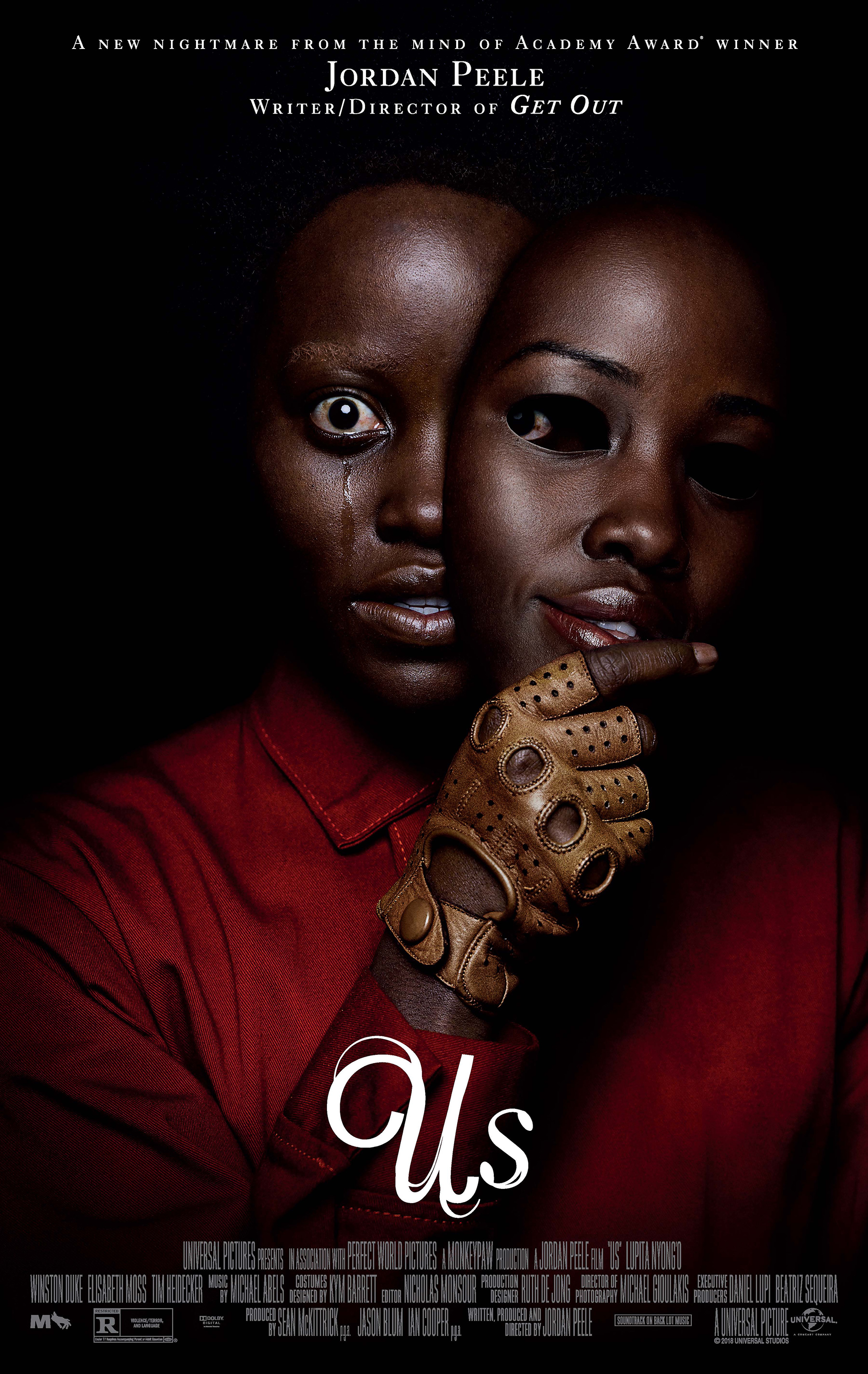
Image result for us movie cast 2019Us is a 2019 science fiction horror film produced and directed by comedian, actor, and writer Jordan Peele. The movie starts with a chilling introduction where we see a young black girl at a pier out with her parents. Her parents don't like each other much, the father is drinking too much, and the mother is telling him no more beer. At some point the girl wanders off on her own, getting lost in a hall of mirrors, some sort of 'ride' at the pier. She was lost for fifteen minutes before her parents found her. When they were reunited, the girl was mute.

The next part of the film starts with a well-to-do black family on vacation at a vacation home. The same girl who got lost at the pier is now an adult, with two children. A boy who is slightly awkward, and a well-adjusted girl. Her husband is a jokey fatherly type with glasses. Things take a turn for the worst when a family wearing red jumpsuits appear on their lawn. They don't say anything. The father goes out to scare them off with a baseball bat but it doesn't work. It turns out that the family is actually them-doppelgangers. This is where the horror element comes from. 

It turned out that the family on the lawn were actually doppelgangers, an apparition or double of a living person. This is where the science fiction element comes in. Later in the film, after some exposition, we find out that there are doppelgangers of Americans living underground, the disenfranchised, the dispossessed. Meanwhile, the privileged, well-to-do people that have it easy in life are living above ground, getting their vitamin D from sunlight and livin' easy.

Not only that but the film makes a reference to the 1980's Reagan era with this event that actually happened, called Hands Across America. These doppelgangers have come up from underground to exact revenge across their doubles, holding hands across vast areas of land in America, after killing people. Does that make sense?  Does it have to?

We see underground that the doppelgangers live with these white rabbits in the corridors. That was an interesting visual. The idea that there are underground places across America reminded me of Colson Whitehead's The Underground Railroad, where slaves find their way to freedom using these underground passages. The movie is somewhat similar and referential a lot of other horror movies, such as A Nightmare on Elmstreet, The Shining [b/c of the white family's twins], and even has some similar aspects to Get Out, Peele's first film.

The movie is filled with too many references, metaphors, and so much symbolism that its all to much to write about here. The main takeaway I got from Us is the idea of the have nots coming to take their revenge on the bourgeois. This goes back to Marx and Hegel's philosophy about the rise of the proletariat, meanwhile, the bourgeois does everything in their power to keep the working class in the gutter. This is what the Communist Manifesto is all about. It's a very overt philosophical overtone. 

Many writers online have been speculating about what this film means. I'm not sure that it particularly means anything, other than that it is a damn good black horror movie. It's great to look at visually too. The fact that the main actors are black people is a plus [and a negative, see below] because its 'the first black horror movie', other than Get Out,  however, that movie works better than Us in the sense that Get Out is simpler in form and not overstocked with 'too much syndrome'. In short, it's less messy, thus works better as a movie that can be enjoyed as well as reviewed. 

I didn't come to the conclusion that Us was too cluttered until I read reviews. After viewing the movie with my friend, we got sidetracked by the clutter: symbolism, metaphors, references, and subtext. But now that I've seen what good movie reviewers think I've come to realize that the movie was still great, although probably not as great as I first thought. This isn't going to be Jordan Peele's best film but it will definitely be one of his most referenced and most talked about, probably for years to come. 

Lastly, I want to mention another thing that is personal to me regarding the movie. I don't think Jordan Peele did black people a favor making a movie like this. Yes, its a black horror movie but in a metaphorical way, I think it works as entertainment for white people to enjoy watching black people get scared, complete with vaudeville big eyes, tears falling down their faces and animalistic noises instead of speech from the doppelgangers. I don't think this is a movie my mother would like or any older, serious, black person. In short, its a young black persons thing, if they're into it at all. Older black folk would scoff at the way black people are portrayed in this movie. This is a personal criticism yet I think it is crucial to the film as a whole culturally. Of course, you could speculate until you turn black and blue and say, "Yeah, Peele is trying to say something important regarding class and race in America." And I would respond with, "Yes, we understand that. But at what cost?"

Despite that I still enjoyed the movie. You can see the ending coming a mile away yet it is still satisfying. Jordan Peele is a young film director and he was trying to do too much, not unlike a great author's sophomore slump. Yet somehow the movie still works, although probably not as effectively as Peele intended. Still, this was probably the best movie I've seen in 2019. You should definitely see this movie.

Monday, March 18, 2019

The War of the Worlds [novel]


Image result for the war of the worlds book coverThe War of the Worlds is a novel written in 1898 by H.G. Wells. The novel has been overshadowed by movies, a record album, and a broadcast in 1938 by Orson Welles, which made people angry because it was never said that the broadcast story was fictional, leaving some people to probably believe that it was true. Or maybe they just didn't like to hear it. The novel was originally written in serial format Pearson's Magazine in the UK and by Cosmopolitan magazine in the US. 

The story is told in the first person. Its told from the narrator's point of view and then tells his brother's account of the invasion. Nothing is known about the characters personally. In fact, here is a novel where hardly anything is known about the characters other than that he's a philosophical writer and married. The aliens land in London and all hell breaks loose, literally. The Martians have a Heat-Ray gun that they use to burn down everything in sight. Not only that, but they have a black poisonous cloud that kills humans too.

The Martians are described first as not having chins. They have small bodies, round heads. They have these tripod mechanical vehicles they use to lay waste to London. They eat kill humans and inject their blood, sort of like zombies.  The narrator spends a lot of time not unlike the nuclear video game Fallout, hiding out in houses, searching for food, and avoiding contact with the Martians with fear for his life, believing his wife to be dead.

The writing style here is formal. Old school. In fact, I could see high schoolers reading this novel back in the 50s or 60s, but today's millennials would not like this in the least bit. They would find the prose wooden. In fact, if I wasn't such a fan of classical books, having gone as far back as Voltaire's Micromegas, Sir Tomas More's Utopia, Cavendish's Blazing World, Francis Bacon's New Atlantis, Jules Verne's From the Earth to the Moon, and Shelly's Frankenstein, I might find this prose to be a bit wooden. 

However, it is precisely because I am familiar with these works of antiquity that I can see how great Well's prose really is. I must admit that some of the words, phrases, and sentences were lost in translation to me. But that only happened a few times, and if I couldn't interpret what Wells was saying, I could always look up the old school phrases online. That's how I got through all those old classical works. Wells knows how to describe things, with a lot of detail. There's tons of exposition, dialogue between characters, but only just bits and pieces of action here and there. In a way he makes you work for all the alien destruction, with tons of exposition. But in the end, you realize that it's worth it. It's a good read. A fun read. 

The War of the Worlds is only science fiction in retrospect. Because science fiction has had such an immense influence on pop culture this book will never be forgotten. Although like I said, the prose doesn't age well. Kids today would not enjoy this novel. Again, this is just my thinking but from what I know about high schoolers today, they would hate this novel. Much in the same way that they would hate Frankenstein. Too many classical words and phrases, that would bewilder them and leave them disliking the book. 

The book touches on a couple of themes that have become commonplace. Invasion, space travel, total war, weapons, natural selection, human evolution, colonialism and imperialism, social Darwinism, and religion and science. Did you get all that? All that basically just means that although this is a thin book with only 194 pages, it is quite a heavy book thematically. 

Lastly, the influence upon other books, movies, TV shows, and music are immense. Edgar Rice Burroughs wrote A Princess of Mars in 1912, not too long after Wells wrote this. It is because of this book that we use the term 'martian' to describe something unknown or otherworldly. This is a great 'scientific romance' [a term used for science fiction back in Wells' and Jules Verne's' day] novel that will continue to influence. As a science fiction reader, I'm obligated to read it. It was an enjoyable experience.

Recommended if you enjoy classical literature and science fiction.

On AI, Existential Threat, and the Collapse

Good evening ladies and gents. Hope you all had a good Sunday. I wanted to write here a bit more about AI, existential threat, and the Colla...