Showing posts with label stories. Show all posts

Saturday, January 4, 2025

Things I learned From Shows in Los Angeles

Letter from the composer: [sends me chords to play on piano]


Me: Thanks, I'll check them out. 


Happy New Year. Kind of bummed out with a work situation at the moment. But the music is keeping me going. The last couple nights I've been going to shows at the bar and figuring out how the sound technician gets all the sounds. I figured it out. 

There are monitors, subwoofers inside the bar on the top of corners on the ceiling. 

The owner only wants the sound tech to only use the brand new [digital equipment]. But he doesn't want to because he likes a more traditional system. 

The owners says the traditional system is too loud. So he can't use it every night. So he's been loading different equipment [a more fancier analog system] all by himself for different nights in a large SUV style van. Not good because the guy is 64 years old. 

The answer to this dilemma is that he must use a smaller sound system for each and every night. But he doesn't want to because he wants to do what he wants, and is reluctant to do anything the owner says because they've been working together for a long time and they have some sort of dispute about it. 

However, the sound technician showed me the older more basic [analog log system that's very small] and I saw that everything that it had was acceptable and could work within the small confines of a small local Encino bar. 

So, you find that the sound systems used to record music are not important at all to the sound of the recording. 

Rather, it is the direction of sound that is placed or pointed at the audience that determines the sound more than anything else. 

In conclusion, theoretically speaking, you could record a classical music album on an iphone 12. 

Keep in mind, this guy used to run sound for Black Flag.


Happy New Year! 

Sunday, March 15, 2020

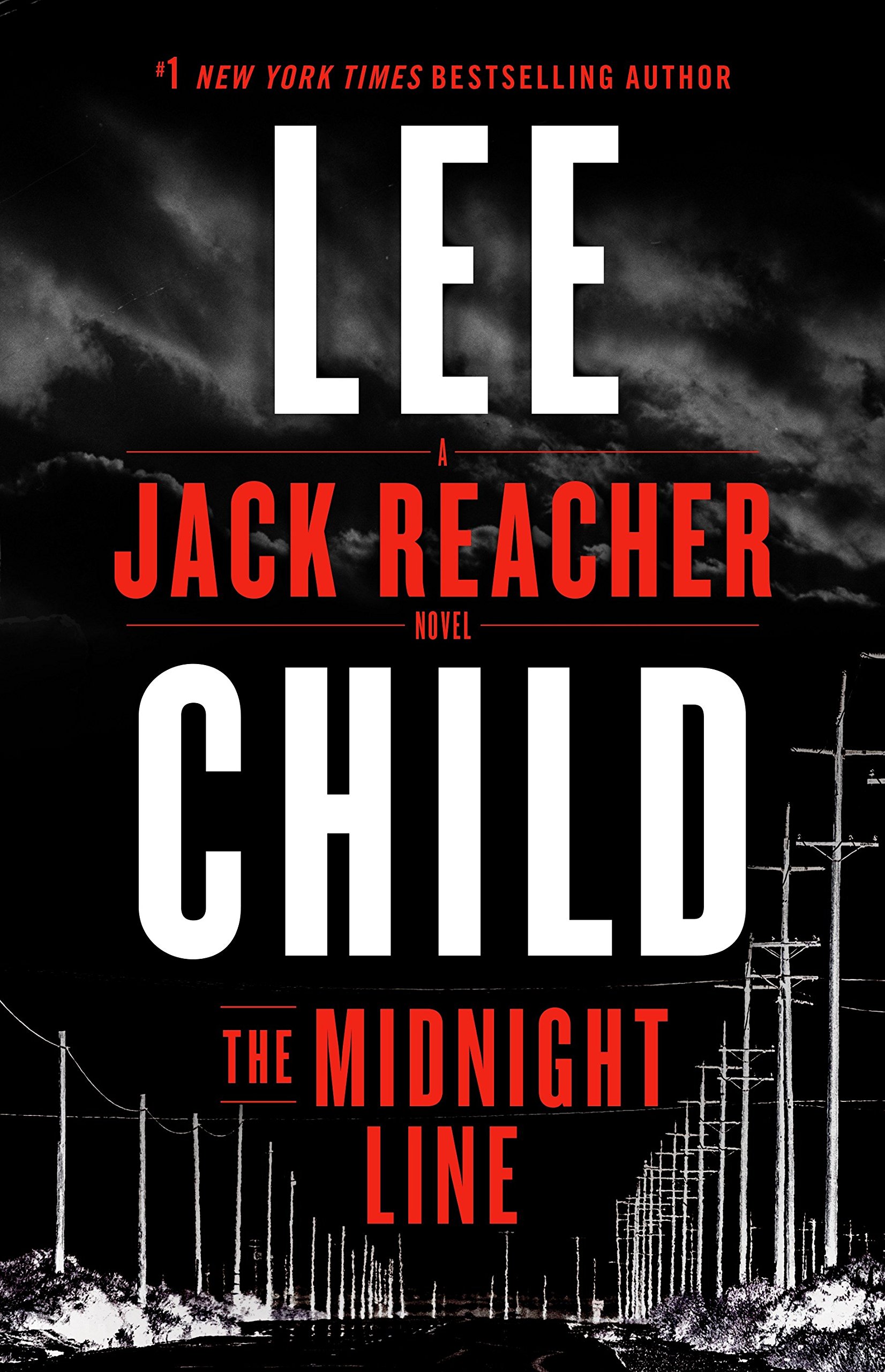
The Midnight Line [A Jack Reacher Novel]

Image result for the midnight line jack reacher book coverThe Midnight Line is a Jack Reacher novel written by Lee Child in 2017. Let me start out by saying this is my first Jack Reacher novel and it is a great one. I would even say superb. Before this, I was familiar with Jack Reacher only through No Middle Name, Child's short story collection about Jack Reacher. That was very good too. But not as good as this novel. 

Okay, so the novel takes place with Reacher somewhere in the midwest. He goes to a pawn shop and finds this ring, the catalyst for our entire story. The ring is engraved with the initials S.R.A and it's from West Point. The very same school Reacher graduated from back in the day. Reacher knows it's a woman's ring because it's tiny. He goes on a quest to find the woman, return the ring, and make sure that she's safe. Because the only reason a West Point student would sell her class ring is that they're in some sort of dire straights and/or trouble. Right? Right. 

As far as suspense thriller versus action this novel is more on the suspense thriller side of things. Which inevitably means its a more serious book. More serious than the next novel in the canon, Blue Moon. But there are still good fights and an incredible climatic takeover and/or heist moment in the end. Jack goes through all kinds of clues, traveling, following, and occasionally beating the crap outta anyone who gets in the way of his mission, to find the woman who owns the ring. One guy even gets his head blown off. Talk about over the top.

The action is simple and straight to the point. It actually reminds me of the action scenes I've read in Cecelia Holland's intense historical fiction novel fights. Except I believe Lee Child knows more about the actual machinations of guns and how and they work. Short, fast, climactic, and brutal in some cases. It's a good writing style. I've learned a lot from it. There's a lot going on stylistically in this novel that Child does.  Also, keep in mind that this novel doesn't feel like he's just making it up as he's going along. [Even if he actually did that.]

The prose is short, simple, and sweet. It's all simple-minded plotting and narration but there's a continuous momentum that keeps the book running from page 1 all the way to page 368. This is a longer novel than your typical suspense thriller. And despite that, it never loses momentum. You want to keep reading until you find out more. You keep reading, find out more, and that propels you into more reading. Well, you get the picture. I read almost half the novel in one day off work. It's that good. It's a great example of popular writing that keeps the readers wanting more. Hence the fact that Lee Child has written twenty-something of these Jack Reacher novels. Not all of them are as good as this one of course. 

So Reacher goes on to find a Private Investigator who is also looking for the woman. An Asian cop is trying to take down a low-level criminal involved in the case. The woman's twin sister gets involved. The Super Intendent from West Point looks back at the woman's records and finds information about her. She's ex-military, been to Iraq five times. Honorably discharged, Purple Heart, face wound. Her twin is so beautiful you don't want to look away. Serena Rose Anderson is the other one.  Hooked on drugs. Has three cowboys look after him in some cabin the woods. A former boyfriend who OD'd himself. No good news.

What we find out throughout the novel isn't quite as much of a big reveal as you'd expect. Nothing truly surprising happens. Rather, it's the way the story is told that is memorable and remarkable. There are touching scenes in this novel. Some that are even very sad. There's a lot of good one-liners from the characters, especially Reacher. 

"I need to pay Arthur Scorpio a visit. He lied to me about Porterfield, and he told two separate people to shoot me from behind a tree. He crossed the line. It's not going to end well for him. He's going in the tumble dryer." 

The actual story, narration, characters, plot, and actions are all very simple. But the delivery and result of all the work put into this are top-notch. Overall, I would say this is one of the better fiction novels I've read this year. Again, it's all simple-minded, and perhaps anyone with decent writing skills could write like this or at least something like this. But it takes Lee Child's drive and will to write an action-packed Jack Reacher story with emotional gravitas. Bravo.    

Much recommended. Better than Blue Moon, the most recent book by Lee Child.

Monday, August 5, 2019

The Silmarillon

The Silmarillion is JRR Tolkien's epic history of the elves of Middle Earth. It was published and edited posthumously by Christopher Tolkien [his son] and an editor in 1977. I somehow don't believe Tolkien would've published this book on his own accord. However, I'm grateful that his son published it because it is a fascinating work of fantasy fiction. 

Where do I start with this? In the beginning, the Illuvatar [the gods of Middle Earth] created the elves, men, and dwarves. The beginning of the story is what kept me reading all 365 pages. I started reading the book on Tuesday and I finished the book on Sunday.

The Ultimate Supreme Badass of Middle Earth is detailed in the first ten pages. His name is Melkor, later called Morgoth Bauglir, aka the Supreme Mother Fucker of Middle Earth. Why is he so angry? Why is he a monster? Well, you see it turns out that Morgoth was a musician, like all the other children of Illuvatar, he was apart of the Valar. Most of the children played the harmonious music of the Ainur, singing sweet songs. However, Morgoth played his own original music. Being a drama queen band leader, he created music of discord, aka death metal complete with blast beats and shrieking vocals. Basically, I see the arrogant evil side of Morgoth in musicians. Even myself but mostly in others. Musicians are real arrogant assholes sometimes. And I thought that was so interesting psychologically that I would say Morgoth is one of my favorite villains I've come across in fiction. He was a disturbance in the music before it is explained that he wised to be called Lord by others. Morgoth is really cool and the way that Tolkien starts his epic history of the elves is described thus: In the beginning there was music and eventually the music turned to discord, eventually leading to the battles that would go on for hundreds of years in Middle Earth. 

The truth about the Silmarillion is that its very thorny. I found it difficult to actually finish reading this book. In fact, I listened to all twelve hours of the audiobook version but it was so difficult to follow that I decided that I should go ahead and read the actual book if I wanted to truly understand the narrative, thus actually 'completing' the book. I had a biased attitude towards fantasy despite reading Harry Potter, The Hobbit, and the Lord of the Rings in middle school. In recent years I've been such a science fiction afionado that I sort of look down upon fantasy as a children's genre. Although this is a heavy book that you could knock someone out with it is still a children's novel after all. Young adult if you will.

The book reads like a manuscript history of everything that could, would, and ever happen in Middle Earth. But mostly the Silmarillion is about the Silmarils, these jewels that the elves created that had infinite power. They're very similar to the Rings of Power that Sauron creates later but more beautiful and the elves will die for them. They proceed to fight over them for hundreds of years. This happened here, this happened there, and these are the people who did it, up to the 39th line [Aragon, called Strider later, Lord of men] of this family name and that family name. There is so much going on and it's so hard to follow that most people who attempt to read this book either stop reading it at some point and give up or take a very long time to finish it. Luckily I finished the book in a few days through some very intense reading sessions. Dedication I guess.

There are certain aspects of fantasy writing that I learned are very important to the genre. Here are a few. First, you have to create your own language for your original fantasy universe. If you have interesting names of characters, places, things, and events that in itself will keep people reading. Tolkien was a master philologist, a master of language and it really shows. Even the most boring parts of the Silmarillion contain a mastery of language. Not only did I learn a lot of new words but I was able to pronounce his own made-up words in my own mind in my own accent but because I listened to the audiobook I already knew how the words were supposed to sound, at least according to the British voice actor. However, I found that my own phonetics in my mind were even better and easier to prounouce. Remember that this book starts with a clash of sound and music. Language is apart of that. In addition, I would say that in a great fantasy novel the dialogue between characters shouldn't be overbearing, but rather that they only say what they need to say, the meat and potatoes of dialogue if you will. That is on display here as well. 

Next, if you want to write fantasy you have to have things happening all the time. And you have to explain it. Sometimes it could be simple things like explaining family lines and other times it will be epic battles taking place between dark lords, elves, and men. The fact that something is happening all the time in the Silmarillion makes it more enjoyable. Although as I said the prose is very dry I can't deny that there is always something happening even if it is just the explanations of this, that, and the other. It can get tedious but the creative imagination is powerful at work here.

Lastly, you need epic battles of struggle, strife, and discord. This book is 365 pages and the climax hits at the 180-page mark. It is a one-on-one duel to the death between an Elvish Lord and Morgoth, a melee duel. Morgoth ends up killing the Elf Lord but not without getting his ass kicked. He gets slashed in the face with a sword seven times. During the entirety of the fight, I imagined epic heavy metal music in the background. Sometimes I didn't imagine it because there were times when I would read the book with music in the background. Most of the time it was heavy rock and roll bands like Black Sabbath and Deep Purple. Now you see why these battles were so much fun. Sometimes the background music was Richard Wagner. Again this is a book about language, music, and sound despite the fact that most of the time reading is a quiet experience except for the turning of pages fast or slow. 

There's a lot of fun facts about Middle Earth here. My favorite is that the orcs are actually bred from elves. There's a love story between two elves who later find out they are brother and sister. You can guess how that ends up. Men were created way after the elves and are called the Followers. Dwarves were created second. The Dwarves played a great role in the battle against Morgoth. Men lived short lives in comparison to the elves and in the end, it was men who helped build Sauron's power through their evil lust for power. Sauron was Morgoth's protege who went on to become the second great dark lord after Morgoth was trapped in the sky [or something] after hundreds of years battling elves, dwarves, and men. Sauron is the main villain in the Lord of the Rings. Learning about his rise to power was fun but he's no Morgoth. He didn't destroy the music of the Ainur. 

Some of the things Sauron is into is very dark. Maybe a little satanic? He builds this temple to serve the dark lord Morgoth and men bring him, people, to burn alive as a tribute. That was quite morbid. He has an epic one-on-one hand-to-hand combat duel but in the end, he loses and flees his body, leaving nothing but a spirit. He is able to take the form of many things. He is able to take the guise of a beautiful person, charming and deceiving his foes. The Eye of Sauron watches over all of Middle Earth, haunting all living things, the Dark Tower presiding over all. Men quake in terror.

In the end, we have a conclusion to the entirety of Middle Earth that is somewhat more satisfying that the end of the Lord of the Rings trilogy [at least from what I remember from middle school]. We find out how the three great wizards of men came to be and how they created the White Council [of elves and men] to counter and watch over all that Sauron does. We have Radagast who is pure of heart and loves animals, who controls and watches over nature. We have Gandalf who is a great leader and friend to men and the half-lings, aka the Hobbits. We have Sauraman who is evil but pretends to work with the good guys while he admires Sauron from afar, seeking all his power and destruction. Gandalf didn't trust Saruman for he already suspected that Sauraman sought the power of the One Ring. And silly Radagast was so sweet that he helped Sauraman find the One Ring by sending all the creatures of Middle Earth in search for it, thinking that it was just part of the plan to keep watch over Sauron. Lastly, we have the pen-ultimate conclusion that it wasn't actually the White Council, elves, men, nor dwarves that ended up saving Middle Earth from Sauron's evil. Rather it was a half-ling, a hobbit named Frodo who, with his friend ended up completing the task that no one else could achieve. Knowing that is very satisfying. But of course, it's written that way.

What a read. If you like fantasy you're going to love this book.

Wednesday, May 15, 2019

The Odyssey


The Odyssey is one of the best books ever. Written some 2,700 years ago by Homer, the story contains everything you'd want in a good story. In fact, it's hard for writers or story tellers in any medium not to be influenced by this monumental masterpiece. How does one go about and review the best book, one of the most original books, the most copied book? Rather than answer that I think I'll improvise and see what I can make of it. Make a go of it shall we? 

First of all, a lot happens in the Odyssey. Fundamentally this is ancient fiction, epic poetry about a guy struggling to get home. That's all it's about. But along the way, all these things happen. Where shall we start? There's a cyclops who eats Odysseus' crew-members alive. Circe, the goddess witch turns his crew into pigs, making them forget about going home. There's the sea monster Scylla, lying in wait in the wayward seas. The only way past Scylla is to just sail on past her, there was no chance of killing it. There are sirens that sing a beautiful tune, making the men go to them, and forget about going home. Zeus himself strikes a thunder bolt that hits Odysseus' ship, sending him lost at sea, alone, and helpless. 

The big question for the reader is why is all this happening to Odysseus? Well, for one thing, Poseidon is trying to stop him from getting home because Odysseus took out his cyclops sons' eye, stabbing it out with a sharp stick. Zeus himself intervenes sometimes against Odysseus but it isn't clear why. Odysseus never thought himself greater than the gods, quite the contrary. The only good thing Odysseus has going for himself is that he is Athena's champion. Pallas Athena, daughter of Zeus, loves Odysseus and does everything in his power to see that he gets home. She intervenes throughout the story, helping immensely. 

I read the Robert Fagles modern style translation from 1996. It reads like butter, meaning that it flows effortlessly. Everything makes sense. I was never confused or puzzled by anything. This is one of the better translations you can find out there. Better in the sense that its a modern take on the classic. There's no classical English phrasing or the archaic language of antiquity. Rather, this is an inspired translation based on the original Greek text. Meaning this is an authentic rendition but it's been updated to fit the modern reader's taste. All in all, this means that this is a great version of the Odyssey for your first read through of the epic. It's so inspiring that I'm already planning on buying other translations so I can compare and contrast them with this. Robert Fagles is a true master of bringing works of antiquity to the modern era. What a guy. 

On a side note if you want to read the Odyssey you should read the Iliad first. It just makes more sense to do that because the events in the Iliad happen before the Odyssey. Also, it will help prepare you for Greek mythology in a nutshell. All the basics are there in the Iliad and appear again or in different shades in the Odyssey.

Back to our plot synopsis. So the Odyssey is a man going through many trials. He even goes down to the House of the Dead on some errand, one of my favorite parts. But the most difficult trial is still at hand after that. Odysseus goes back home only to find that his palace has been overtaken by many suitors, who have been wooing his wife, trying to win her hand in marriage, never knowing if the king of Ithaca will ever return, the champion from the Trojan War This part is interesting. 

All those events that everybody knows about happen in the first half of the book. The entire second half is dedicated solely to Odysseus getting his revenge against the suitors in Ithica. Athena turns him into an old man, begging for scraps at the palace. Eventually, old man Odysseus and his son Telemachus, and two farmhands take up arms and kill all the suitors, a real blood bath. To be quite frank, it ends like how you expect it to end. With him getting him but barely making it, and taking his revenge against these suitors. He also kills the maids who were whores and slept with the suitors. The guy has no mercy. He even cuts off the ears and nose of a guy, tears off his genitals, and feeds it to the dogs! My name is reek anyone? After going through the intense violence that is the Iliad, going through this was a walk in the park. Intense violence isn't really my thing but the Iliad is a much more fucked up and violent story, showcasing the complexities of war in the most aggressive way possible. 

Lastly, what you can come to expect is that you'll see and rehear these tales rehashed over and over again. In other books like fantasy novels in particular, in video games [like Warcraft], in movies, TV shows, and even in music [Symphony X, Odyssey]. What I've learned through my fascination with epic poetry, ancient fiction is that everything you'd ever want in a story is already written. It's all either in the Bible or Greek mythology. Everything is variations of those themes. It's the job of the writer to make these variations better and more interesting. This is one of those books you must read. Even if you don't like ancient fiction literature there's something for everybody here. The fact that its a straight narrative of one man makes it a simpler story to tell than the Iliad. A lot of writers have been copying the tales here in endless variations. Of course, in the end, nothing is better than the original source.

Check out my review for the Iliad https://ofigueroamusic.blogspot.com/2019/05/the-iliad.html 

Saturday, May 4, 2019

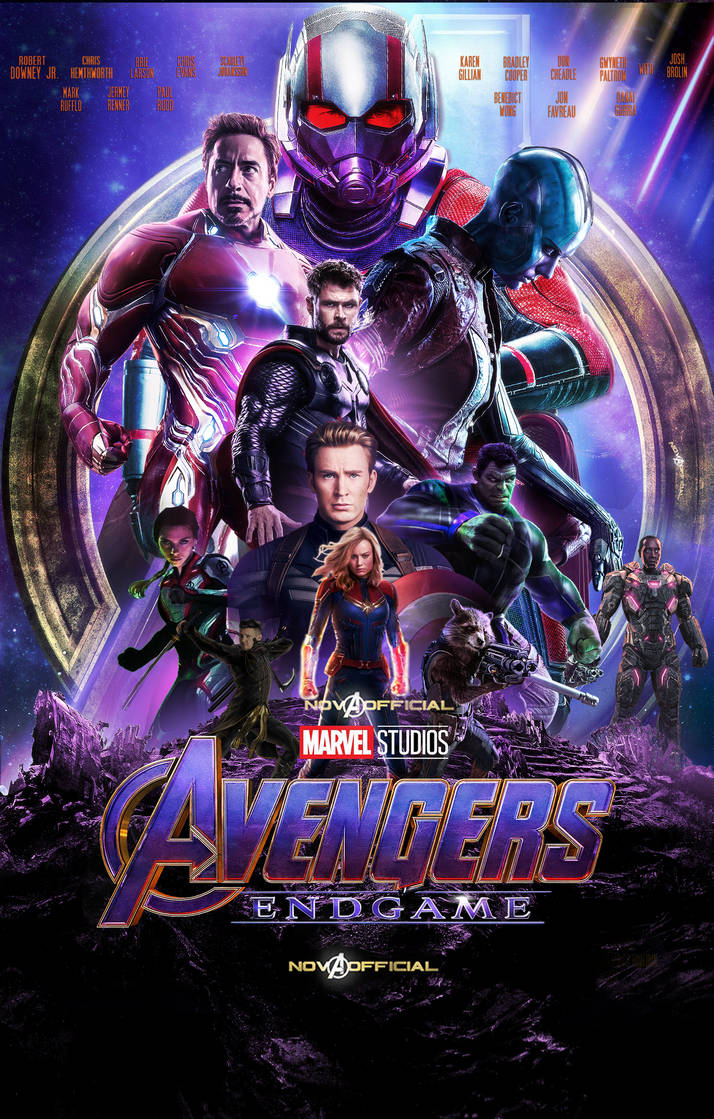
End Game


Image result for endgame posterI just saw End Game today and what a show it was. After my friends cancelled three times I decided to break out on my own and watch an early morning 10am showing in Dolby at AMC. The seats were very comfortable, and they reclined, perfect and much needed saying since this movie is clocking in over three hours.

This movie is the movie that ends most of the Marvel Cinematic Universe. Chances are you might have missed a couple of the Marvel movies before you saw this one. You definitely need to see Avengers, Avengers Age of Ultron, and Avengers Infinity War before you see this movie. Now before we get into the nitty-gritty, stop reading this if you don't want spoilers. 

Okay, a brief synopsis. So half of the population has been wiped out by Thanos. Ant-Man gets out of his quantum realm with the help of a rat [funny, nice touch]. He comes to the present time-line only to find out that a lot of people are dead, including himself. He teams up with the Avengers and they come up with the idea of a time machine. It's actually Ant-Man's idea.

Captain Marvel brings Stark [Iron Man] back to Earth and Stark helps them develop the time machine. Time travel is always messy and it definitely doesn't make sense in this movie, but hey, who am I to argue? It's very cliche, and its a super old science fiction trope that doesn't hold up well in this day and age, going back to 1820-The Time Machine by HG Wells. Great idea for 1820 not so much for 2019. But I digress.

Anyways, they branch off into small groups and fetch the infinity stones from the past, so they can bring it to the present, use the infinity gantlet to bring everyone back. There's a scene I like that reminds me of the comics where Steve Rodgers [Captain America] is a double agent. He grabs the stones and tasseract from the bad guys who are from Hydra, evil Nazi's. Cap says, "There's been a change in plans. I'll take care of the goods." Then he whispers to the bad guys,"hail Hydra." I liked how they sneeked that in there. 

Thor is fat and depressed. Natasha [Scarlett] feels that her only purpose is to bring everyone back with the Avengers. Brie Larson is snarky, just like in Captain Marvel. Nebula takes on a more serious active role, helping the Avengers go back in time to grab the stones, only to be kidnapped and then her doppelganger from the past comes to the present and messes everything up-you got all that? One thing that should be noted is that the jokes are few and far between. This is a much more serious Avengers team. Rather than their typical snarky smart ass selves they portray in the other movies.

Okay, so this movie is sort of all over the place and the first 2 hours and 45 minutes are just them going back and forth for the infinity stones. Then Thanos from the past comes to the future to do what he did in the present-again! Why, because this is fate, he says. But we're not stupid, we know that the script is written that way so that he can get his ass kicked-again. Actually Thanos dies in the first thirty minutes of the movie. Thor chops his head off, the blood splashing across Nebula's face. "I aimed for the head." Nice bit of gore there.  

The last twenty-thirty minutes is straight-up superhero fanfare. Hulk uses the infinity gauntlet to bring back everyone, bringing them on a huge battlefield against Thano's army, that he brought from another time-line thanks to evil Nebula from the past time-line. Captain Marvel destroys Thanos' ship in one fell swoop. Thanos is desperately trying to get the infinity gauntlet [which has all the stones] but Stark quickly puts on the glove.

Thanos [putting on the guantlet]: I am inevitable. 
Stark [who somehow had the rings with a makeshift Iron Man suit guantlet]: I am Iron Man.

It doesn't seem like a powerful line but it is. And it was his last line of the film, and the franchise, because Stark ended up dying after he used the gauntlet. Apparently humans aren't strong enough to wield the power of the infinity stones. Even after Thanos used it, he was old and dying on a planet somewhere, his energy wasted from the stones. When Hulk used it, he burned up his arm and upper body, and he's the strongest one out of all of them. 

The fighting was great. Especially Cap. Thor is about to get sliced by his own blade by Thanos. Then out of nowhere Thor's hammer flies into Thanos' skull-its Captain America's doing. 

Thor: I knew it! 

Cap wields Thor's hammer like a god. Like Achilles from the Iliad. He's swinging the hammer in his left hand and holding his shield up in his right, like a true warrior. Not only that but he's commanding lightning strikes with the hammer as well. That was my favorite moment of the film, it was great to see that not only is he worthy of Thor's hammer, but he can use it just as well as Thor too. The female heroes had their moment in the sun too. They're protecting the infinity stones as Spiderman says, "Uhh, be careful, you might need some help." "We have plenty of help right here," the female Wakanda warrior says as the women beat and bash their way through enemies.

The end is what this movie is truly about. "End Game". Thor joins the Guardians of the Galaxy. Stark dies. Natasha sacrifices herself so the team can get the soul stone, a very sad and tragic death. That one was a real tearjerker.  Hawkeye gets his family back. Captain America goes back in time and stays there with his sweetheart, becoming in the present an old man. 

At the end of the movie where we see Cap dancing with his sweetheart back in the 40's I had a sort of epiphany that the whole point of superheroes is for people to do normal things like that-have a simple and loving life. The thing I realized is that you don't need superheroes to enjoy that kind of stuff, you don't need all the action and the rigamarole, the twenty-two movie fanfare. If the Marvel movies had more of that and less of all the other stuff, it would've been a much more thoughtful experience. More acting, less fighting. Maybe that could become the new norm for superhero movies? I wish.

With all that being said, "Avengers assemble!"

Check out my reviews for all the other Marvel movies I've seen. 
 Antman and the Wasp https://ofigueroamusic.blogspot.com/2018/07/antman-and-wasp.html
Avengers Age of Ultron https://ofigueroamusic.blogspot.com/2015/05/avengers-age-of-ultron-thoughts.html
Avengers Infinity War https://ofigueroamusic.blogspot.com/2018/05/avengers-infinity-war.html
Guardians of the Galaxy 2 https://ofigueroamusic.blogspot.com/2017/05/guardians-of-galaxy-2.html
Spiderman Into the Spiderverse https://ofigueroamusic.blogspot.com/2019/01/spiderman-into-spiderverse.html
Deadpool 2 https://ofigueroamusic.blogspot.com/2018/06/dead-pool-2.html
Thor Ragnorak https://ofigueroamusic.blogspot.com/2017/12/thor-ragnarok.html
Doctor Strange https://ofigueroamusic.blogspot.com/2016/11/time-will-tell-how-much-i-love-you.html
Deadpool I https://ofigueroamusic.blogspot.com/search?q=deadpool
Venom https://ofigueroamusic.blogspot.com/2018/10/venom.html 

Friday, February 15, 2019

The Main in the High Castle


Image result for the man in the high castle original book coverThe Man in the High Castle, by Phillip K. Dick is a grand and magisterial science fiction novel. Written in 1962, the only thing 'science fiction' about it is the fact that its an alternate history novel. Set in 1962, fifteen years after an alternative ending to World War II. Here, Germany and Japan actually win the war. Now, both countries share control over the entire world, including the United States. The Man in the High Castle won the most prestigious science fiction award [the critically acclaimed Hugo Award] in 1963. In 2015, Amazon Prime adapted the novel into a series. However, you can't compare the show to the novel, its just not good enough to even compare notes on. 

Inspirations for the book include Ward Moore's alternate Civil War history, Bring the Jubilee [1952], various classic World War II histories, as well as the I, Ching [used by the characters in the novel], which creates a sense of a novel within a novel.   

More on the world within the novel. FDR was assassinated in 1934, leading the continuation of the Great Depression and isolation during the War. Hitler and Nazi Germany take over Europe and the Soviet Union, murdering anyone they don't like. Japan controls Eastern Asia and Oceania. The Nazis helped Italy conquer Africa. Japan invades the US West Coast while Germany invades US East Coast. By 1947, the US and Allies surrender to the Axis powers, ending the War. The US is still independent, but under Nazi rule. 

By 1960 Japan and Nazi Germany are the worlds' superpowers. Japan establishes the Pacific States of America [P.S.A] from the former Western United States, with the Rocky Mountains as a neutral zone between the PSA and the Nazi-occupied former Eastern United States. For reasons not explained the UK, Spain, Canada, and many other nations in the world remain independent. 

Hitler is still alive but he's going through an advanced stage of syphilis, not governing. Martin Bormann is Chancellor of Germany, with Goebbels, Heydrich, Göring, Seyss-Inquart (who oversees the extermination of the peoples of Africa), and other Nazi leaders soon trying to take his place.

The Nazis drained the Mediterranean to make room for farmland, developed the hydrogen bomb, designed rockets for fast travel across the world as well as space, having colonized the Moon, Mars, and Venus. The novel takes place in PSA, where Chinese are second class citizens, and blacks are slaves. The secondary setting for the novel is the Rocky Mountain states, Cañon City, Denver and Cheyenne.

Now for the plot. This is where things get interesting. In 1962, Robert Childan owns an antique shop frequented by bourgeois Japanese who like historical American artifacts. Childan is contacted by Tagomi, a high-ranking Japanese official, who is seeking a gift for Baynes, a Swedish industrialist. Childan's store is stocked with items from WM, a company that Frank Frink [formerly Fink, a Jewish name] works for. 

Frank Frink is secretly an American Jew who survived Nazi Germany. He's just been fired from WM, so him and Ed [also from WM, Ed quits WM] go into the jewelry making business on their own. 

Meanwhile, Frank's ex-wife Juliana, works as a judo instructor in Canon City, Colorado, where she begins a sexual relationship with an Italian truck driver and ex-soldier, Joe Cinadella. Throughout the book, most of the characters, resort to using the I, Ching, a cultural import from China used ask questions, "what should I do?". Ask the Oracle. Most of the characters are also reading the Grasshopper Lies Heavy, a popular work of fiction that depicts a world where the Allies won the War, similar to our real life world. 

Frink reveals that WM has been selling Childan counterfeit material, not stuff of actual historical value, which works to blackmail WM so he can fund his new jewelry venture. Tagomi and Baynes meet but Baynes keeps delaying until they get word from a third party from Japan. Suddenly, the Chancellor of Germany, Martin Bormann dies, making national and world-wide news. Childan takes Frink's work on consignment to some Japanese, who tell them that the artwork is junk, but contains spiritual value. That the items could be sold in Asia or Latin America as magic good luck charms, things of that nature. This upsets Childan, who thinks that original American artwork is too good to be junk magic charms. Juliana and Joe out of nowhere decide to visit Abendsen, the writer of the Grasshopper. Goebbels is announced as the next new Chancellor of Germany. 

Baynes and Tagomi meet their Japanese contact as the Nazi secret police close in to arrest Baynes [who is actually a high ranking Nazi official, although he is really a Jew, complete with body changes and enhancements to lose his Jewish 'look']. In fact, it turns out that Baynes is actually a Nazi defector named Rudolf Wegener. Wegener warns his contact, a famous, high-ranking Japanese General of Operation Dandelion, a Goebbels approved surprise attack on the Japanese Home Islands, in order to destroy them in one fell swoop! 

Frink is exposed as a Jew and arrested [but is later released with no explanation]. Meanwhile, Wegener and Tagomi take down two SD Agents, actually it is Tagomi who kills both of them with an antique Civil War revolver. Back in Colorado, Joe cuts his hair short, dyes it blonde, and starts acting differently, making Juliana believe that he's going to kill Abendsen. In fact, she's been had. He's actually a Nazi on assignment to kill the famous writer of Grasshopper. 

Wegener flies back to Germany and finds out that Goebbels has been ousted by Reinhard Heydrich, who is anti-Dandelion. Tagomi is extremely shaken by the blood on his hands. He goes back to sell the antique revolver to Childan, but Childan doesn't take it back. Instead, Tagomi buys one of Frink and Ed's 'silly' trinket items that Childan had on consignment for EdFrank Jewelry. Tagomi goes on an intense spiritual quest where he momentarily perceives an alternate history of San Francisco. He does 'see' into the metaphysical reality, a philosophical section of the book.

Elsewhere, Juliana puts a razor blade to Joe's neck, presumably killing him. Then she goes on to meet Abendsen, who it turns out, doesn't live in a High Castle surrounded by weapons, but in a normal house, with his family and friends. In fact, Abendsen doesn't even occupy his mind with thoughts that he's going to get assassinated. However, when Juliana tells him that she saved him from a potential killer [Joe], Abendsen is grateful. Juliana asks Abendsen tough questions about how he wrote the Grasshopper. At first he gives her half-assed answers and is arrogant. But eventually he admits that he used the I, Ching to write Grasshopper, which leads to Juliana, before leaving, to infer that "Truth" wrote the book in order to reveal the "Inner Truth" that Japan and Germany really lost the War. 

I don't usually go into this much detail about the plot of a book when I write a blog about it. However, this novel is so important and great that I felt obligated to, so that if you, the reader don't have the time to actually read the novel, you can read my synopsis and find the inspiration to make time to read this great book. 

Some novels just hit you on the head and a light bulb goes on, a little voice in your head says, "This is an important book."  This is so with The Man in the High Castle. The material here, so much about Nazi's and whatnot, is hard to bear, and I think snowflakes in the Twitter literary world would find lots to complain about. However, because it was written in 1962, it got the praise it deserved, for it shows a world that could have been, may have been, if only we had lost the war. 

Culturally, there is a lot going on here. For example, just like how the characters in the book used the I, Ching to make important decisions, so did Phillip K. Dick use it for decisions regarding plot and such. Not only that but in order for Dick to write the book he did a ton of Nazi history reading. Going down that road is difficult for anyone [excluding Nazis], for that history is hard to take in, absorb, and write about. In fact, Dick wanted to write a sequel but couldn't because he just didn't want to read and write more about Nazis, understandably so. 

The use of the I, Ching makes for a great novel-within-a-novel theme [so does the Grasshopper book]. The use of the I, Ching is downright fascinating. This book has everything: extrapolation, suspense, action, art, philosophy, plot, and character. Its no wonder that it won the Hugo Award in 1963, its a masterpiece. 

In addition, another thing that really 'spoke' to me as I read the book was the pure artistry of Dick's literary style, technique. He's a true master of fiction. I learned more about how to write a sympathetic character, from studying the way Dick describes the thoughts of the characters as they 'perform' in the world of this particular fiction. I haven't thought about doing this sort of thing in my own fiction. I'm striving to become a great fiction writer, and although I think it would be super difficult to imitate Dick's style, I also think I've learned from his style as well, how to use the voice of the writer as well as the voice of the characters. Very important stuff.

In terms of Phillip K. Dick, it might not get any better than this. I've read a lot of Dick's novels, and the one I can think of that I enjoyed as much as this one was Do Android Dream of Electric Sheep? However, I would say that this is arguably a more important novel in the genre, and for Dick as a writer.  

An aside, this is a very tough-minded book. Not for snowflakes.

Read the novel, skip the show, be amazed. 

Other blogs on Phillip K Dick
http://ofigueroamusic.blogspot.com/2017/05/phillip-k-dicks-cosmic-puppet.html 
http://ofigueroamusic.blogspot.com/2015/12/man-in-high-castle.html

Sunday, January 27, 2019

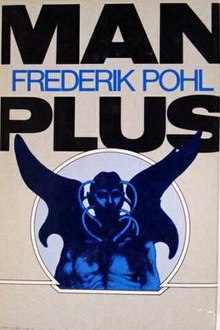
Man Plus


Image result for man plus frederik pohl cover
Man Plus is a science fiction novel written by Frederik Pohl in 1976. Pohl is one of those rare great writers who was not only a great writer but also a great editor. I heard from my dad that he didn't start out as a great writer either. In fact, it took him a while and eventually he just got good.  [much like how gamers get good after playing for years and years, practicing rigorously]

Man Plus is a the modern world at that time, in the 70s. Communism has taken hold in every part of the world except North America. They mention the evil Chinese and this and that but no word on Africa at all. Anyways, the world is in a Cold War state and the only thing that will save humanity from Armageddon is colonizing Mars and eventually settling a colony. The Americans come up with the Man Plus program to achieve this.

Interestingly enough, when I compare the politics and President here to the current Trump administration and the rise of Communism across the globe, I see an eerie similarity. Basically President Deshantine in Man Plus is very much like Trump. Full of shit with bad politics. 

Roger Torraway was third in line to be the Man Plus. However, the first guy has a complication and dies. The second guy has a broken leg. Roger is up. The thing is that the scientists needed to create a being who can stand on the surface of Mars without a space suit, something totally implausible in any scenario. But Pohl makes it almost make sense. And he plays it off very well. In order to get this to work the scientists rip apart Roger's body and rebuild him with mechanical parts and a computer, saving only what makes him human, his brain. He becomes a human-machine hybrid, a cyborg. 

The cyborg seems like one of those old pulp science fiction tropes. Or Doctor Who if you're familiar with that show. Its a popular idea for a good reason. Because its interesting. Its captivating and all that jazz. We as the audience want to see into the inner soul of the cyborg, can they have that?

While Roger's failing to control his new mechanical body he's also failing to deal with his own personal relationship; mainly the fact that his wife has been cheating on him with his best friend! [which reminds me of The Room, a parody movie

Roger doesn't fully come into his own until he actually walks the surface of Mars. Once there he realizes he can't control the machine within him, and at the end we learn that the machines built within him as well as the machines of the Earth might've influenced him and humanity in order to get to Mars and establish a colony, a sort of AI-human hybrid influenced fate. Perhaps Pohl is saying that the machine will become sentient and we'll be the machines? Role-reversals? I think of things like this when I see how smartphones have taken over the consumer to the point where consumers are using their phones for everything instead of just to make calls. [E.M Forster's The Machine Stops comes to mind]

The ending is very interesting and I'm still not sure what to make of it. Satire maybe? You could say the whole novel is satire. I only know that I think its fantastic. It left me in a state where after I read it at a lunch break at work, finished it, clocked back into work, and thought "I just finished reading a masterpiece". Realistically and thinking back on it a day later, its just a great work of style. 

Pohl is a stylist here. This is New Wave science fiction with a high literary style and voice. This is beyond the 50s and 60s pulp science fiction. More technical, more scientific but in the end its all great made up fiction, which is really the only thing that matters in the end. Never mind all the biological and technological jargon regarding the machinery and the climate/habitat of Mars. Forget how the frog's eyes work. All that is just extra for great writing and great ideas. 

Another important factor is the psychology of the characters involved. This novel is intellectual in a psychological way. None of them are say villains but they ain't saints, especially Roger's best friend, who ends up going to space with him. [you can guess what happens on Mars when that happens

This book was so captivating that I could hardly put it down. I finished all 180 pages in two days and was thoroughly satisfied upon completion. Great classic science fiction read, recommended to anyone who loves space, adventure, as well as an intellectually stimulating narrative.

Tuesday, June 5, 2018

An Android Story by Orlando Figueroa

Check out my first story written since 2013. Its called An Android Story by Orlando Figueroa. Its a science fiction story about an android that plays jazz saxophone. Enjoy!
Read it here.

On AI, Existential Threat, and the Collapse

Good evening ladies and gents. Hope you all had a good Sunday. I wanted to write here a bit more about AI, existential threat, and the Colla...