Showing posts with label movie. Show all posts

Tuesday, June 18, 2019

Solaris


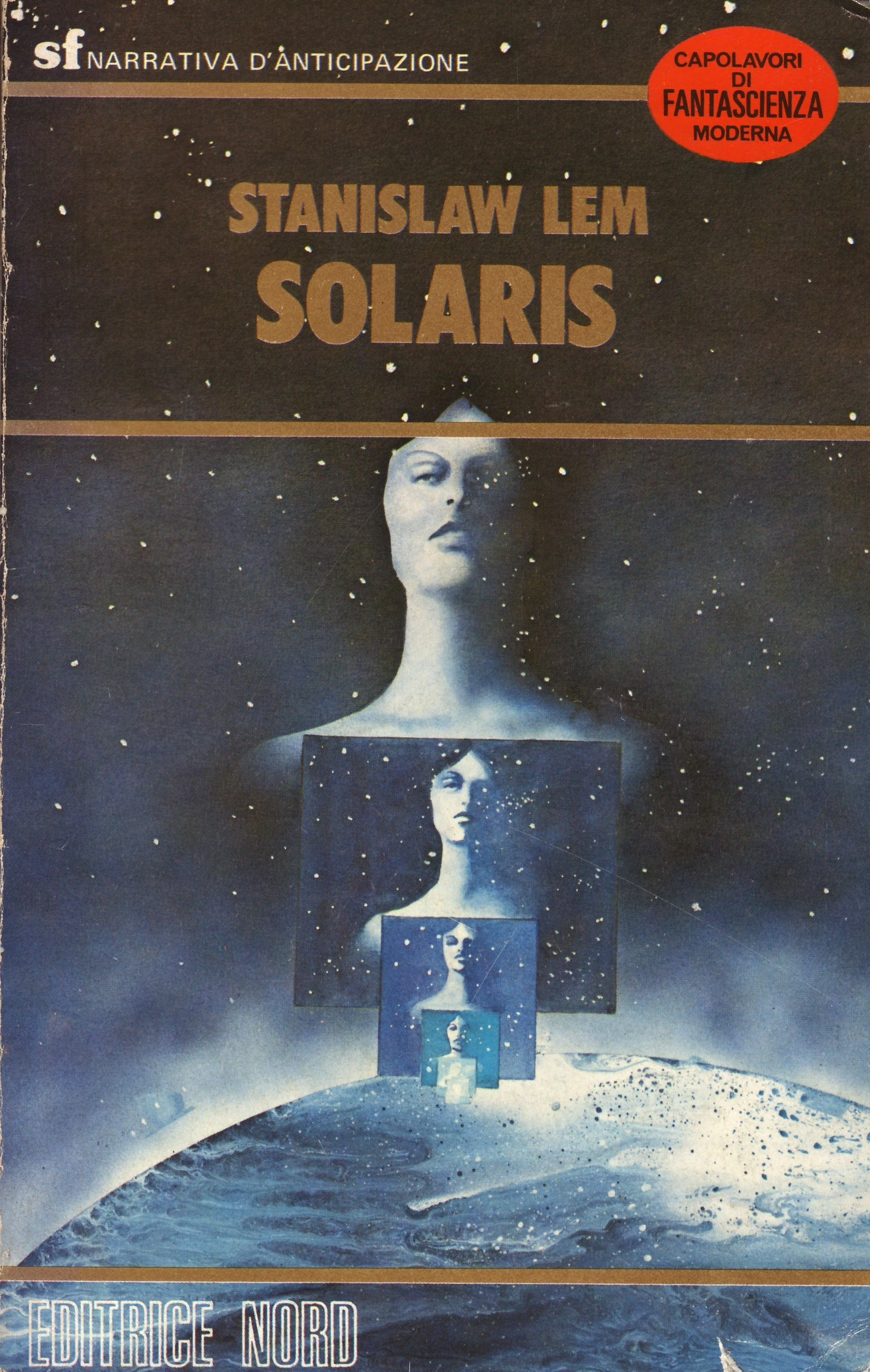
Image result for solaris stanislaw lem book coversSolaris is a science fiction novel published in 1961 [later turned into movies in 1972 and 2002] by eastern [Polish] European science fiction writer Stanislaw Lem. It's a very thoughtful and philosophical novel in the SF genre. I would go so far as to say that this is one of the best science fiction novels I've read this year [so far]. 

The story starts with a psychologist named Kelvin. He goes up to the Solaris space station. Solaris is this planet with two suns, a red sun, and a blue sun. Scientists have been studying the place for years, coming up with all kinds of theories, that are all mostly speculation. 

It turns out that the entire planet's ocean is alive and may or may not be sentient. There's a sense of mysticism when Kelvin starts to see and experience strange phenomena on the space station. This possibly sentient ocean affects the human psyche to the extreme. For example, when he first gets there he meets his co-worker, Snow, and the guy looks like he's scared shitless most of the time, mad as a hatter. Kelvin goes into his room and becomes fearful when he sees a big black woman roaming around. Where did she come from? Who knows.

It turns out that although these scientists might be studying the sentient ocean, it is actually the sentient ocean that is studying them. The other character's experiences are mostly just alluded to. However, our main character Kelvin's experience is told first hand. 

Somehow the ocean creates a human simulacrum of Kelvin's long-dead wife, who committed suicide. He blames himself for the suicide and he can't handle the situation at all. He tries his best but by the end, the psychological trauma has changed him for the worst, forever. But perhaps it is only bad if seen in that one-dimensional view.  Racked by psychological trauma, Kelvin tries to do his job by observation and working with Snow. 

One of the main themes I picked up from Solaris is that no matter what you did in the past and what you're doing now, anything that happened in between can and may come back to haunt you in some form or another. It's basically a classic gothic horror theme in a science fiction skin. However, to just call it as such would be a disservice to Stanislaw Lem. After all, Lem amazes here. What amazes me is how he uses the idea of 'first contact', the alien being a benign ocean, and somehow turning into a thoughtful understanding of the human experience. It's very difficult to explain but Lem pulls that off in this novel.

There are other more philosophical themes as well. In the end, we have a dialogue about an imperfect god. Could this ocean be an imperfect God? After all, the God of the Old Testament was an imperfect God. He must've been because he got jealous of golden calves and demanded sacrifices when he wanted it. The dialogue mentions this. 

The great thing about this novel is that you're expecting some kind of resolution to all this madness and philosophical SF ideas. But in the end all we get is a guy who is sort of in shell shock, not unlike a soldier who experiences war for the first time. Yes, he could go back home and live a happy, normal life, but can he really? Perhaps he'll always be longing for his long-dead wife, even if his dead wife on Solaris was just an alien ghost. It will haunt him forever.  Maybe not.

My favorite thing about this novel is that it sort of reads like a madhouse. Not much really happens. Kelvin only leaves the space station to check out the ocean at the very end. It's a pure adrenaline rush in terms of the fear within the characters. I was sitting at the edge of my seat wondering what would happen next, only to find that not much happened throughout the entire thing. However, Lem makes it a rewarding experience because the way he explains everything is quite wonderful. He's a much more thoughtful science fiction writer, capable of interesting philosophical ideas. This is literary science fiction. Something like Ursula K LeGuin's The Left Hand of Darkness is literary science fiction as well. I could compare it to something like that. 

The English translation I read was a very smooth read. The book reads fast, moving along with action and dialogue. It isn't until perhaps the last 50 pages that the book is littered with tons of fancy science fiction exposition. The exposition is highly enjoyable but I found it to be my least favorite part of the book. However, I do think it was necessary to fully explain Solaris itself. Plus every great science fiction novel has to have some great exposition [imho]. The way Lem uses the end of the book for exposition is interesting. I would compare it to when a book is over but the author wants to add more information to help resolve things, an afterword if you will. This is commonplace in classic science fiction so I'm used to seeing it. 

This was the best Lem novel I've ever read and I plan on reading more of his work. Definitely read this book if you're a serious science fiction fan. Also make sure to check out the 1972 Tarkovsky movie Solaris, as its one of the best science fiction movies I've ever seen. 

Check out my review for Stanislaw Lem's novel Eden below:
https://ofigueroamusic.blogspot.com/2019/02/eden.html

Tuesday, April 9, 2019

Us


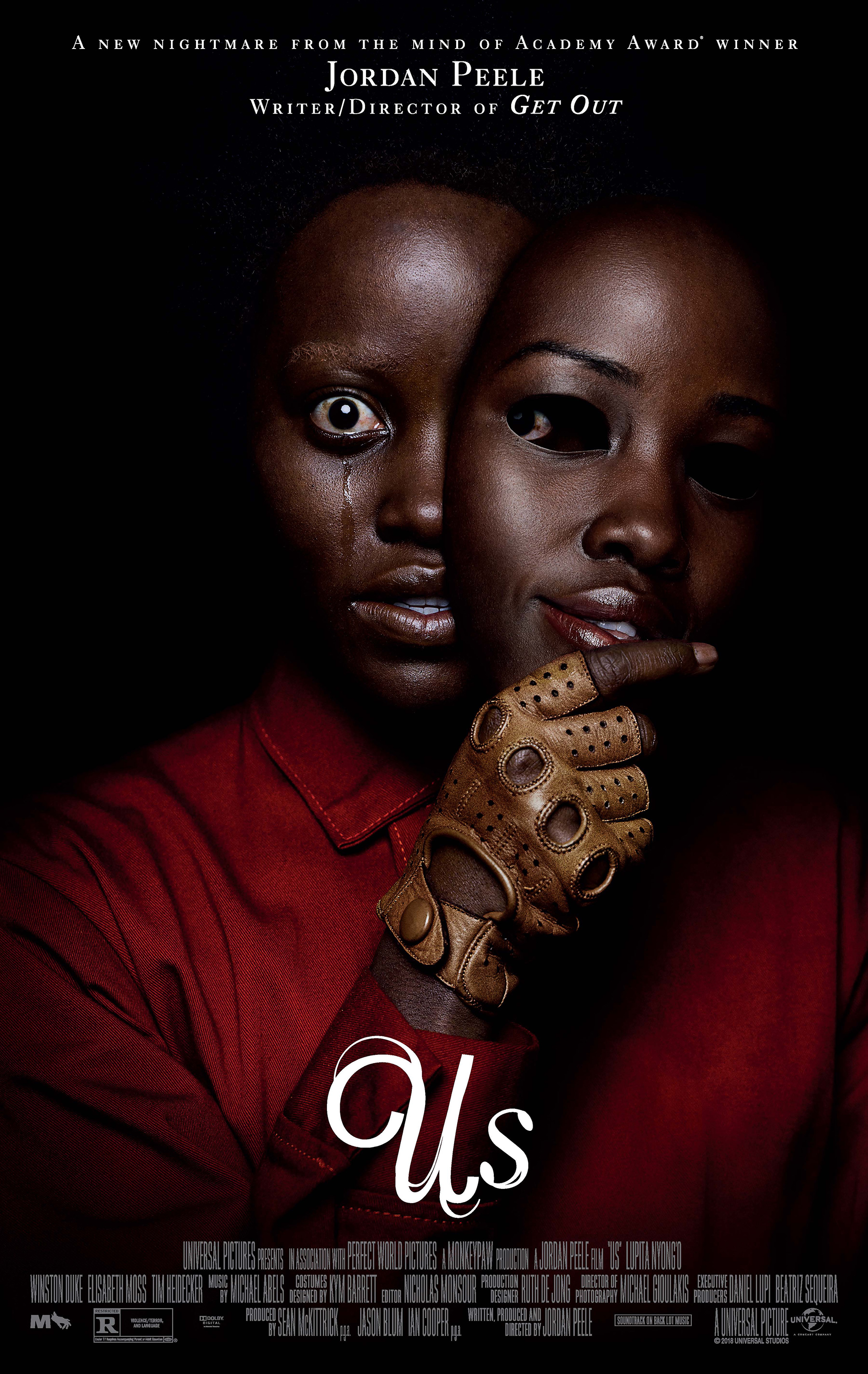
Image result for us movie cast 2019Us is a 2019 science fiction horror film produced and directed by comedian, actor, and writer Jordan Peele. The movie starts with a chilling introduction where we see a young black girl at a pier out with her parents. Her parents don't like each other much, the father is drinking too much, and the mother is telling him no more beer. At some point the girl wanders off on her own, getting lost in a hall of mirrors, some sort of 'ride' at the pier. She was lost for fifteen minutes before her parents found her. When they were reunited, the girl was mute.

The next part of the film starts with a well-to-do black family on vacation at a vacation home. The same girl who got lost at the pier is now an adult, with two children. A boy who is slightly awkward, and a well-adjusted girl. Her husband is a jokey fatherly type with glasses. Things take a turn for the worst when a family wearing red jumpsuits appear on their lawn. They don't say anything. The father goes out to scare them off with a baseball bat but it doesn't work. It turns out that the family is actually them-doppelgangers. This is where the horror element comes from. 

It turned out that the family on the lawn were actually doppelgangers, an apparition or double of a living person. This is where the science fiction element comes in. Later in the film, after some exposition, we find out that there are doppelgangers of Americans living underground, the disenfranchised, the dispossessed. Meanwhile, the privileged, well-to-do people that have it easy in life are living above ground, getting their vitamin D from sunlight and livin' easy.

Not only that but the film makes a reference to the 1980's Reagan era with this event that actually happened, called Hands Across America. These doppelgangers have come up from underground to exact revenge across their doubles, holding hands across vast areas of land in America, after killing people. Does that make sense?  Does it have to?

We see underground that the doppelgangers live with these white rabbits in the corridors. That was an interesting visual. The idea that there are underground places across America reminded me of Colson Whitehead's The Underground Railroad, where slaves find their way to freedom using these underground passages. The movie is somewhat similar and referential a lot of other horror movies, such as A Nightmare on Elmstreet, The Shining [b/c of the white family's twins], and even has some similar aspects to Get Out, Peele's first film.

The movie is filled with too many references, metaphors, and so much symbolism that its all to much to write about here. The main takeaway I got from Us is the idea of the have nots coming to take their revenge on the bourgeois. This goes back to Marx and Hegel's philosophy about the rise of the proletariat, meanwhile, the bourgeois does everything in their power to keep the working class in the gutter. This is what the Communist Manifesto is all about. It's a very overt philosophical overtone. 

Many writers online have been speculating about what this film means. I'm not sure that it particularly means anything, other than that it is a damn good black horror movie. It's great to look at visually too. The fact that the main actors are black people is a plus [and a negative, see below] because its 'the first black horror movie', other than Get Out,  however, that movie works better than Us in the sense that Get Out is simpler in form and not overstocked with 'too much syndrome'. In short, it's less messy, thus works better as a movie that can be enjoyed as well as reviewed. 

I didn't come to the conclusion that Us was too cluttered until I read reviews. After viewing the movie with my friend, we got sidetracked by the clutter: symbolism, metaphors, references, and subtext. But now that I've seen what good movie reviewers think I've come to realize that the movie was still great, although probably not as great as I first thought. This isn't going to be Jordan Peele's best film but it will definitely be one of his most referenced and most talked about, probably for years to come. 

Lastly, I want to mention another thing that is personal to me regarding the movie. I don't think Jordan Peele did black people a favor making a movie like this. Yes, its a black horror movie but in a metaphorical way, I think it works as entertainment for white people to enjoy watching black people get scared, complete with vaudeville big eyes, tears falling down their faces and animalistic noises instead of speech from the doppelgangers. I don't think this is a movie my mother would like or any older, serious, black person. In short, its a young black persons thing, if they're into it at all. Older black folk would scoff at the way black people are portrayed in this movie. This is a personal criticism yet I think it is crucial to the film as a whole culturally. Of course, you could speculate until you turn black and blue and say, "Yeah, Peele is trying to say something important regarding class and race in America." And I would respond with, "Yes, we understand that. But at what cost?"

Despite that I still enjoyed the movie. You can see the ending coming a mile away yet it is still satisfying. Jordan Peele is a young film director and he was trying to do too much, not unlike a great author's sophomore slump. Yet somehow the movie still works, although probably not as effectively as Peele intended. Still, this was probably the best movie I've seen in 2019. You should definitely see this movie.

Monday, March 18, 2019

The War of the Worlds [novel]


Image result for the war of the worlds book coverThe War of the Worlds is a novel written in 1898 by H.G. Wells. The novel has been overshadowed by movies, a record album, and a broadcast in 1938 by Orson Welles, which made people angry because it was never said that the broadcast story was fictional, leaving some people to probably believe that it was true. Or maybe they just didn't like to hear it. The novel was originally written in serial format Pearson's Magazine in the UK and by Cosmopolitan magazine in the US. 

The story is told in the first person. Its told from the narrator's point of view and then tells his brother's account of the invasion. Nothing is known about the characters personally. In fact, here is a novel where hardly anything is known about the characters other than that he's a philosophical writer and married. The aliens land in London and all hell breaks loose, literally. The Martians have a Heat-Ray gun that they use to burn down everything in sight. Not only that, but they have a black poisonous cloud that kills humans too.

The Martians are described first as not having chins. They have small bodies, round heads. They have these tripod mechanical vehicles they use to lay waste to London. They eat kill humans and inject their blood, sort of like zombies.  The narrator spends a lot of time not unlike the nuclear video game Fallout, hiding out in houses, searching for food, and avoiding contact with the Martians with fear for his life, believing his wife to be dead.

The writing style here is formal. Old school. In fact, I could see high schoolers reading this novel back in the 50s or 60s, but today's millennials would not like this in the least bit. They would find the prose wooden. In fact, if I wasn't such a fan of classical books, having gone as far back as Voltaire's Micromegas, Sir Tomas More's Utopia, Cavendish's Blazing World, Francis Bacon's New Atlantis, Jules Verne's From the Earth to the Moon, and Shelly's Frankenstein, I might find this prose to be a bit wooden. 

However, it is precisely because I am familiar with these works of antiquity that I can see how great Well's prose really is. I must admit that some of the words, phrases, and sentences were lost in translation to me. But that only happened a few times, and if I couldn't interpret what Wells was saying, I could always look up the old school phrases online. That's how I got through all those old classical works. Wells knows how to describe things, with a lot of detail. There's tons of exposition, dialogue between characters, but only just bits and pieces of action here and there. In a way he makes you work for all the alien destruction, with tons of exposition. But in the end, you realize that it's worth it. It's a good read. A fun read. 

The War of the Worlds is only science fiction in retrospect. Because science fiction has had such an immense influence on pop culture this book will never be forgotten. Although like I said, the prose doesn't age well. Kids today would not enjoy this novel. Again, this is just my thinking but from what I know about high schoolers today, they would hate this novel. Much in the same way that they would hate Frankenstein. Too many classical words and phrases, that would bewilder them and leave them disliking the book. 

The book touches on a couple of themes that have become commonplace. Invasion, space travel, total war, weapons, natural selection, human evolution, colonialism and imperialism, social Darwinism, and religion and science. Did you get all that? All that basically just means that although this is a thin book with only 194 pages, it is quite a heavy book thematically. 

Lastly, the influence upon other books, movies, TV shows, and music are immense. Edgar Rice Burroughs wrote A Princess of Mars in 1912, not too long after Wells wrote this. It is because of this book that we use the term 'martian' to describe something unknown or otherworldly. This is a great 'scientific romance' [a term used for science fiction back in Wells' and Jules Verne's' day] novel that will continue to influence. As a science fiction reader, I'm obligated to read it. It was an enjoyable experience.

Recommended if you enjoy classical literature and science fiction.

Saturday, March 2, 2019

Battle Angel Alita [anime movie]


Image result for alita battle angel anime scenesBattle Angel Alita [Gunnm, literally translated "gun dream"] is a Japanese cyberpunk manga series by Yukito Kishiro. To be clear, this is the OVA [anime movie] I'm reviewing. It consists of two parts-Rusty Angel and Tears Sign. Kishiro has no plans to revisit the anime. The film was adapted to a live action movie with motion capture in 2019. Check out my Alita Battle Angel live action movie review here. I wanted to do a separate post about the anime movie, titled Battle Angel Alita because I thought the anime movie was better than the movie in some ways, but not others. Lets discuss the differences. 

The story is fundamentally the same and the film follows almost the same course of events almost to a tee. However, the anime movie looks much better than the film adaptation. The artwork here is quite stunning. The characters all have that late 80s [this was created in 1993] anime look: tall, short, wide eyed, glasses on some characters [super circular oval glasses and googles]. That was the style back then. The backgrounds in every scene are highly stylized and textured but the characters themselves are simple. This was the state of anime back in the late 80s, as this movie was created in 1993, just a few years after I was born. The biggest and best reason for the anime being better than the live action film is simply the cinematography. The hand-made drawings can't be beat, even with a motion capture suit [which is still pretty cool]. 

Next, the anime does everything the movie does plot-wise, but faster and with more skill. The anime movie is only an hour long. The live action film is over two hours. Quite a difference. Although the anime film crams everything together super fast, I actually think it does a better and more concise job. When you watch the anime you realize you don't need to have all that extra clutter of plot.

In addition, another thing the anime does better than the live action film is action. The amount of gore in the anime is at an all time much higher level than the live action movie. In fact, there wasn't even red blood in the live action film. There was this weird blue blood when the cyborgs got killed in violent ways. However, the anime takes that to a whole new level. Some of the killing scenes in the anime will stick with me for a while. They were just that gruesome. When the dog gets killed in the anime it is a grotesque death. Likewise, when cyborgs get their skulls bashed in, there is a freaking pool of blood smeared across the walls, floors, and characters. Its a blood bath. Much different from the live action film, which of course couldn't be that violent, otherwise it would be rated R, which means no kiddies get to experience Alita fanfare. Also, in the anime Alita seems to have some extra powers that weren't shown in the live action film. She has these power-up moves that are quite cool. Instead of having these power-ups in the live action film, they simply gave her a 300 year-old sword [her age].  

Another thing that stood out is the fact that Alita doesn't seem to be objectified or sexualized in the anime. In the live action film they give both of her suits breasts and stuff, which doesn't really make sense, but whatever. In the anime they downplay the feminine aspect of her cybernetic body. Just something I noticed. Its a good thing.

What the live action movie does better that the anime movie doesn't do quite as well is create a likable sympathetic character. In the live action film Alita's actress does a fantastic job portraying herself as a young, naive, empathetic cyborg girl [with those big anime eyes you can see into her soul]. We feel for her. I know that sounds cheesy but when I saw Alita Battle Angel [live action film] I really felt for Alita: for all her problems, not knowing who she was, how she couldn't get her boyfriend to Zolumn, and if she was capable of being loved by a human boy. These are realistic things that people can feel and understand. Again, I know these seems cheesy but I thought it was a very important aspect to the film, maybe the most important one. Blue-blood-oozing-sickle-wielding cyborgs aside. 

All in all the anime is pretty damn good. Its only an hour long. You really can't go wrong. If you watch the live action film I think you can benefit from watching the anime as well, provided that you like anime and you would like to see a different interpretation. Sure, the live action film is a $300 million dollar movie and the anime was probably nowhere near that budget but they got some things right. They don't make anime like that anymore. In a sense, because of that, it is priceless, a relic of the 90s. Something that can easily be forgotten and lost forever.

Check it out, you can watch it on YouTube. 
Part 1 Rusty Angel https://www.youtube.com/watch?v=mKTxbZPqzFM 
Part 2 Tears Sign https://www.youtube.com/watch?v=VaidL6_fE_c 
Make sure to add the English subtitles on the YouTube options. Enjoy!

Check out my Alita Battle Angel live action review http://ofigueroamusic.blogspot.com/2019/02/alita-battle-angel.html

Wednesday, October 31, 2018

Venom

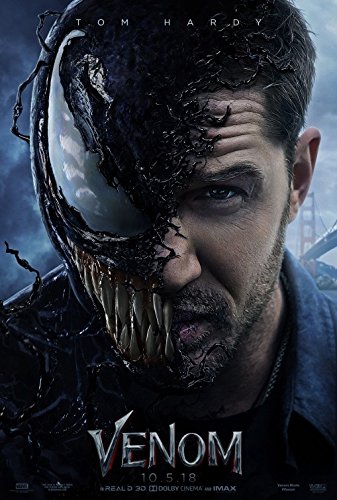
Image result for venom movie posterVenom got a lot of bad reviews in the press. In fact, I asked a lot of friends and peers what they thought of the movie and most of them had mixed reviews. However, they still thought it was fun and 'good', albeit in a broad generalized way. I only read maybe two reviews before I saw it. I already knew most of the plot and details from friends but didn't know exactly how it would be displayed. I wasn't disappointed, I thought it was good. 

Tom Hardy's Venom is a kin to the common-man trope in many stories, be they science fiction (Phillip K Dick's characters), comic books (Peter Parker, nerd), or fictional Horatio Alger stories (stories of the great American canon). Tom Hardy is a reporter who's life goes to shit when he loses his job, his girl friend, and all ambition. Venom, a symbiotic form from space attaches to him during this time of crisis, not only that but he identifies with Hardy, saying, "where I'm from I'm a loser like you, but here 'we' can be something more." This is a further identification with the common-man trope, or in this case common-alien. 

Tom Hardy does a great Venom voice, deep and vicious with jokes sometimes and serious threatening behavior the next. Venom likes to eat tater tots and chocolate, which was kind of funny. Venom even eats people, biting their heads off, which of course freaks out Eddie Brock (Tom Hardy's character). I like the way Venom is portrayed here. Yes, he admits to being a 'loser', but he's also a bad ass character, a strong fighter, who develops a sort of labored love towards Eddie Brock, and even his girl friend, who when Venom takes control of her, kisses Brock as She-Venom, quite an intimate kiss. Oui la la. 

My biggest criticism of this flick is that the villains were boring and one dimensional. Donald Trump makes a better villain than any of the characters here. Venom has his evil tendencies, but in the end he becomes an anti-hero, willing to live, take care of, and be a willing part of Eddie Brock's life. First off, that bad guy who finds the symbiotic goo that is the Venom strains (there are millions of them, just like Venom), he's this Silicon Valley type Elon Musk guy named Carlton Drake. That guy is one of the worst villains I've seen in a Marvel movie. Elon Musk is actually much more of a d-bag villain, especially when he called a guy a pedo a while back. 

Anyways, this character was so generic it was laughable. They try to make it more interesting by giving him a symbiotic parasite too, named Riot. But Riot ends up being kind of generic too. Other than the fact that Riot and Venom have an epic fight to the death (with Riot and Elon Musk-alike getting blown up), there's not a thing interesting about these characters. The bad guys need to be better, have better motive, other than typical generalized ideology.  

Lastly, I would say that they captured Venom pretty well. The way he runs up walls check. The way he's like a glue that attaches to Tom Hardy's body check. His jump from Marvel Vs Capcom 2 check. His "we are Venom" characteristic voice-line check. They did Venom right. He comes across as bad ass. I thought the movie was bad ass, in the sense that the action was great, the voice lines were strong, especially the "have a nice life" line. The love interest is sort of down-played in this movie and my friends even said that the actors didn't have much chemistry. Its true, but I don't think the luke-warm relationship hurt the action-packed scenes or the exciting nature of the human-symbiotic relationship. 

As a kid I used to love reading Spiderman, Venom, Carnage, those three were some of my favorite superheroes, antiheroes, and villains, mostly because they're from the Spiderman universe and I always liked Spiderman. The Venom movie is a lot different from the comics but I would still say its does a decent job of not straying completely off base from the comics. In that sense, its a safe portrayal, ultimately a decent one of the classic antihero. 

Overall I think Venom is a pretty damn good movie. I thought a lot of it was humorous but it was also action-packed. This is a better movie than Ant-man and the Wasp, the last Marvel movie I saw. I recommend the movie to comic book fans, Spiderman fans, and Carnage fans for sure. Carnage even has a cameo after the credits so make sure to stay after the credits to see this ginger talk about "bringing carnage."  

Tuesday, October 9, 2018

Dune


Dune by Frank Herbert is one of those all time great novels that you read, and in many ways the book is more relevant (it was published in the 60s) now more than ever. Dune encapsulates many things; ecology, politics, religion, ideas of the messiah, science, government, space travel, intergalactic planetary systems, its got a lot going on. At over 500 pages (including an appendix, which is a must read to learn more about the world of Dune), this is a very thick novel that can take a long time. However, its such a great novel that reading the 500 pages was an enjoyable experience. 

I saw the theatrical released David Lynch movie before I read the book so I had a basic idea of the plot. Its complicated but I will attempt to explain it with as little words possible. 

House Atreides has governing power over a desert planet called Arrakis, home of a spice called melange, used to prolong life, and for the workings of intergalactic space travel; think petroleum and cocaine mixed in one. 

Shaddam IV, the Emperor of this galactic space opera organization,  secretly has a setup with the Baron Harkonnen, of House Harkonnen, and they setup a sting operation to attack House Atreides after they move to Arrakis. 

Duke Leto of House Atriedes realizes this is a trap but the offer is to good to refuse, after all Arrakis is home to spice. The Duke's concubine, Lady Jessica is a Bene Gesserit (witchy, part of a breeding program to create the 'chosen one', Kwisatz Haderach, a male Bene Gesserit). Paul Atreides becomes this messianic figure, who goes on to have powers to see through space and time, and act accordingly in the present. 

Lady Jessica and her son Paul end up going into hiding in the desert after the Duke gets betrayed, and murdered. The rest of the book is Paul and his mother planning in the desert, where they are presumed to be dead. 

However, they end up in the hands of the natives, called Fremen. There, they teach the Fremen the "weirding way" fighting technique. Paul proves himself in a duel to the Fremen, choosing his Fremen name of Muad'Dib. He becomes a messianic figure, and stops spice production via Fremen raids. Paul drinks the Water of Life and becomes the Kwisatz Haderach, a kind of messianic god-like being that can see through space and time. He senses that the Emperor is in space and about to come down to the planet. 

Paul leads a Fremen raid to attack the Emperor's troops and there's a big battle, the Fremen against the Harkonnens. Paul's only son Leo II dies. Paul threatens the Emperor, and says he will stop spice production forever unless he abdicates the throne. Baron Harkonnen's nephew Feyd-Rautha attempts to duel Paul in a knife battle but loses, thus the Emperor gives in, and even has to give his daughter to Paul's hand for a royal marriage! Paul realizes he's achieved his goal, but its too late to stop the Fremen jihad, because they have a powerful belief in him. 

What can be said about this book? Its a terrific novel, one of the best and longest science fiction novels I've ever read. Dune introduced a sense of ecology for me, something I was aware of but didn't think much about. The lack of technology in the story gives you a sense of primitiveness, something most science fiction lacks. You find this lack of technology in old historical fiction and in fantasy. 

The ideas of politics and religion are huge here. Here Herbert creates his own political philosophy and religious context. The appendix talks more about this, its a must read once you finish the story. 

In addition, there's tons of Middle Eastern references, mostly words. The native language of the Fremen is supposed to be mixed from Arabic and Persian. "Paul's messianic name (Muad'Dib) means in Arabic "the teacher or maker of politeness or literature", and the prophesied appearance of one known as the "Kwisatz Haderach", meaning "one who shortens the way" borrows the Hebrew term Kefitzat Haderech (×§ְפִיצַת ×”ַדֶּרֶךְ), a Kabbalistic Jewish term meaning one who can "clench the way", i.e. the distance between two places - and teleport. The Fremen language is also embedded with Islamic terms such as, jihad, Mahdi, Shaitan, and the personal bodyguard of Paul Muad'Dib Fedaykin is a transliteration of the Arabic Feda'yin." (https://en.wikipedia.org/wiki/Dune_(novel))

Lastly, I must mention that the women in Dune are powerful and have their feminist tendencies. This isn't your 50s science fiction where women are plain and simple. Here, the female characters are just as important as the main character. They are powerful and impact the story in their own way, especially Lady Jessica. She is just as important as Paul. Paul's Fremen wife also has a big role too. 

Dune is an important book in the science fiction genre. It took me a long time to read, but I'm really glad I did. Its an unforgettable book and I can see much to be gained in reading it again. The movie doesn't do the book justice, it lacks the eloquence and beauty of Herbert's literary sensibility. I won't be reading the sequels, that's too much man.

Fear is the mind killer.

Sunday, January 21, 2018

Frankenstein, or The Modern Prometheus


Hello everybody! Here I'd like to discuss Mary Shelly's Frankenstein, which I literally just finished reading just now. The book was inspired by Mary Shelly and her friends friends who used to tell each other ghost stories around the campfire, they all decided they should all write their own ghost story and whoever wrote the best one, that one would get published. This is the only one that got done and published folks. Its quite good and inspired movie(s), cartoons, video games, and much more. The first unedited version was written and published in 1819, making this the oldest science fiction I've ever read, wow!

This book can be a little difficult to get into at first. Everybody knows the story of Frankenstein and the book only differs from the movie in some slight ways. For example, the monster here is eloquent and quite poetic, however, that is just the writing, times, and style of the book. The writing is quite formal, which is expected of the time in which it was written. For instead of thinking of the monster as eloquent, its more evident that the monster is a product of the times (1819) and that he is still quite evil despite his mastery of persuasion and making the reader feel sympathy for the state of this pathetic wretch.

The main difference from the book and the 1930s movie we've all seen is that Victor Frankenstein (the creator, mad scientist) gets a full biography and history where we learn near the end that the woman he is to marry is a childhood friend that his family took in, almost like a sister, which to me was a little incestuous but otherwise not that different from the movie. In addition, his monster torments and kills members of his family in the book, whereas in the movie the monster accidentally kills a villager's daughter. Also, the ending of the book is quite different from the movie, but I do like that after all is said and done our monster runs away like a thief into the night. It was quite a fitting ending for what could be construed as science fiction horror.

Today we look at this kind of thing and call it horror but back at its inception this type of writing would be considered science fiction. Mary Shelly's writing here is quite stylized; formal, educated, high art of a certain style. Its definitely a product of its time and I could see some people having trouble getting used to the literary style. I've found that I really enjoy these old types of science fiction writings, especially by women, they have a certain voice that men don't have. I suspect I'll learn more about this as I read more and more science fiction by female authors. I just ordered Ursula K. Le Guin's The Left Hand of Darkness, which is a sort of feminist cyberpunk sort of thing. I'm looking forward to reading that next.

However, Frankenstein is a hellova novel. I liked it so much that I'll probably want to read it again in the future, probably some months or years down the line. There's a sensation of eerie evil doings alongside justice in this book and it seems to do it in a literary personable voice rather than just being sinister just because. It's great, and if you like the movie then you should definitely check out the book.

"Cursed, cursed creator! Why did I live? Why, in that instant, did I not extinguish the spark of existence which you had so wantonly bestowed? I know not; despair had not yet taken possession of me; my feelings were those of rage and revenge. I could with pleasure have destroyed the cottage and its inhabitants and have glutted myself with their shrieks and misery."

Friday, December 29, 2017

La Jetee


La Jetee is a French short science fiction film made in 1962. It runs at about twenty-eight minutes. The movie was a big influence on William Gibson, one of my favorite science fiction writers. The story focuses on a man as a child and adult who is watching planes take off at an airport. He sees a woman there. The last thing he remembers is seeing the woman and in that moment he knew that he saw a man die, but this is all he can discover from this. Eventually the world becomes engulfed in darkness, a sort of nuclear apocalypse perhaps? In the end we learn that what he saw was actually his own death.

Later he wakes up as an adult in this underground city, called galleries in the film. There's these scientists that are doing experiments on people so that they can go to the future to find a technology that can restore the world of the past. They decide to use this man because the strain of going to the future is hard on the mind. They think that because this guy is so attached to this idea of his youth, that moment described above, that his chances for doing it will be greater. So they put some stuff over his eyes and conduct experiments on him. In these experiments he meets (in a sort of other world) the woman he saw at the airport as a child and he comes to have a romantic relationship with her complete with jokes, conversations, and numerous hangouts every time he goes through the experiments.

Eventually during one of these experiments our protagonist finds himself in the world of the future, where the people have this black dot stuff (not all of them were dots, some were other shapes) on their foreheads. The future civilization people give him a technology that can restore the past and prevent impending doom. So he goes back to the dystopian present where his mission is completed, thus saving humanity.

Upon his arrival our main character figures out that these scientists are going to kill him. The aliens of the future ask him if he wants to leave that time permanently and go with them but the man instead asks to go back to the past so he can meet the woman. They agree to do this.

So he goes back to the past at the airport. He knows he is there as a kid. He sees the woman and just before he gets to her he dies, killed by a government agent that works for the scientists. What a movie!

The movie brings to mind a bunch ideas. Time is inescapable. Try as we might we are all subservient to time, we bend to its will in a way. We think we understand the past but we don't totally get it. Instead, we find ourselves in the hear and now, an important concept in Zen Buddhism, which I've read a little about. 

It also brings to mind the idea of dystopian modernism. If the Earth got flattened by nuclear war we would probably build cities underground, a popular idea in many science fiction movies. The surface would be contaminated by nuclear waste and we wouldn't be able to live in such nice places anymore. As the movie said we would become lords of rats.

There's ideas of utopia thrown in there as well, The scientists in the present think that the world in which they live is so horrible that they have to keep conducting experiments that probably harm peoples' minds because they want to regain what they had lost, their precious happy-go-lucky past where parents take their children to see airplanes take off at the airport. What a precious and happy thought.

Lastly, the film brings up romance. Ultimately our main character becomes attracted to the woman and keeps wanting to see her. When he finds out he's going to be killed, instead of going with the future citizens he asks them to send him back to the past so he can find the woman. When he does this it shows that he loves the woman, perhaps may want to spend the rest of his life with her. He could have gone to the future and lived the life of a revolutionary but instead he chooses love.

There you have it. A short science fiction film that displays tons of great ideas and all with still photos! I can see how and why something like this would influence William Gibson. These ideas are still portrayed in movies and talked about to this very day. You could even say that some of the virtual reality things I've been blogging about and reading are sort of related to this-science, dystopia, utopia, love, futurism, and the modern dark ages.

You can watch the film here.

Nothing distinguishes memories from ordinary moments. Only later do they become memorable by the scars they leave.

Saturday, December 16, 2017

The Disaster Artist


The Disaster Artist is an adaptation of The Room starring James Franco and his brother Dave Franco. The Room was a terrible movie I've dubbed (whenever I talk to other people about it) "so bad, its bad." So why would a smart artist actor James Franco want to do a movie about it? The answer to that is (probably) because The Room is a Hollywood success story. Sure it didn't get any awards and isn't a 'good' movie but it has a cult following and a fan-base that loves Tommy Wiseau and Greg Sestero. And now that The Disaster Artist has done well James Franco and Tommy Wiseau can rest easy knowing they both did a great job in Hollywood. Sure it might be comedic relief but that's not the point. The point is that Tommy came from nowhere and is now a movie star. The dream of every actor that comes to LA. Just like my dream to become a guitar player. And I'm from Wisconsin so I might as well have come from nowhere.

The cool thing about the movie is that it was sort of autobiographical. It shows Tommy trying to be an actor in acting school and he fails hard. When he comes to the realization that he may never become a famous actor he decides to make a movie of his own. Nobody knows where Tommy comes from or where he got his money to make a movie. Let's just say he's probably some sort of financial investor, like how he played a banker in San Francisco with long hair (premise of The Room). Anyways (how is your sex life?), Tommy figures the only way he can become a star is if he does it himself, everything from producing, directing, acting, and casting. A novel idea but nothing to take lightly. You can sink or swim, even more so in the movie business than in music. Seeing his humble beginnings on screen makes me think that everything I do to become a famous guitar player isn't enough. I have to increase everything I do tenfold if I wanna be like Tommy. Or just play so bad its bad (bad as in good, like the jazz cats say). One thing to note is that Tommy worked hard to make The Room a cult classic, even spending tons of money to keep the movie playing in a theater for two weeks so it could get a chance to be nominated for awards. He also had an ad out back when the movie came out that had his real phone number on it.

Its a funny movie but it wasn't as funny as seeing The Room for the first time. Now that's funny, especially the sex scenes. Instead, I watched this movie and took in the more documentary aspects of it rather than any particular laughs, or any laughs at all. However, the audience laughed a lot and they're right, its sort of a funny. But I've seen it all before, all the jokes, the scenes, and Franco is not as funny as Wiseau (but he tries). This movie recreates scenes from The Room in exact frightening detail. Sure its cool that they recreated scenes but to make it exactly to the point that the lighting and shading and details of the rooms (ha) were identical? Now that's something a madman would do. Or just somebody who really loves The Room. In this day and age I suppose that's maybe not so farfetched.

Oh, hai Mark!

Sunday, January 3, 2016

Star Wars the Force Awakens


     I finally saw the new Star Wars movie on Christmas Eve with my brother. We went to an early morning showing so there wasn't too many people at the show. This movie is amazing! Easily one of the best films of 2015. Let me tell you a little about it.
     The Force Awakens is really just a rehash of the first film, A New Hope. The whole story is almost copy and paste A New Hope except with updated and new characters-Rei and Finn. Rei is a girl who somehow possesses force powers despite being left on a desert planet called Jukku as a youth. Finn is a storm trooper taken from birth to be made for combat for the First Order, which is pretty much the baddies in this movie, like the Empire in the original trilogy. Now if you've seen a New Hope you will kind of already know what's going to happen in this movie. Basically the First Order is looking for this droid that has part of a map that will lead to Luke Skywalker, the last remaining Jedi. Everybody's trying to find Luke throughout this movie but in the meantime there's all these fights and battles. The best and most original thing about this movie was the characters.
     The film portrays these new characters very well. Finn is a traitor to the First Order and ends up helping the Rebels (with Leia Organa as General) destroy the First Order's mega weapon-a giant weapon that absorbs Suns in an orbital system and can destroy multiple planets once it has enough power. Basically its a death star. Rai is somewhat of an outcast from a desert wasteland called Jukku. She doesn't want to accept her destiny and take Luke's lightsaber when given to her but she eventually becomes the movies' true hero, facing off against Kylo Ren in a epic battle at the end. Kylo Ren is a Sith Lord in training and also Han Solo's son. People online are saying they didn't like the way he was portrayed because he was seen as weak and kind of a whiny bitch but I thought that the actor did a great job. And I have to mention that Han Solo and Chewy carry this movie when it didn't need to be carried in the first place. The whole movie starts off very well and only gets better and better. Then Han Solo appears and the movie just takes off! Let me talk about some of my favorite moments of the film.
     A cool moment was when Finn was fighting off the First Order storm troopers and this Commando starts fighting him melee style and Finn is using Luke's blue lightsaber. Finn gets his ass kicked royally but in previous Star Wars movies we've never seen a storm trooper who was ever that strong. So that kind of leads me to believe that maybe that storm trooper will come back or possibly that the storm troopers are just way stronger in JJ Abram's Star Wars universe.
     I also liked the fight between Finn and Kylo Ren. Finn is somehow using a lightsaber still even though he isn't a force user! This leads me to believe that he does have some force power and that he might be trained in the force with Rei under Luke Skywalker. Finn gets wrecked by Kylo Ren, eventually getting cut in the spine and falling down unconscious. Then Rei stands up to the plate taking on Kylo Ren. This is a great fight. Despite Rei never being trained in the force she's already learned enough on her own to stand toe to toe with Kylo Ren. Kylo Ren isn't a Sith Lord yet and he hasn't finished his training so I guess I can accept that Rei can fight her and do pretty well. At one point in the fight Kylo Ren says, "You need a teacher. I can teach you the ways of the Force." And then Rei closes her eyes and in that instant starts to wipe the floor with Kylo Ren.
     Then there's the part when Kylo Ren and a First Order General are talking with their Master, someone named Snok, who looks like this zombified alien Sith Lord. There's a lot of theories over this big baddie. The main one being that Snok is Darth Plaegus, the Master of Emperor Palpatine who has learned how to overcome death itself. So he doesn't die ever. And the other theory is that he actually created Anakin Skywalker with mitochlorins in an attempt to influence the Jedi and destroy Emperor Palpatine. That one's a bit a stretch but we will have to wait and see when we learn more about him in the next films. The thing is that I've read Star Wars books before and there are Sith Lords who have overcome death by putting their bodies in stasis. Plus if there are Jedi ghosts maybe there is something equivalent to that on the Sith side as well.
     Lastly, this movie is bad-ass and you definitely have to see it if you haven't already. I'm interested in seeing the film again with friends soon. I think if I see it again I will notice a lot of things that I missed the first time. I would say this movie was the best film of the year but I have that spot reserved for Mad Max, another great film that is a must see from 2015. I'm looking forward to more great movies this year, especially the Batman V Superman movie. May the Force be with you! 

On AI, Existential Threat, and the Collapse

Good evening ladies and gents. Hope you all had a good Sunday. I wanted to write here a bit more about AI, existential threat, and the Colla...