Showing posts with label 1960s. Show all posts

Monday, May 20, 2024

may gloom, june bloom!

Goodbye May gloom, hello June bloom! Looks like even the weather's trying to keep up with my mood swings. What can I say, I'm feeling kind of blue. But this too, shall pass.

Here we are in May. Six months from now we will have a new American President. I think Trump will actually win the election. The court cases and the sensational news about it, every excruciating detail even the stuff about Stormy Daniels, has somehow made Trump even stronger. I think his base are more fired up than ever, and they're around me everyday at the supermarket. Woe is me. Hopefully violence doesn't break out. 

Why I think this. Well, for starters, I think Biden has alienated a lot of his base. People like me, young people, people of culture who vote and think and read and have jobs and families, people who usually always vote democrat, I think Biden has really messed with this set of peoples. However, I think one part of his base that will remain loyal to him no matter what is black women, a large portion of the democratic base. 

I don't want Biden to be President, and I think he's doing a disservice to the world community by funding and sending arms to Israel to use against the war in Gaza, but to be fair, what it really has become, is the Israeli military beating and blowing up Gazan civilians and destroying their infrastructure, now leading to famine. 

I think the outrage and disgust against this war will ultimately result in the loss for the democrats and lead to the takeover of America by the republican party, sponsoring Trump to rule as a fascist despot in the guise of a republican party leader. Almost like some bad nazi won the war movie. That's worst case scenario. And I know you know and think that Americans don't want this. But what if they 0 don't consider swing voters enough 1 don't show up to vote 2 vote for trump 3 end up being okay with being run by a fascist despot, because after all 1 i got mine and 2 those other people don't matter and 3 they should work harder. These are things you've got to think about if you're being realistic. 

Next, the pressing issue of people in today's society and culture. Now, it seems to be that most people out there are not taking care of business. Your parents aren't taking care of business, your managers aren't taking care of business, your friends aren't taking care of business, you have to take care of business yourself. 

So this means you can't just turn on, tune in, and drop out like Timothy Leary. Although many of the older American friends of mine have turned on to this decadent hippie lifestyle. What they'll do is find a way to finance themselves in the easiest way possible, barely work, have a house for them and a girlfriend/wife, and just coast while drinking a lot and perhaps indulging in some occasional recreational drug use. 

Keep in mind I work at a supermarket so I can see and tell you that there alcoholics that come to me to purchase liquor everyday at the same times and they're hardcore alcoholics and it's like a way of life to these people. They come to me to ring it up every time possibly because they think I won't judge them as harshly as the other cashiers, I'm known to be something of a Papa Genu. 

My point; when you have a society, an entire culture wasted by alcohol and recreational drugs like marijuana and cocaine, you have a recipe for mental health disaster. We have not reaped the benefits of the so-called acid generation. In fact, they're a big part of the problem since the 1960s. I'm not saying the conservatives were right, but I'm saying there's been a big problem with the entire liberal agenda, the entire scene, it's all wrong-headed and stupid, and has contributed to moral hazard. 

After all, I am a moral conservative. But one that isn't closeminded to change or adaptation to change. I think change is a big part of the culture, history, society, and government of the United States. I think one of the biggest problems in America today is that we aren't open enough to change. How can you explain the fact that its election 2024 Biden versus Trump yet again. These guys have one foot in the grave and we're giving them a chance to run for president yet again? What does that tell you about us, as a society, as a people, as a culture? 

We live in a society where the culture goes anyway the wind blows. A pop culture, where the average student is weaned to become a consumer of almost any type of goods from any country. When you walk down the street or go to businesses there's more often than not, people making a spectacle of themselves for some reason or other. I see it almost every night at work. These are like happenings, but not the good type of happenings like a concert in the park on an afternoon.

The culture has become debased. We have young people tuned in on video games, tiktok, porn, TV, movies, social media, alcohol, drugs, but not really making the money needed to live a better life or the life they want. They don't contribute to the society in any meaningful way expect putting their hard earned money back into the economy, allowing the invisible hand to do what it will. We have so much of everything that it's literally hurting us to the point where people can not and will not think for themselves. 

Every time you get in an argument with your parents, your managers, your friends, your so-called acquaintances, think about why they were angry and think about the fact that they're not taking care of business. Why should you explain yourself to someone who's completely tuned out and isn't taking care of business? So you see there is a sort of hypocrisy there. 

But wait, there's more. There's still hope yet for you. Through change. Change is the total mass retain. By change you will come to who you are, see things for what they are, and hopefully come to some understanding to develop strategies into which you can transform your world, your environment into whatever you want it to be, leading through your own personal example, but also by going in there and breaking things. The right kind of outside character already knows this, the outsider. But not all of us are outsiders, some of us are children of the wasted acid generation, who didn't have a clue and still don't, especially now that they're getting older. 

The last part here is the most important. You have to learn to think for yourself. Question everything, question even what I have written here, question yourself, question your own thoughts and ideas, but keep a reality principal, make sure you understand and know what is real and what is not, learn to become smarter so you can more easily define and compare good and evil. I know this is basic but you would be surprised how many people don't know this because they think doctors, lawyers, parents, wives, girlfriends, or therapists will help them and somehow they'll 'figure it all out.' 

Of course, today, anyone with an iq above 28 is a threat to society and is automatically labeled an outsider, even if he knows it or not. Why? Drugs and alcoholism has taken over critical thinking in the younger classes and disillusionment and powerlessness have overtaken the older generations to the point where most of them are tuned out to the pop culture world and live in a small capsule. 

Is this the end of civilization part III? 

Friday, January 13, 2023

The Age of Voltaire by Will Durant


The Age of Voltaire is volume 9 of Will Durant's Story of Civilization series. So far I've read four of Will and Ariel Durant's Story of Civilization series of books: The Italian Renaissance, The Life of Greece, The Age of Reason Begins, and now finally I've read The Age of Voltaire. 

Closing this book, I felt that this was an extensive and comprehensive history of the age right up to and leading into the French Revolution, the Age of Enlightenment in France, roughly 1680s-1780. Voltaire was born in 1694, ensconced in education through the Jesuits. The Jesuits were the main educators in this period and had a lot of influence over schooling of children [boys and girls] and even sometimes in government and various occupations. They were known for being very educated and lenient towards their people, although they themselves were also quite dogmatic about Christianity and its spread throughout other parts of the world like in Latin America and even China. Despite this early great education from the Jesuits, Voltaire grew to increasing dislike the Church as he gained more fame and influence. He spent a lot of time running around to different homes and even the home of Frederick the Great because of his critiques of the church and nobility.  

However, there was a lot more going on in the Church other than Jesuits. There was the growing disputes between church, the peasantry, the aristocrats, the nobles, and the church's feuds with protestants [Jansenists], Catholics, and atheists from the philosophes, the intellectuals [writers, philosophers, scientists, artists, mathematicians, playwrights] like Voltaire, Diderot, Rosseau, Montesquieu, and d'Alembert. These named in particular would have the greatest influence on France and in the world. 

It should be named that being a philosopher in 18th century France isn't the same thing as being a philosopher in the 21st century. These intellectuals delved and wrote in a variety of fields and styles in order to reach their audience in the best ways they could. Voltaire didn't think much of giant books like the Encyclopédie [famous 18th century book from France by the philosophes], rather he thought that small books easily concealed would serve him better. So he ended up writing a lot of small works that contributed to his vast body of works. So Candide ended up becoming his most famous book.

But not every intellectual was an expert in a particular field. Rather a philosophe, was someone who was expected to know a little bit about every subject, even if they themselves weren't a master in each field. In order to write the Encyclopédie, the writers utilized and employed different philosophes for different phrases and words that they didn't feel adequate enough to cover themselves.

What caused the French Revolution? This book doesn't entirely aim to answer this question, rather it focuses more on historical detail. But after reading The Age of Voltaire, you can figure it out.

France was deep in debt from wars and the debt fell upon the peasants more and more, as the nobility became more and more corrupt. Tensions increased between the nobles and the church, and eventually even the Jesuits who had educated all the best minds of the time, were expelled from France. On top of that, the educated people were being more and more exposed to the works of the intellectuals of the time, the philosophes, and now, more than ever, people were more willing to become atheists, little by little, influenced by these great men with big ideas, ideas that changed the world, would eventually lead to the world we live in now. A world of more religious toleration, human rights, democracy, and equality.

Although the Age of Voltaire was published in 1965, it seems to somehow resonate in the scatter-brain afterimages of 21st century 2023. There's something there in this book that has an everlasting effect on the time it is describing, the time it was written in, and the time I live in now as I write this. It seems that now, more than ever, we're living in a world increasingly fraught with the same problems, plus a bunch of new additional ones, that weren't quite resolved from the French Revolution and perhaps never will be solved.

It has occurred to me after reading four volumes of Will Durant's Story of Civilization series, that the problems of any age seem to follow and recur in many others. There's always an endless cycle; renewal, back to the classic ages, onto a newer more advanced, more intellectual more philosophical more scientific less God, then an eventual regression back into a simpler mode of civilization, except we never really find out or perhaps we never can find out, that the civilization itself has already and always collapsed, only to be rebuilt by other people anew.

It is said that on his deathbed, Voltaire, when asked to return to the faith of his fathers and renounce the devil, responded with, “This is no time to be making new enemies.”

Wednesday, February 17, 2021

This Immortal

This Immortal
, serialized as ...And Call me Conrad, is a novel by Roger Zelazny released in 1965. 

"It was abridged by the editor and published in two parts in The Magazine of Fantasy and Science Fiction in October and November 1965. It tied with Frank Herbert's Dune for the 1966 Hugo Award for Best Novel."

It's a short fantastic tale set in a post-apocalyptic world full of mutants and aliens.

In the beginning our protagonist Conrad, who either is or isn't Pan, [a Greek god], takes an alien visitor to a Haitian vodou ceremony. The idea of overmen, or gods, is very important here. The Haitians at the ceremony tell Conrad that his friend is possessed by a devil god named Angelsou. Well, to be fair he was a hired killer. The Haitian vodou section was a good experience reading in science fiction because Haiti isn't mentioned much in science fiction. As a Haitian-American, I find rather that most of the time Haiti is mentioned in popular works, it's always the negative zombies in the fields motif. Here, it was nice to see more of a cultural connection through religion. This shows Zelazny's interests in other cultures and makes his work more interesting other than big dumb objects in the sky of the science fiction pulp fanfare. The notion of tourism comes to mind especially while the characters are traveling in Greece, Rome, and Egypt. 

The story here is nothing special. Other people want our protagonist Conrad to kill someone going on his tour. Conrad doesn't want to do it unless they have a good reason for him to. They don't. So the whole point of the book is for Conrad to figure out why they want to kill him and how he's going to protect this guy from getting killed. It's very simple but the suspense is built up throughout the entire short novel. It's quite the usual linear novel that builds to a climax. 

Again, like in other Zelazny novels, it's not the story that is all that great or important, rather it is the writing style. Zelazny writes a fast, expressive exposition and dialogue that keeps you on the edge of your seat. There's a lot of fast action scenes in this novel. One of my favorite parts was when they attacked and captured by cannibals. And then some anthropologist who became leader of the cannibals pitted their vampire-god against Conrad, but it ends up being Husan, an Arab who ends up doing the fighting. 

Zelazny really got me when I found out they had to fight a vampire. But it turned out that the cannibals keep this guy locked up in a cage and only let him out to eat humans and drink their blood. So he's of course being taken advantage of even though his people see him as a god. Not only that but he's also a fat slab of 350 pounds that can barely move. However, what gives him his godlike physical abilities is not only his drinking of blood, which is the reason why he's called a vampire, because he drinks the blood, but also the cannibals give him drugs that numb any pain that may be inflicted upon him. He's basically a fat beefcake that feels no pain when fighting. But the fight was lackluster. It turned out that Husan had poison on his finger tips and although he got his ass kicked, the poison at some point finally kicked in and our vampire god dies in one instant. Anticlimactic to say the least but it does move the story along quickly. Simply put, it was written that way. 

At the end we still don't know what Conrad is. What we do know is that he is or isn't Pan. Also the novel begins and ends in the same way. Conrad and his girlfriend are just hanging out. Which is a good place to begin AND end a story. 

Wednesday, February 3, 2021

Live Performance 2/3

Live performance on Wednesday, February 3, 2021, featuring Jason Thomas on alto saxophone and Orlando Figueroa on guitar. We played some jazz standards and did some improv. Sound is okay, not great, but the performance was a good one. It's a blessing to be able to livestream, record, and play music during a worldwide pandemic. Thank you for listening and stay safe. 

https://www.youtube.com/watch?v=K_DERvGXm4o

Saturday, January 2, 2021

Pavane


One of my favorite last moments with this book was the warm hearted story at the end where the young man seeks refuge in a old world town. Him, being a new worlder, has no one to help him, but a girl sees him and decides to show favor upon him. That's heart warming. 


You only get to see a few glimpses into the world Roberts has created here. The Church runs everything, they're using technology that is pretty much steampunk aesthetic but won't share it with the rest of the world. 


A heretical Priest forms his own faction and becomes a leader. A Queen forbids technology from entering her country in order for her people to have more time to believe in Truth and Reason, a Renaissance of sorts, that could have actually happened in an alternate history timeline simulacra. 


There's train haulers that know every nook and cranny of their machines. There's a lot of mini stories in Pavene, but in addition to interesting story lines and narrative development, there's also a lot of very well written sentences, sentences written in an elegant, stylistic way. Roberts is a stylist after all. And he never failed to deliver. In some ways I could compare this with some of William Gibson's stories from Burning Chrome or Neuromancer, but that wouldn't do it justice, it's simply a thing  entirely on its own, it's Pavane: 


a stately dance in slow duple time, popular in the 16th and 17th centuries and performed in elaborate clothing.

a piece of music for a pavane.

"the repertory consists mainly of pavanes and galliards"

Wednesday, December 2, 2020

Live Performance 12/2/2020

This is a live performance from today, 12/2/2020, that took place from 430pm-530pm. Featuring myself, Orlando Miguel Figueroa on guitar and Jason Tomas on alto saxophone. We perform [in order], an untitled composition, Footprints, Freddie Freeloader, Blue Monk, a jam based on a diminished chord, and ending the set with Body and Soul. 

Watch the performance here, https://www.facebook.com/orlando.figueroa.3150/videos/1730748607096466

Thanks for listening and supporting our music. 

The modern improviser refuses to die! 

Tuesday, August 25, 2020

The Art of the Perfect Day


Sgt. Pepper': John Lennon's 'Getting Better' Acid Trip - Rolling StoneLately, I've been writing a lot of long-winded rants about the ways of the world, making it out to seem a lot more wicked than it might potentially be. While the world is still trying to kill all of us with the threat of COVID looming over us like the sword of Damocles, embodying the very nature of pure fear and danger. It's been rough. But I think I've finally hit that sweet spot where I'm not going to bitch about how bad COVID is, and cry about how I can't hang out at Starbucks or hang out with girls at the bar. 

Consider the alternative. Positive energy, good vibes, hippie energy, essentially. This is where the Beatles come in for me. With the godlike good vibes of the Beatles, there are no limits to what you can, imagine. 

Consider how difficult it would be for you to have a perfect day. Well, I had a perfect day today. Nothing got to me and it was just lovely. I want to live every day in a positive way like this. It's like a superpower. But it isn't easy. Nothing you can do if you want to sing the blues but you know it don't easy. Every day is a constant uphill battle. But you can't let the fuckers get you down. 

Here are some tips and tricks that help me practice The Art of the Perfect Day.    

1) Read books, not articles. 

A lot of people wake up in the morning and they read the news and then follow it up with either more news articles or other articles about various subjects they're interested in. While I think reading the news is essential, I don't think you should solely only read the news, nor solely read articles. If you do, you're reading potential is sorely wasted. In fact, I would say that reading the news isn't even reading, it's just politics and keeping up to date. The sheer intellectual stimulation you get from reading a great book or even a mediocre book that interests you is so powerful that there's almost no other source like it aside from maybe something like LSD. Again, no limits to what you can, imagine. 

2) Talk to people, really talk and understand.

When you talk to people, are you really listening? Are you giving them your full attention and respect? One of the things in life that is hard to get in this day and age is a good, sentimental education. With this, you will learn to treat people with dignity and respect. You will learn to treat the janitor with the same respect as the CEO. People that don't understand this don't make it far in life; their wives leave them and take the kids, they lose their top pay CEO positions, they even fail their careers and end up unemployed or worse. You don't learn this from college and sometimes even parents don't understand or know how to teach this. It comes with wisdom, age, and experience. 

3) Relax, don't try to control everything.

Take a chill pill and mellow out sometimes. Remember that you can't control everything, especially people, their actions, and their thoughts. I've worked with a lot of managers who stress out to the point of exhaustion. This is very common. This is a big no-no in life and it holds them back, as well as making them stand out like a sore thumb. While you can't be a complete hippie freak and let your freak flag fly high all the time, you should at least know how to play it cool, so cool that nobody sees you freaking out under pressure, no matter how much pressure it is. Take your time. Do things at a reasonable pace. Don't make mistakes. But if you do, don't freak out about it, just fix it, but again, be reasonable about it. If it's a serious mistake, admit to your faults, and move on. 

4) Get a little help from your friends.

Use all your friends and family to your advantage. They're there to be there for you. Feel free to lean on them in times of trouble. Likewise, always help them whenever they need you. With a little help from your friends, you can really get by.   

5) Realize that things are getting better all the time. Sometimes you have to learn to see the sunny side of the street. People really hate being around negative people all the time. It's a fact that they are the worst. Likewise, people who are always overly positive can be annoying. But consider the fact that the overly positive person is much more likable than the negative person. The positive person has a better personality and probably has an easier time getting through their day, and consequently, through much practice in good mindsets, even has a better life.

One day doesn't change all the other days. But's it good practice. Life's a bitch, and then you die. Better make the best of it and enjoy it to the fullest. 

"The teachers that taught me weren't cool, holding me down, turning me round, filling me up with your rules. I've got to admit it's getting better, a little better all the time." 

Sunday, August 2, 2020

How the Beatles Saved Me During Coronavirus

George Harrison's guitar auctioned for $657,000 | CBC News

Hello, ladies and gents. How's it going? Well, the answer to that question is probably all over the place. To be completely honest, the world has pretty much gone to shit, 'in it? That's my British slang for you. There's actually a perverse goodness and grace that has come out of all this disorder and chaos. Consider the fact that if it were not for all of the terrible things that have happened, Trump just may have gotten re-elected, and easily too. Of course, we will see in November. 

But I'm actually hear to discuss music. The Beatles saved me during coronavirus. No other band or musical style have resonated with me this much during the crisis. It's pretty easy to see why I like them so much and why they've made such a big impact on me during this particular time in my life. 

For starters, they're one of the best classic rock groups of all time. Of course, they're more pop than rock, but they had their more rock and roll moments, especially early in their career, like the Revolver album or A Hard Day's Night. Consider the fact that Jimi Hendrix only agreed to go to London and become a rock star there only if he got to meet Eric Clapton and the Beatles. They're so famous they're bigger than Jesus. No offense Jesus, you're pretty cool yourself. 
 
Second, the lyrics. The lyrics in Beatles songs are the bread and butter of their music. The lyrics are always simple but they are powerful. Sometimes the best lyrics are simple everyday thoughts, patterns, and phrases that have been rewritten into a more catchy form. Easy to understand, very difficult to master.  

Third, the guitar and drum parts. Okay, so to actually perform their songs, its nothing really all that special. However, they did it so well as a band, that I'm actually impressed with John Lennon and George Harrison's guitar work. Harrison and Lennon are two of the best guitarists in rock history and Paul McCartney is one of the best bassists in rock. In terms of Paul's bass sound you can judge for yourself, after hearing countless great bass runs throughout the Beatles catalogue, you just know he's a great player. Ringo laid down the groove. 

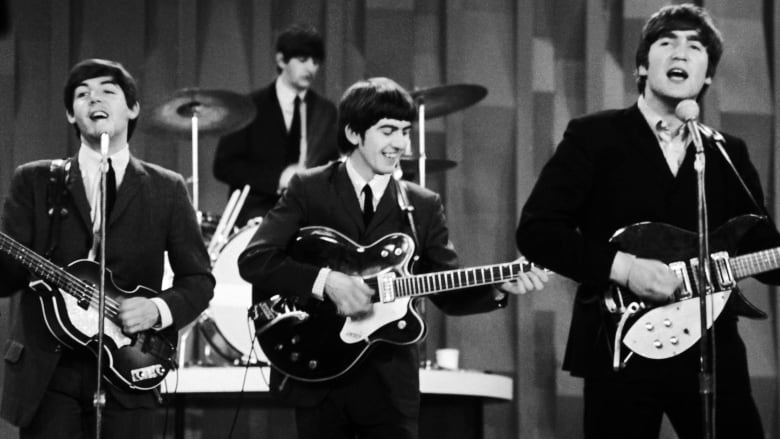
One of my favorite time periods for the Beatles was when they first came to America, and they were playing stadiums full of screaming girls. John played a Rickenbacker guitar and really strummed the hell out of it. Those were the days. 

Lastly, the personal connection through loneliness, isolation, listening to the music, and feeling so good despite it all. Their music makes me feel good. Sometimes I'll listen to them all day and I can still hear the songs in my head when I lay down at night. Even at that level, their music calms me down and soothes me. The positivity is so strong.

This is the ultimate band for the ultimate cheerful person, the person who smiles when everybody else complains. It's the soundtrack to my life. At least for now.  

The world is burning outside, but it's all good because she loves you, and you know that can't be bad. She loves you and you know you should be glad. [wooooooooooooooo!] 

Thursday, June 11, 2020

The Heat Death of the Universe

A chilling prophecy: The heat death of the universe Summer is here and the time is right, for dancing in the street. Dancing in the street! No, just kidding. I actually don't dance but I have gone to the club on a few occasions to do just that. What this post is actually about is working all day in 100 degrees California summer heat.

I've been back at work for only two days so far but both days were all day ventures doing work outside; carts and cart handle cleaning duty. Both require a lot of strength, endurance, and will power to complete without being overly tired when you get home. So, without further adieu, here are tips and tricks for working all day in the California summer sun, or as I like to call it, the heat death of the universe. 

1) Drink water: Okay, so this is a given. But only you personally know how much water you need at any specific time. Maybe you only need one bottle of water and that will last you 3 hours, perhaps you drink one bottle and you feel thirsty again 10 minutes later. This depends on the individual. When you're working outside you don't want to be going in and out to the bathroom all day. So you want to drink water and/or other drinks but drink them conservatively. For example, I'll chug a bottle of water when I'm super thirsty but only drink small amounts when I've got more energy. 

2 a) Move your body and do all physical tasks with no tension in the body, likewise, breathe easy breaths: Alright, so this is probably the most difficult bullet point because most people who work outside all day do physical labor that requires a lot of strength and endurance. It's easier said than done but essentially all you're doing is standing, walking, moving, and doing all your tasks with the least amount of effort, resulting in a relaxed body, easing all tensions. This is where Flanders comes in with his famous Simpsons line, "It's almost as if I'm wearing, nothing at all." 

2 b) The other part is breathing. This is the most complicated part of this post because there isn't any one true, right, or wrong way to breathe. What works for me when I'm out in the blazing sun is that I'm so calm and relaxed, that it's almost as if I'm not breathing. Of course, I actually am, it's just that I'm breathing such small, shallow, but essential breaths that I don't even realize it, feel it or think about it. What helped me a lot with this is actually meditation, guitar sessions, and live performances in front of people where I had to calm nerves by controlling my breathing. When I used to have more time for meditation I would exclusively focus on my breathing and do variations of breathing. Try breathing exercises and see what works for you. This is what works for me. Now I feel as if I'm a fish in water. "I dreamt I was a butterfly."  

3) Don't think too much; Thinking a lot requires energy, which we want to conserve as much as possible. This is where your zen training from meditation and breathing comes in. No matter how boring the work outside is, you can't eventually realize that this is boring, this sucks, and start thinking about a million other things. If you do that, then your head isn't in the game. If your head isn't in the game you're using energy to think about other stuff. The energy used in thinking about other stuff will whittle you down until you forget about the work you're doing, resulting in a piss poor job done.  "You're fired!"

4) Lastly, get plenty of rest. Even if you do all this stuff perfectly you will still be tired eventually even if it's two days later. For me, I don't get tired the day I work. For others, they might get tired sooner, or perhaps later if they are a super physically fit Superman. The point is that you want your muscles to be relaxed and have no tension every day that you work. The only way to achieve this Herculean task is by making sure you get plenty of rest. I recommend sleeping 6 1/2, 7 1/2, to 8 hours every night. Doing more makes me groggy. Doing less makes me think too much and have little strength. I recommend drinking chamomile tea before bed to relax the nervous system and fall asleep more easily. Other people that are so inclined might want to smoke some marijuana or have a shot of liquor. Whatever works best for you. Just make sure to get plenty of rest. 

 "Here comes the Sun King...Everybody's happy..."

Tuesday, June 9, 2020

Zen and the Art of Positive Thinking

Hunter X Hunter: "Jajanken!" | Anime Amino What's up my fellow late-night readers? Today was my first day back to work after two months off. Here are some takeaways about what it was like being back in a blog titled Zen and the Art of Positive Thinking. 

First, I went to work with a strong, positive attitude. I already knew that everything had changed; the store was remodeled, everything items' placements were switched around, most of the young people were replaced by other young people, there's not really any younger women or girls my age that work in my department anymore, hours have been cut severely, and on top of that, the windows and doors are shuttered with plywood for fear of rioters and looters. Whew!

Even knowing all that, I went in thinking this will be fine, this will even be good. And it was. For the most part. I only had a few moments of weakness at the end of the night, where business was so slow that for the last three hours there were hardly any customers at all. I was so bored that I mentioned it to the security guard and the manager. "It was the most boring night of work ever."

I've never seen that happen in any place of business that I've worked at before, and I've been in the retail business for 15 years. Where most of all the customers stop coming in at a certain time. Astounding. In fact, business is so slow that the company is losing so much money that they're going to have to cut hours even more. You put that with possible rioters and looters and the COVID-19 pandemic and you have a recipe for disaster. 

So, yeah, there's all that. But where do I come in? Well, I went into work today and did the usual thing. An older coworker who knows me really well said, "You're different." I said jokingly, "Oh yeah, a lot of soul searching, good time." I played it off as a joke but the fact that she recognized that was an important moment of the day. For it was at that moment that I realized I had become more relaxed. I'm not talking as much because I don't feel I have to fill in space as much. And when I speak I only say what is needed, only going into more details if time and interest are there. Girls are more responsive. Women too surprisingly.

Second, it's not all about being a hippy and having good vibes. That's one aspect of this. It's also about the body. At my job, the work is very strenuous and if you strain yourself just a little too much doing one little thing then you're body's equilibrium gets off balance. 

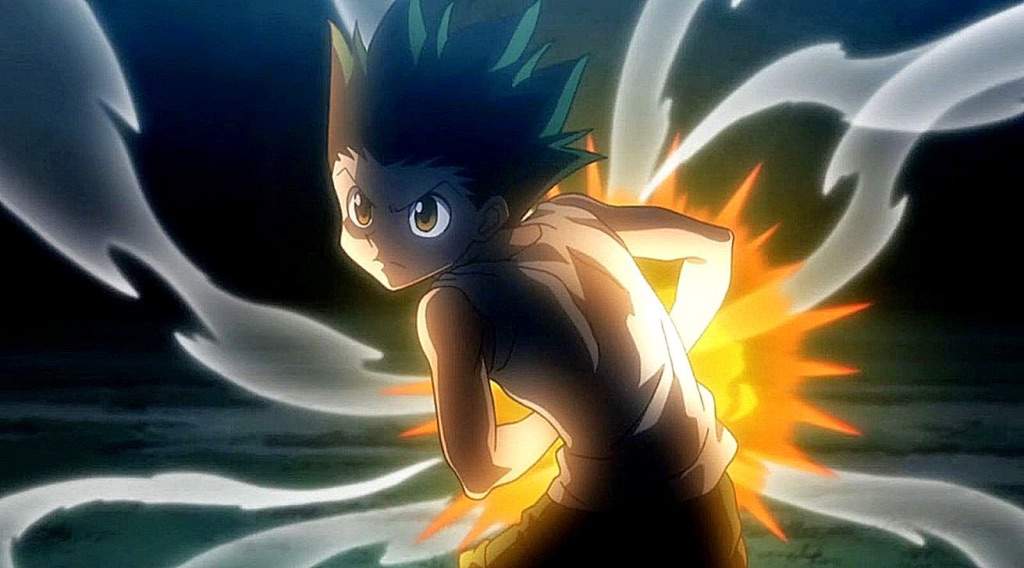
I was jokingly thinking about this today at work as if I were thinking about 'nen'. Nen is an idea I got from a Japanese anime called Hunter x Hunter. Yes, this is a little silly but hear me out. 

Nen is the body's physical energy and capabilities. Differing from the mind's energy, nen is what's used to focus the body, keep it in shape, and allows you to do strenuous activities for long periods of time without using too much energy. This saves you time by allowing you to work hard in a reasonable time period, getting your tasks done more easily, while at the same time, conserving your body's energies so that not only will you not be tired at the end of the night when you go home, but you might actually be re-energized. 

Yeah, that sounds pretty wacky, doesn't it? What if I told you that nen, or something like it, is actually a real thing? Of course, you won't always feel renewed after a hard day of work. On the contrary, some nights you'll be exhausted, but the point is that you work in such a way that you're hardly ever straining your body, and your muscles are so lucid, that there's hardly anything you can't do, and it won't make you too tired when you go home at night.    

You don't have to be super athletic or strong. Simply standing up straight with no tension is nen. Breathing slow, small, shallow breaths is nen. Even breathing takes up energy. If you breathe too much too fast your body will respond in a certain type of way that is stressful and energy-consuming. Breathing is an essential and important element. "Breathe, breathe in the air," as the Pink Floyd song goes. 

Obviously, these things aren't going to save the world. But they will make your workdays a lot more manageable. Some days will be like today; essentially perfect for all practical purposes. The point is to put this to practice all the other days and not weaken. 

Back to work. The grind continues.

Thursday, June 4, 2020

Democracy Dies in Darknesse

Richard's Daily Quote : Democracy Dies in Darkness (With images ...There's been a lot happening in the last couple of months. Hell, in the last eight days. We've been under quarantine dealing with COVID-19, the worst pandemic since the 1918 Flu, which has killed over 100,000 Americans. On top of that, every night for the last eight nights in a row, people have taken to the streets, risking the spread of COVID-19, to protest the brutal murder captured on video of George Floyd, a nonviolent black man.

We've all seen the brutal murder video on social media or news media outlets. It's hard to watch. An officer was seen with his knee pinned on George Floyd's neck. There were people there who witnessed the murder, and it was filmed by a 17-year old girl. George Floyd died eight minutes later, his last words being, "I can't breathe." He called out to his mother in his dying words. The national outcry for his murder has been resounding over a week later still.

There was a lot of rioting and looting reported and seen on video. However, what the media isn't reporting nearly as much is the peaceful protests that are going on in the midst of the chaos. This is sort of like the 1960s but there's one major difference.

There weren't this many different and varied people all protesting the same thing in the 1960s. That is new. This will lead to many young people becoming 'awakened', tuned in to the systemic issue of police brutality against black men in America. This will lead them to other issues that are important to them, specifically them, their families, and their communities, making them more educated and more effective in voting and voting measures.

This is the way we can change America. Yes, peaceful protests are good. And yes, some of it will be bloody, as were the protests of the 1960s. But, we can't let the media use us, the protestors as an angry mob. We must galvanize our forces, register more voters, and vote in the right people that will help our cause, whatever that might be. In this case, fixing the problem of police brutality against black men, it's going to be a long fight that could take decades.

Police departments are local entities, not national. So to stop this problem, one would have to go to the heart of every single local police department and vote for the right police leaders, and all that could take a very, long, time. But the people demand justice, now! Right? It's not quite so easy. You can quell the chaos, but you cannot stop the wheels of justice. This is where time works for you. That's where all those protesters come in.

Personally, I've been accosted by cops many times. I'm a black man. Luckily, I was never harmed or arrested. But many times as a teenager in Wisconsin, the cops would ask to see what was in my backpack and check it. They were racist cops but I got lucky. They could've been looking for a violent offender one of those times and things could've escalated in some way. I could've been George Floyd. Any black man could. That's the problem. That's why we're enraged.  

As if that wasn't dark enough, there's a small chance that despite all this, the protests won't change much, and more black deaths at the hands of white police officers will take place? What will be the response then? Well, who knows, right? This goes to show that one justice for one death isn't enough and that we must go beyond, into voting measures that will counter this. Am I hopeful? Yes. Optimistic? Yes. But thinking about how bad the protests have been, how the issue has hundreds of years of white racism and hatred, there's a feeling I get that these protests won't be enough, as powerful as they are. Your protest voice is strong, but your voting voice is much stronger. That's my opinion. I thank and value all the protesters. I just wish there weren't so many looters and rioters. Not to mention the businesses burning down their buildings for insurance money. But that's another story the media isn't telling.

Next, it's all one story, it's all apart of one single story, which is ours right now; 2020, winter lockdown, beginning of summer quarantine, COVID-19, George Floyd's death, past 100,000 cases, the second wave has hit, Trump orders military to attack protesters for a photo op at church, Trump Administration stops anything to do with the containment of coronavirus. Although it is morbid to put all of this together, I think it's really important to see it all as one big picture, rather than say, just the protests, racism, police brutality, or just COVID.

When you see it for what it really is, you have to ask yourself one question; What is the turning point for Republicans? At what point will they stop, will they let this President step down or be removed out of office before they give him unyielding powers? Is there never a time where they will say no to this President, will they ever relinquish power, will they ever realize that they're fueling this frenzy, this angry mob, and to what purpose? I'm no conspiracy theorist but it doesn't take a genius to know that the Republicans will do anything it takes to keep control and to keep Trump in power. They've proven that time and again. And anyone who disagrees with Trump gets fired and replaced by a croony who does agree with everything he says. It's no wonder democracy is dying in darkness. We have a Nero rather than a President of the United States.

This is why your vote matters more than ever. That, and taking part in your community, helping them in whatever ways you can. You can protest if you want, but voting is even better. If you do both, then you are a Godsend. Don't forget that great things happen out of catastrophe. We will achieve great things together as Americans in the coming days, months, and years. This lodestar democracy has seen better days but with your help, and more importantly, your vote, America can live up to its name, and we can live in a better, more nuanced America, where the peoples' voice is heard as well as felt.

Saturday, April 4, 2020

The Moon is a Harsh Mistress

The Moon Is a Harsh MistressThe Moon is a Harsh Mistress, the novel by the classic and famous Robert Heinlein is one of those classic science fiction novels, from the golden age of science fiction, the 50s-60s. TMIAHM was initially released through magazine installments, later as a full novel. The novel won the Hugo Award for best science fiction novel in 1967, during the height of the flower power hippie movement.

Which was great timing for Heinlein to write this book. For you see, this book is a good story, but it is also an exercise in literary politics and/or political economy, particularly libertarianism. So it makes sense that Heinlein would publish and write books with this flavor of politics during the 1960s when many young people would be exposed to these, then new ideas for them.

Let's start with the story. This is a story about revolution. A lunar colony on the moon is taking control over the colony, giving it to the people [in this case, our narrators/main characters], and saying, "screw you," to Earth, and all the Earth countries that won't recognize this new regime. 

The new regime comes to be through a particularly striking main character; a sentient supercomputer who befriends the narrator and his two friends. The supercomputer, named Mike, is so lifelike, but the fact that he wants to help humans stage a revolution and succeeds in helping them do so, makes him a lot like a computer Pinocchio. What does he get out of it? Friendship really is all. It's worth it.

The narrator, the main character as well, is a guy named Manuel, who's first language seems to be Russian, so he speaks in a sort of broken English not unlike what you would see in Slavic languages. Sort of like the slang in A Clockwork Orange. The first couple of pages reading it is sort of strange, but then you get a feel for it, and just go with it. After all, you can't expect everybody you talk to, to speak in perfect English, better get used to it. Mannie is Mike's technician, and he isn't a much of a political guy, but he gets roped into this. 

By a woman of course. Wyoming Knott-Davis. She's a beautiful blonde. For a while, she uses advanced technological makeup to make her look African while she's in hiding, complete with an afro. But she's blonde most of the time. She gets Mannie involved with politics, after Mannie saves her from a blood bath, as you see a political secret meeting against the Warden took place, and it was raided by Dragoon Troops, the Warden's hired goons. The action scene that took place in that instant was classic military science fiction, complete with laser guns, blood, and gore. I liked the scene a lot and expected more of this. Ironically, there isn't much actual fighting and action, at least not till the very end. But our three characters needed one more person to help them realize their mission. 

Enter Professor Bernado de la Paz. He's an old teacher who's taught nearly half of Luna. He describes himself as a Rationalist Anarchist, which basically means that the government has no existence but for the acts of responsible individuals, "tries to live perfectly in an imperfect world." He's the true radical of the group but realizes that the need for the government does indeed exist and achieves it.

Some info on the world-building here. Luna is seen as a sort of Old West, and the revolution is reminiscent of the Bolshevik October Revolution as opposed to the American Revolution. People are sent to Luna either to escape bad fate, live a new life, or they're prisoners. Luna is short on women so women are heads of families and families are composed of 'line marriages,' giant families that pool all their resources together. Once when Mannie is in North America he gets arrested for polygamy, as he has multiple wives. Women are so scarce on Luna that they never get hurt, or even raped. They're safer there than on Earth surprisingly, even among criminals.

So we have these characters achieve a revolution. Now what? They do their best to form a government, get the rest of the world to recognize their new independent status. Failing that, they 'throw rocks,' at the Earth, hitting most of the countries with heavy bombs, carefully shot from Luna with the help of Mike, a ballistics expert, who even gets his own human persona, which he creates using images on a screen. What a computer! Probably the best-written computer character I've seen in science fiction. 

After the Earthlings get mad at Loonies [yes that's what they're called] for bombing them, they retaliate by indoctrinating some prisoners and drugging them, telling them that unless they kill as many Loonies as possible, they won't get their freedom back. This results in an epic bloodbath on Luna. More Loonies die in the firefight that ensues, but they kill all the Earthling intruders and come together more than ever. In a blaze of glory!  

Realizing that they failed, the Earthlings concede Luna's independent status and the mission is complete. It's a great read in terms of story, plot, characters, politics, and philosophy, but the thing that can't be overlooked is that this is just a damn good story. Definitely read this is you're a science fiction avid reader. Don't get me wrong, this is not a masterpiece, but it's important enough that it's a must-read science fiction novel, in my humble opinion. 

On a side note, reading this during the pandemic has me thinking a lot about politics. Could it be that the politics that emerge out of this historic pandemic would shift to a more libertarian sort of state? Something to think about.

"There Ain't No Such Thing As A Free Lunch!", (a common expression on Luna that states one of the main ideas of the book's political system.)

Wednesday, January 29, 2020

Life, Today, Now

Hello, ladies and gents. Back at it with another update on what's been going on in the wonderful world of Figuero. Things have become a little hectic as of late but it's all a-okay for now.

For one thing, I've been switched up from late night 1am closing shifts at work to morning showings. Sometimes I start as early as 9am which is pretty insane for me, considering I've been working 430pm-1am for six years straight. It was tough closing at a retail gig all those nights but here's the kicker, I actually enjoyed it.

Most of the people I work with are fighting hard to get early morning/midday shifts, whereas me, I tried to fight back against the whole morning switch up. But alas, it seems my fate is sealed. I'm a morning guy now. 

That being said, I've officially become a normal member of society.  

Wham, bam, thank you, mam. 

As a night person you never actually get used to morning shifts.  

I'm usually pretty tired but I'll get used to the whole thing.

In other news, I've been reading a lot. I haven't been writing as much as I should be but that's mostly because I've been so tired from work, and as a result, been feeling less inspired. I am still going to finish a much better version of my memoir, as well as write more short stories, in the end, have a short story collection.

I've been reading a lot of philosophy and science fiction as of late. I just finished reading Immanuel Kant's Critique of Pure Reason. Also, I just finished John Crowley's Engine Summer, a terrific 1979 science fiction novel, a coming of age story. It's unlike any other science fiction novel I've ever read. It's not so much a story as it is a metamorphosis of character, quite brilliant really.

Right now I'm reading Kant's Critique of Judgement, his writings on art, beauty, criticism. It's quite a wonderful read. I've learned a lot from Kant. I plan on reading more German Idealism at some point soon. I'm very much interested in reading Hegel. Kant has taught me that to truly understand anything, you have to break it down into simple, easy to understand concepts, define and learn everything from that, then look at the whole as one sort of dialectic. In short, you have to be interested in everything. That's the key to being a great dinner party host, as Kant was.

Also, I've been obsessed with the Beatles for a long time now. Even though I've still been doing the once a week jazz saxophone/guitar duo I've actually been listening to more 60s rock and roll than jazz. Mostly Hendrix, Zappa, and the Beatles. You really can't go wrong with that.

I joined a band but nothing happened with the group so that's done with. It was worth a shot. At some point soon I'll get back to my book review blogs, and I'll be posting my fiction writing on my other blog, ofigueroastories.blogspot.com. That page really needs some new content. Coming soon.

Tuesday, December 17, 2019

Hainish Cycle [Trilogy]

RocannonsWorld.jpg
PlanetofExile.jpg


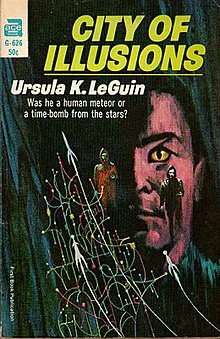
CityofIllusions.JPG


Finally getting back to more book blogs. I just finished reading the third book in Ursula K LeGuin's Hainish Cycle, or trilogy in this case. Her other novels in the Hainish universe are much different from these, her first three novels. I'll describe each novel's plot and simply tell you my thoughts on the works in and of themselves, and then what I think of them as a whole. 

Rocannon's World

Rocannon's World is Ursula K LeGuin's literary debut. It's a science fiction space opera with heroic fantasy elements. Other alien races are similar to fairies and gnomes, who wield swords and axes. The word "ansible" for a faster-than-light communicator, was coined in the novel. The term has since been widely used in science fiction. 

The story begins with a prologue titled Semley's Necklace, which is about a woman who travels to a primitive planet to recover a family heirloom. However, her husband and daughter aged so much while she was on the trip, that when she got back they were dead. It combines Rip Van Winkle fairy tale [a person goes off with dwarves for a short bit, only to find that generations have gone by] with modern [the 1960s] science fiction elements.   

Rocannon is an ethnologist space operator turned warrior turned mystic god. The story has fantasy elements, especially the dialogue of the alien races being similar to the dialogues of fairies and elves in fantasy novels. Also, the idea of the impermasuit, a suit that makes the wearer invulnerable as long as he's wearing it. This seems like a now-classic fantasy trope. The characters ride on flying winged beasts. Rocannon learns how to Mindspeak [Le Guin's idea of telepathy in the Hainish universe], calls his human allies from the League of All Worlds to help him destroy the enemies' base, but because he's telepathic he feels the death of hundreds of his enemies, making him sorry and traumatized.

The first Le Guin novel is stunning. It's short, simple, straight to the point. The writing is simple but not too simple. It's still got the deep meaning behind the text. In this case, we're talking about Le Guin's primary ideas coming out for the first time in novel form. The idea of anthropology for one thing. One great civilization from outer space comes to some other faraway planet, only to find primitive aliens living in the Bronze Age. The idea of the cargo cult. Some evildoers are enemies of the League and then there are good guys like Rocannon, and then there are all the gray areas that would naturally appear. Considering this came out in 1966, I would say its an important book to read in the science fiction canon. Must read science fiction actually. 

Planet in Exile 

Planet in Exile also came out in 1966. The story is set one Werel, the third planet of the Gamma Draconis system. The planet is about to through its long winter. The planet has an orbital period of 60 Earth years. Wold, a chieftain and his daughter Rolery are humanlike aliens indigenous to the planet. Jakob Agat is a young man from a dwindling human colony. Although both races have human genes, the differences between them are enough to prevent interbreeding. The main point A to be B here is that the two races have to come together despite a dispute between Rolery getting involved with Agat, which is forbidden to Wold and his people in their culture. There are invading alien creatures, the Gaal, that aren't hilfs [LeGuin term meaning high intelligence life forms] that take them to war. 

Planet in exile plays back on the action that is at the forefront of Rocanon's world. In fact, the siege part where they're defending their city from the invaders doesn't focus entirely on the action and fighting. There are a few gory moments and descriptions but it's downplayed heavily considering they were at war. 

What Planet of Exile does bring more to the picture is the extension of the LeGuin aesthetic; anthropology, space opera, and believe it or not in 1966, feminist overtones. This novel focuses more on the ecology of the planet itself [something science fiction fans got for the first time from Frank Herbert in Dune]. There is a lot of exposition about the native animals, plants, and races here. 

Also, this is the first time that Le Guin writes a powerful sympathetic female character. Rolery isn't as powerful or as important as Agat, rather it's something of a Pocchahantas story. However, it was a push in the direction she would inevitably take. To write feminist science fiction space operas like The Left Hand of Darkness where she goes more into female identity, gender, sex, and equality. Sure, Planet of Exile is sort of conventional in terms of female characters, but it's also so early in the science fiction canon that it can't go unmentioned how important Le Guin's female characters were even as early as her second novel. 

City of Illusions

City of Illusions came out in 1967 and lays the foundation for the Hainish universe, where most of Le Guin's novels take place. 

The story takes place 1200 years after the Shing has broken the power of the League of All Worlds and occupied Earth. Humans are alive, living as nomads and in small tribes. The Shing suppresses human civilization with Mindspeak, telepathy, and the ability to mind-lie. A descendant from the characters from Planet in Exile is involved in a spaceship crash. The Shing mindwipe him, leaving his mind a blank slate, tabula rasa. They throw him in the forest left to die as practically an infant. He develops a new identity and tries to find out who or what he is. 

I finished this novel today and find it to be the weakest of the three in terms of plot but the strongest in terms of character identity. Falk is a powerful sympathetic character. This novel is primarily about the inner psychology of the main character. Not unlike Frederic Pohl's masterpiece, Man Plus. It's not about action, it's about the soul. That's what matters here. 

The weakest part of this novel for me was the Shing themselves. They were supposed to be a race of Hitlers but they were portrayed as practically harmless. It was laughable in certain aspects considering that all the humans on Earth live in fear of them and animals have learned to talk because of them. The problem was that they were not convincingly evil. For one thing, they do not kill and have an oath about it. A group of 'bad guys' who don't come off as really all that bad is the death of a novel. Keep in mind that it's very hard to write a group of bad guys in novel form. Most of the time there are one or two bad guys in a novel, but a whole race? That's pushing it. This is why the idea of the literary Satan is usually left for poetry and drama.

LeGuin makes use of her own Tao Ching here. She creates a book for the humans that is basically their bible. It's important and was before and now a staple science fiction trope. I also liked how the humans on Earth 1200 years into the future were all nomads, barbarians, savages, yet there were still some peaceful ones living across the apocalyptic wasteland. It reminded me of Fallout 4. Of course, only in retrospect could someone [a video gamer] say that.  

In short, these three novels got me back into my science fiction readings. Le Guin strikes deep with her science fiction. As a whole, the work comes across as a vast cultural societal experience. Le Guin's work makes me think more about the bigger picture. Who really are the good guys in the world? Who are the bad guys? Who are we? What am I? I've already ordered Le Guin's The Lathe of Heaven and The Dispossessed [also in the Hainish cycle]. For now, I'm reading a modern 2013 new verse translation of Dante's Divine Comedy. Watch this space.

Thursday, October 10, 2019

The End

And in the end...

A lot of times I think about the present and think about how it is the end. The end of what? The end of various things, from trivial matters to big, important matters. The end of a jam session, hard day of retail, a day off, a day, a year, a decade, twenty years, thirty years. A life.

I was pretty sad the other day when I found out that Ginger Baker, drummer for Cream, the second rock supergroup after the Beatles had died. He was eighty years old. He lived a full life. Yet it still got to me. Ginger has always been my favorite rock and roll drummer. Before he was in Cream, he played jazz and blues gigs with Jack Bruce. I've seen him on video playing very good straight-ahead jazz drumming styles, something akin to Elvin Jones, Buddy Rich, and Art Blakey, the best of the best in the genre. 

Ginger's death made me think of a lot of other things that have come to an end. My best friend at work got transferred to another store, a promotion for him. We still hang out but a lot less often because his work is a lot farther, and his hours have changed. On top of that, a very good friend of mine seems to be too busy to hang out. The solitude of my home life has been removed due to a new housemate. My attitude about playing open mics has changed. Sometimes I'm just not feeling it and end up not going after practicing said songs to be performed. What's the deal? 

Sometimes I even go to the extremes of going through all my intellectual reading pursuits, discussing it with people in public, and with friends, and think to myself, "What's the point? Will anyone ever care about Littgenstein's Brown and Blue Books? Heidegger's Being and Time? Descartes? The Tale of Genji? A Distant Mirror? Floating Worlds?" The obvious answer is that it might not matter if they don't care because I care, that's the only thing that matters in a sense. Of course I don't mean this in selfish way, rather, so many people are so intellectually bankrupt they wouldn't care to discuss philosophy or literature. But that's subject for another discourse. 

Things change. People change. We have to keep on going, moving on, keep on grooving. The road we travel is a solo path even if you have a wife or girlfriend. Friends are great company but I've found that most of my friends, who are mostly younger than me, are a lot more arrested than myself, meaning, that most of our hangouts consist of me babysitting in a way. It's a sad realization. At first it was, a farce, now tis but a tragicomedy. That's a Marx quote, one of my favorites. 

Now we get to the crux of the matter. Everything you love will be gone one day. Enjoy everything you can and live with no regrets. Even just living life one year ago with the different dynamics is something I miss dearly.

Everything changes but in the end the song remains the same.

Tuesday, August 20, 2019

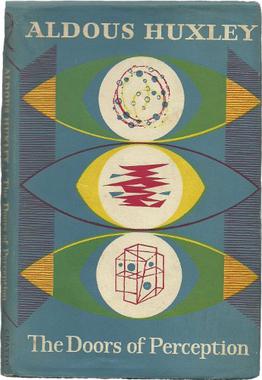
Aldous Huxley's Doors of Perception and Heaven and Hell


Image result for doors of perception heaven and hell book covers
“That humanity at large will ever be able to dispense with Artificial Paradises seems very unlikely. Most men and women lead lives at the worst so painful, at the best so monotonous, poor and limited that the urge to escape, the longing to transcend themselves if only for a few moments, is and has always been one of the principal appetites of the soul.” [The Doors of Perception]

I've picked up a lot of books over multiple library book sales. These are first-come, first-serve sales of mostly paperback but sometimes you can find handsome editions of hardcover novels. I picked up The Doors of Perception because I'm been inspired by the counterculture hippie movement since high school. The Doors was one of my favorite rock bands as a kid.

That's my paradigm. I'm mostly inspired through rock and roll rather than experimentation of drugs. But even as a youngster I was familiar with the Merry Pranksters, Timothy Leary, LSD, Sgt. Pepper, and "turn on, tune in, drop out." And of course, all my favorite American hippie rock bands supported all that stuff. The Doors named themselves after Huxley's Doors of Perception. This edition comes with a separate book entitled Heaven and Hell. Both of these short books explores the mind's remote frontiers and the unmapped areas of human consciousness. 

For starters, one of the main problems with these books is that its no longer apart of the zeitgeist or discourse. The idea of taking psychedelics in order to gain some insight into the spiritual self is no longer apart of the current paradigm. Native Americans were known to use peyote/mescaline for spiritual purposes. But do even they still do that today?  

The young people I know who have experimented with heavy drugs like LSD, mushrooms, cocaine, and heroine are using it in order to escape from their reality. Much like the quote above. They use drugs as a backlash against the real world because they feel they are suffering. Any release into paradise will suffice. Even if it only for but a moment. Drugs and alcohol relieve them from their suffering. Albeit only for a short while until they come down from the high. Knowing that, it's very difficult for millennials to truly understand anything that Huxley is talking about here. But I like a challenge. 

This isn't really a book. Rather its a dialogue of Huxley containing his trip on mescaline. Ironically the trip takes place in the world's largest pharmacy during the early stages of the trip. A bit of comedy for his mescaline trip.  What happens to someone under the influence of mescaline? 

a) Ability to think straight is little if at all reduced. You don't become stupid.
b) Visual impressions are greatly intensified and the eye recovers some of the perceptual innocence of childhood when the sensum was not immediately and automatically subordinated to the concept. Interest in space is diminished and interest in time falls almost to zero. 
c) Though the intellect remains unimpaired and though perception is enormously improved, the will suffers a profound change for the worse. The mescaline taker sees no reason for doing anything in particular and finds most of the causes for which, at ordinary times, he was prepared to act and suffer, profoundly uninteresting. He can't be bothered with them, for the good reason that he has better things to think about. 
d) These better things may be experienced (as I experienced them) "out there," or "in here," or in both worlds, the inner and the outer, simultaneously or successively. That they are better seems to be self-evident to all mescaline takers who come to the drug with a sound liver and an untroubled mind. [Doors of Perception]

Time meant nothing. Huxley mentions there was plenty of time. Not a concern. He also wasn't concerned by spatial forms. This could mean the distance between me to my computer screen as well as the matter of me writing this review and then finishing it. Neither mattered anymore. 

What really is important to him is experiencing and observing.  Looking around the room takes on a new perception and/or concepts of the things we see. Mescaline strips down concepts but allows you to see them for the first time, the beauty of it. 

Man-made art had little effect on him. He was humored by the fact that humans tried too hard to symbolize things. "How dare they?" "The audacity?" This goes alongside paintings as well as classical music composers. He was more mesmerized by nature than by human-made things. 

Heaven and Hell go into religious aspects. Huxley notes that in the middle ages Christians would beat themselves until wounds would fester [flagellants] and starve themselves until they literally saw visions. They would literally see the devil. The festering wounds would cause hallucinations. How about that? 

My favorite concept that Huxley mentions in heaven and hell is a simple one. If you are a mystic/artist, you must learn from the scholar. If you are a scholar you must learn from the mystic/artist. It makes perfect sense. Why isn't the world like that? Why aren't more people across different discipline working together and learning from each other? It makes me wonder what could have been.

The truth is that I would never do any hallucinatory drugs and this book doesn't make a convincing argument for me to find a dude off the street and buy some mescaline off him. Rather, I'm impressed with Huxley's experience. I'll take his word for it and agree that the experience changed him for the better. Even if it only changed him for that day I can see from his writing that it had a profound spiritual effect on him. None of these drugs should be used for recreational purposes. Hell, at this point I don't even believe marijuana should be used recreationally. Maybe I'm getting too old. Maybe I'm a square. Maybe drugs are good for people sometimes.

In the end, we are all riders on the storm.  

Tuesday, June 18, 2019

Solaris


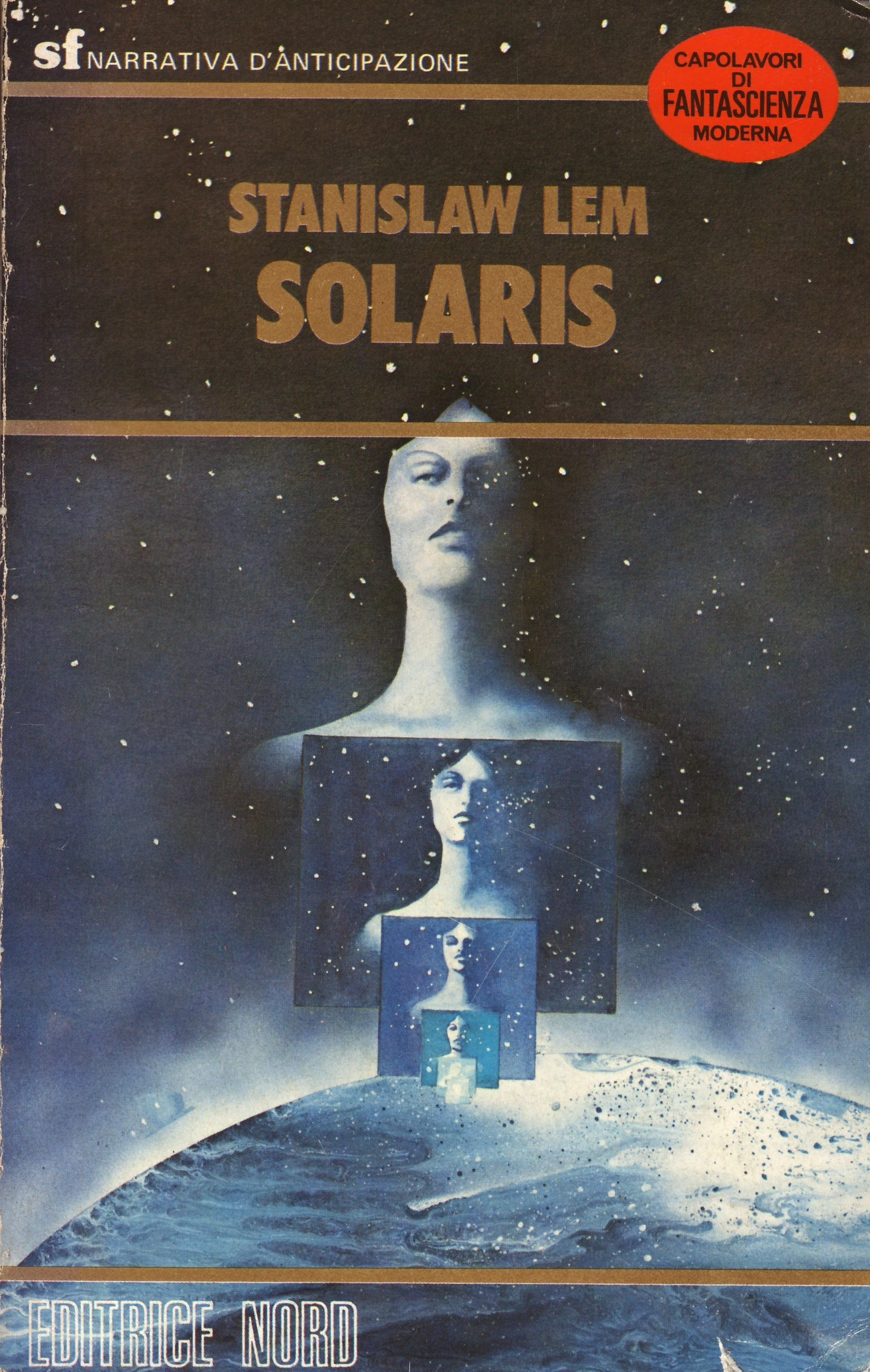
Image result for solaris stanislaw lem book coversSolaris is a science fiction novel published in 1961 [later turned into movies in 1972 and 2002] by eastern [Polish] European science fiction writer Stanislaw Lem. It's a very thoughtful and philosophical novel in the SF genre. I would go so far as to say that this is one of the best science fiction novels I've read this year [so far]. 

The story starts with a psychologist named Kelvin. He goes up to the Solaris space station. Solaris is this planet with two suns, a red sun, and a blue sun. Scientists have been studying the place for years, coming up with all kinds of theories, that are all mostly speculation. 

It turns out that the entire planet's ocean is alive and may or may not be sentient. There's a sense of mysticism when Kelvin starts to see and experience strange phenomena on the space station. This possibly sentient ocean affects the human psyche to the extreme. For example, when he first gets there he meets his co-worker, Snow, and the guy looks like he's scared shitless most of the time, mad as a hatter. Kelvin goes into his room and becomes fearful when he sees a big black woman roaming around. Where did she come from? Who knows.

It turns out that although these scientists might be studying the sentient ocean, it is actually the sentient ocean that is studying them. The other character's experiences are mostly just alluded to. However, our main character Kelvin's experience is told first hand. 

Somehow the ocean creates a human simulacrum of Kelvin's long-dead wife, who committed suicide. He blames himself for the suicide and he can't handle the situation at all. He tries his best but by the end, the psychological trauma has changed him for the worst, forever. But perhaps it is only bad if seen in that one-dimensional view.  Racked by psychological trauma, Kelvin tries to do his job by observation and working with Snow. 

One of the main themes I picked up from Solaris is that no matter what you did in the past and what you're doing now, anything that happened in between can and may come back to haunt you in some form or another. It's basically a classic gothic horror theme in a science fiction skin. However, to just call it as such would be a disservice to Stanislaw Lem. After all, Lem amazes here. What amazes me is how he uses the idea of 'first contact', the alien being a benign ocean, and somehow turning into a thoughtful understanding of the human experience. It's very difficult to explain but Lem pulls that off in this novel.

There are other more philosophical themes as well. In the end, we have a dialogue about an imperfect god. Could this ocean be an imperfect God? After all, the God of the Old Testament was an imperfect God. He must've been because he got jealous of golden calves and demanded sacrifices when he wanted it. The dialogue mentions this. 

The great thing about this novel is that you're expecting some kind of resolution to all this madness and philosophical SF ideas. But in the end all we get is a guy who is sort of in shell shock, not unlike a soldier who experiences war for the first time. Yes, he could go back home and live a happy, normal life, but can he really? Perhaps he'll always be longing for his long-dead wife, even if his dead wife on Solaris was just an alien ghost. It will haunt him forever.  Maybe not.

My favorite thing about this novel is that it sort of reads like a madhouse. Not much really happens. Kelvin only leaves the space station to check out the ocean at the very end. It's a pure adrenaline rush in terms of the fear within the characters. I was sitting at the edge of my seat wondering what would happen next, only to find that not much happened throughout the entire thing. However, Lem makes it a rewarding experience because the way he explains everything is quite wonderful. He's a much more thoughtful science fiction writer, capable of interesting philosophical ideas. This is literary science fiction. Something like Ursula K LeGuin's The Left Hand of Darkness is literary science fiction as well. I could compare it to something like that. 

The English translation I read was a very smooth read. The book reads fast, moving along with action and dialogue. It isn't until perhaps the last 50 pages that the book is littered with tons of fancy science fiction exposition. The exposition is highly enjoyable but I found it to be my least favorite part of the book. However, I do think it was necessary to fully explain Solaris itself. Plus every great science fiction novel has to have some great exposition [imho]. The way Lem uses the end of the book for exposition is interesting. I would compare it to when a book is over but the author wants to add more information to help resolve things, an afterword if you will. This is commonplace in classic science fiction so I'm used to seeing it. 

This was the best Lem novel I've ever read and I plan on reading more of his work. Definitely read this book if you're a serious science fiction fan. Also make sure to check out the 1972 Tarkovsky movie Solaris, as its one of the best science fiction movies I've ever seen. 

Check out my review for Stanislaw Lem's novel Eden below:
https://ofigueroamusic.blogspot.com/2019/02/eden.html

September Sweater Weather

Good evening ladies and gentlemen, hello world. How are you?  It's good to be writing on a good day off work today on a Saturday. Here, ...