Showing posts with label fiction. Show all posts

Wednesday, July 16, 2025

Adam Bede, by George Eliot


He's in love with her, she's in love with him, he's mad at him for being in love with her, and she doesn't realize he loves her. Set in rural England in 1799, the hardworking well-respected carpenter Adam Bede falls in love with the dairymaid Hetty Sorrel, as the upper-class Arthur Donnithorne also falls in love with Hetty, and pursues a relationship with her in a classic tragedy of seduction and betrayal that ends with a happy ending for some but not for all.

First, this novel focuses on psychological realism. Eliot's free writing style allows us to inhabit each and every character, from Dinah, the preacher, to Hetty the dairymaid, to the old folks, the Church goers, the upper-class Donnithorne, to Seth, Adam's brother, and their parents. You get to live within the world of these rural English people. They may not be rich or have much, but they have values like church going, family, eating good home-cooked meals with the family, and hardwork. The other side of this realism is the inner mind of Hetty later with this novel, when she is charged with the crime of letting her baby die and eventually ends up being hanged.

Second, this novel has moral complexity. Hetty isn't exactly a crazed lunatic killer when she lets her baby die of exposure in the woods. She's a tragic character that didn't know where to turn. Arthur isn't exactly innocent when he finds out Hetty is pregnant and he ends the relationship and goes abroad to Ireland, only to come back to find that Hetty let the baby die after she ran away from marriage with Adam. Dinah the preacher seems to be the only true god-blessed person in the book, as she's a preacher and ends up marrying Adam at the very end. So there is some happiness.

Third, this novel has a lot of pastoral imagery of a rural England of old. From Adam working at his carpentry workshop business and working a farm, to Hetty doing chores around the house, to the Church dinner celebrating Adam Bede's success, even the scenery and backgrounds where the characters live in and interact in, is almost like additional characters in and of themselves. 

In addition, this novel includes a lot of Church and Methodist preaching, a lot of it by a character named Dinah. There are many preaching chapters in the novel. Oftentimes, this can slow down the narrative of the novel and prolong the novel. You'll find that Dinah's preaching often overrides the novel itself. This display of religious preaching fervor takes over much of the novel. However, this could be because that's the world in which these characters inhabit, and because that was the world of England in 1799, ultimately making the novel much stronger in its realism.

Ultimately, though, we find that in the end this is a very rewarding experience. We find that Adam's love interest in Hetty was genuine, but that doesn't mean that other men couldn't have been interested in her and courted her. Arthur's remorse after the death of the baby and Hetty's death is lifelong, and Hetty's tragedy is a reminder to society that poor women have no safety net; if they do something wrong and have no money or help like to say, raise a baby, they might have no choice but to give the baby up or worse, a sad reminder that poor women are often the most neglected members of society within any time period throughout history. 

Lastly, although written in 1859, Adam Bede reads like a modern literary novel, albeit even with all the Methodist preaching. I would also recommend reading Eliot's The Mill On The Floss, for a more biographical take also in a rural England setting. And of course, you should've already read Middlemarch, if you've read any of George Eliot's works. 

Wednesday, February 24, 2021

Dubliners

Dubliners by James Joyce is one of the best collections of short stories. Maybe the best ever of all time. Yes, it's that good. 

This is a collection of short stories based on people, their lives, relationships, and the history of their times in which they're living in, Victorian era. It's based in Dublin, Ireland, which is full of alcoholics, Catholics, Protestants, Priests, school children, working people, and rich people of the Victorian style era in which this is written. 

What makes James Joyce's stories here so great and so effective is that he writes a simple style that is easy to read and understand. Not only that, but his stories go somewhere emotionally, something that is very much lacking in modern entertainment like video games, television, and movies where things simply just happen in a linear escapade. 

One of the stories that hit me hard was the one where two friends are talking. One is a bigshot that made it in Europe, traveled everywhere, has a great career, wife, and kid. The other didn't make anything of himself and never left their hometown. We get the idea that the other didn't appreciate his friend because he declined his friends' offer to see his wife and kid, thinking that his friend thinks he's better than him because he's so successful in life. But at the end of the story we find that the successful one with the wife and kid is actually miserable and doesn't like his life. Things like that are impressive in writing, that sort of contrast.  

There's a meta magical realism in James Joyce's writing that is unmatched even by other writers of the same period like say for example, Jane Austen. It's realism but there's always a little something extra, a twist here and there that makes the short stories pop and shine with luster unmatched by other writers of his time period, of even the entire western canon. I haven't completely tapped into and understood this writing style completely, but I will understand more when I read more of his works, the next one being Portrait of an Artist as a Young Man. 

Lastly, a review can't be written without mentioning The Dead, the story at the end. Here we have a party where a wife and husband attend. The husband is ready to have sex with the wife in their hotel room, but he sees she's crying about something so it doesn't happen. It turned out that she was thinking about a boy she loved when she was younger, who was a great singer. Music is very important in Joyce's world. In Ireland. In Europe in general during this period. The husband realizes that his relationship with his wife is actually nothing in comparison with the boy who died loving her. The snow falls outside the window. It doesn't really get more meta than that. 

James Joyce is one of the greatest writers of the western canon. I plan on reading much more of his works: Portrait of an Artist as a Young Man, Ulysses, and Finnegan's Wake. 

Wednesday, February 17, 2021

This Immortal

This Immortal
, serialized as ...And Call me Conrad, is a novel by Roger Zelazny released in 1965. 

"It was abridged by the editor and published in two parts in The Magazine of Fantasy and Science Fiction in October and November 1965. It tied with Frank Herbert's Dune for the 1966 Hugo Award for Best Novel."

It's a short fantastic tale set in a post-apocalyptic world full of mutants and aliens.

In the beginning our protagonist Conrad, who either is or isn't Pan, [a Greek god], takes an alien visitor to a Haitian vodou ceremony. The idea of overmen, or gods, is very important here. The Haitians at the ceremony tell Conrad that his friend is possessed by a devil god named Angelsou. Well, to be fair he was a hired killer. The Haitian vodou section was a good experience reading in science fiction because Haiti isn't mentioned much in science fiction. As a Haitian-American, I find rather that most of the time Haiti is mentioned in popular works, it's always the negative zombies in the fields motif. Here, it was nice to see more of a cultural connection through religion. This shows Zelazny's interests in other cultures and makes his work more interesting other than big dumb objects in the sky of the science fiction pulp fanfare. The notion of tourism comes to mind especially while the characters are traveling in Greece, Rome, and Egypt. 

The story here is nothing special. Other people want our protagonist Conrad to kill someone going on his tour. Conrad doesn't want to do it unless they have a good reason for him to. They don't. So the whole point of the book is for Conrad to figure out why they want to kill him and how he's going to protect this guy from getting killed. It's very simple but the suspense is built up throughout the entire short novel. It's quite the usual linear novel that builds to a climax. 

Again, like in other Zelazny novels, it's not the story that is all that great or important, rather it is the writing style. Zelazny writes a fast, expressive exposition and dialogue that keeps you on the edge of your seat. There's a lot of fast action scenes in this novel. One of my favorite parts was when they attacked and captured by cannibals. And then some anthropologist who became leader of the cannibals pitted their vampire-god against Conrad, but it ends up being Husan, an Arab who ends up doing the fighting. 

Zelazny really got me when I found out they had to fight a vampire. But it turned out that the cannibals keep this guy locked up in a cage and only let him out to eat humans and drink their blood. So he's of course being taken advantage of even though his people see him as a god. Not only that but he's also a fat slab of 350 pounds that can barely move. However, what gives him his godlike physical abilities is not only his drinking of blood, which is the reason why he's called a vampire, because he drinks the blood, but also the cannibals give him drugs that numb any pain that may be inflicted upon him. He's basically a fat beefcake that feels no pain when fighting. But the fight was lackluster. It turned out that Husan had poison on his finger tips and although he got his ass kicked, the poison at some point finally kicked in and our vampire god dies in one instant. Anticlimactic to say the least but it does move the story along quickly. Simply put, it was written that way. 

At the end we still don't know what Conrad is. What we do know is that he is or isn't Pan. Also the novel begins and ends in the same way. Conrad and his girlfriend are just hanging out. Which is a good place to begin AND end a story. 

Tuesday, January 5, 2021

Pride and Prejudice

Wow, just wow. From the very first couple sentences I was captivated by this book. The way the men are characterized, the way the girls are portrayed emotionally, the weariness of the mother to marry off her poor three daughters. The father who has to deal with them. You begin to see that this isn't a novel, it is rather much very like real life. If you're single, then you know that your mother is wondering if you have a girlfriend when she calls.


That's where Jane Austen captivates me. This work of fiction is rather like real life. The way the characters say things but they really mean the exact opposite of what they say, that is what happens in real life too! This was one of my favorite aspects of the book.

What do girls want? To be loved and married and all that good stuff, to marry a man of good looks, status and prestige, of wealth and land ownership, of upright jovian bearing, who will treat them right and love them, that's what Jane Austen says.

But how to they achieve that, being but a girl of low social status, no money, and possibly not even the best looker? Well, that's where things get complicated, and the devil is in the details. It turns out, that sometimes, even if a man and woman like each other, they might love each other too, but only if they can truly find each other, I know that sounds corny but it's what happens in this book. How does a couple find each other? Turns out just by talking to each other. Sometimes it turns out that they loved each other upon first meeting but sometimes it doesn't click instantly, and their love only intensifies from there. You had me from the very beginning, you really got me.

Girls just want to get married and then have fun.

Saturday, January 2, 2021

Pavane


One of my favorite last moments with this book was the warm hearted story at the end where the young man seeks refuge in a old world town. Him, being a new worlder, has no one to help him, but a girl sees him and decides to show favor upon him. That's heart warming. 


You only get to see a few glimpses into the world Roberts has created here. The Church runs everything, they're using technology that is pretty much steampunk aesthetic but won't share it with the rest of the world. 


A heretical Priest forms his own faction and becomes a leader. A Queen forbids technology from entering her country in order for her people to have more time to believe in Truth and Reason, a Renaissance of sorts, that could have actually happened in an alternate history timeline simulacra. 


There's train haulers that know every nook and cranny of their machines. There's a lot of mini stories in Pavene, but in addition to interesting story lines and narrative development, there's also a lot of very well written sentences, sentences written in an elegant, stylistic way. Roberts is a stylist after all. And he never failed to deliver. In some ways I could compare this with some of William Gibson's stories from Burning Chrome or Neuromancer, but that wouldn't do it justice, it's simply a thing  entirely on its own, it's Pavane: 


a stately dance in slow duple time, popular in the 16th and 17th centuries and performed in elaborate clothing.

a piece of music for a pavane.

"the repertory consists mainly of pavanes and galliards"

Tuesday, April 21, 2020

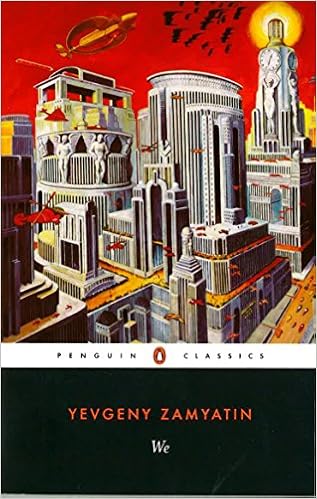
We

We: Yevgeny Zamyatin, Clarence Brown, Clarence Brown ...
We is a classic dystopian science fiction novel by Yevgeny Zamyatin, written in 1920-1921, published in 1924, via English translation in New York. Yevgeny was part of Russian proletariat writing groups and eventually requested to leave Russia as many writers were being persecuted, thus resulting in the death of their writing careers. In fact, when Zamyatin died, there was no mention of him in Russian papers. Most proletariat Russian writers made livings elsewhere like in Paris, England, and the United States. 

The novel depicts a world of harmony within a totalitarian system. There is freedom but only ruled by the Benefactor and activities are ordered along to the 'Table,' a system that controls every hour of everyone's day. In some respects, there wouldn't be a Brave New World by Huxley if it weren't for We. No 1984 by Orwell. No Handmaid's Tale. There wouldn't be all those tons of young adult dystopian novels either. We did it first. 

I will focus on the plot first because it's pertinent to the ideas therein. 

We is set in the future. Probably far future because they have space ships. It's said that there was a great war over something, which is only alluded to in the novel. A resource perhaps. It resulted in the use of weapons of mass destruction, leaving the world outside One State a post-apocalyptic landscape. 


The main character is D-503, a space engineer. People have no names, rather they are identified by number. It takes place in an urban society constructed of glass, which helps for mass surveillance. The people march in step with one another and wear uniforms.  Life is managed scientifically; everybody eats at the same time, works the same time, has recreation hours at the same time, and they even have scheduled times to have sex with partners they can sign up for, rather than of their own choosing. People think with science, logic, and reason above all. The formulas people use are ones devised by the One State, their form of government, lead by the Great Benefactor, their supreme leader.

One State has conquered the whole world. They're now building a spaceship in order to invade and conquer other planets, thus bringing One State across the universe, helping their cause, and increasing their numbers. The ship's project engineer D-503 writes a journal that is meant to be brought along the spaceship when they go to another planet.  

D-503 lives in a glass building like all the others. His partner, O-90 is deemed too short to bear children and is upset by this. His best friend is R-13, a guy who reads his poetry verses at public executions. On an assigned walk, D-503 meets I-330, who flirts with him without being properly assigned. I-330 is a careless free spirit; she drinks alcohol, smokes cigarettes, has casual [not assigned] sex. Every guy has met a girl like I-330, that footloose, and fancy-free girl. In short, she's doing everything that you're not supposed to do in One State. D-503 is appalled but intrigued at the same time. He continues to see her. 

D-503 starts to have a lot of freedom through I-330 and starts to have dreams, which the One State describes as mental illness. "What's wrong with me doc?" "You've found out that you have a soul, for which there is no cure." That's my favorite line in the book because it has that edge of snarky satire as well as philosophical ramifications that goes back to the Greeks. It works well. 

Slowly, I-330 reveals that she's part of an organization called Mephi, which plans to bring down One State. O-90 wants D-503 to illegally impregnate her but in order for her to stay with the baby, she has to leave One State and go beyond the wall, where primitive humans live, complete with coats of fur. 

The last journal entry details the 'Great Operation,' a brain surgery of sorts, that targets the brain with x-rays, so they can function as 'tractors in human form.' It basically makes you more of a vegetable. Removes imagination. Once D-503 gets the operation he runs to the Benefactor to tell him about the Mephi operation. I-330 and her associates are sentenced to death under the Benefactor's machine, which literally melts the human body. A  death ray.

But the novel ends on somewhat of a good note. The Mephi operation is doing well, birds are repopulating the city, and people start acting out against the regime. One State's survival is left in doubt. The book ends with a strong manifesto; just as there is no highest number, there can be no final revolution. 

 Now we get some ideas. 

First, the writing style can, at certain times, be quite a satire. There's one scene early in the book where a woman is playing the piano and people are watching and listening to her play. At one point during the impromptu performance, which is already rare in this society, D-503 starts laughing uncontrollably because music is such an unstructured improvised form that most of the citizens just aren't used to. 

The scene with the doctor is my favorite in the book. "You have a soul. There is no cure." That's a great satirical moment, a great laugh. Of course, it was true, D-503 had indeed, somehow developed a soul through his new girlfriend, I-330. 

The idea of having sex only with assigned partners and only at certain days and times is also a laugh. Did they also forbid masturbation?

There are philosophical ideas at work here too. In fact, the doctor scene isn't just a satire, there's a religious tone to it as well. The idea of the soul separate from the body and mind goes back to Plato and Aristotle. This is used in fiction to good effect. The fact that D-503 developed a soul rather than being born with one is another note on satire. 

The idea of a conformist culture where everybody is happy [for the most part One State is happy] should be considered utopian, right? Well, the thing that makes One State a dystopian novel rather than a utopian one is the fact that One State not only wants to take away freedoms [which is fine because most of the people are cool with that], but One State also wants to get rid of imagination. In We, imagination is the mind-killer rather. If the citizens of One State were allowed to imagine this would be an entirely different novel. 

Lastly, this is one of the important and critical works in science fiction, particularly in the dystopian canon. I initially read this on the recommendation of a Russian friend of mine. I'm glad I read it because it's truly a great story and it stays with you. This isn't something you read and forget about a few months later. It's that important of a book. Considering the way governments are run today you will find that Yevgeny Zamyatin's ideas still ring true to this day. For just as there is no highest number, there can be no final revolution.

Thursday, April 9, 2020

Human, Ghoul, Zombie

Hey everybody, how's the quarantine life going? Here, I'd like to share with you a fictional short story I wrote that was inspired by the virus. It's called Human, Ghoul, Zombie. It's going to be a series, maybe eventually the theme would be written into a novel. You can read it here; Human, Ghoul, Zombie

Thanks for reading. Keep social distancing and stay healthy! We will get through this together.  

Sunday, March 15, 2020

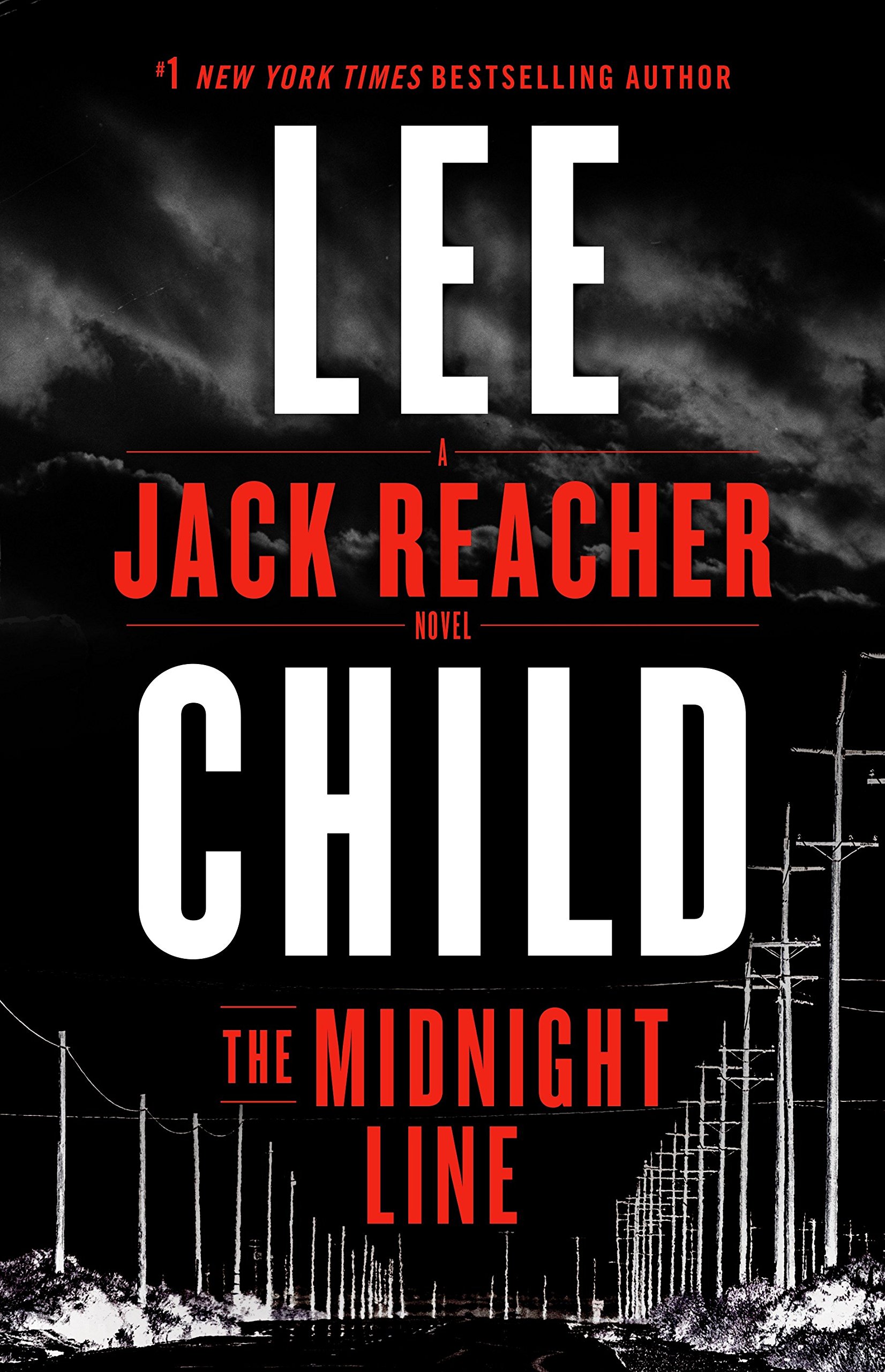
The Midnight Line [A Jack Reacher Novel]

Image result for the midnight line jack reacher book coverThe Midnight Line is a Jack Reacher novel written by Lee Child in 2017. Let me start out by saying this is my first Jack Reacher novel and it is a great one. I would even say superb. Before this, I was familiar with Jack Reacher only through No Middle Name, Child's short story collection about Jack Reacher. That was very good too. But not as good as this novel. 

Okay, so the novel takes place with Reacher somewhere in the midwest. He goes to a pawn shop and finds this ring, the catalyst for our entire story. The ring is engraved with the initials S.R.A and it's from West Point. The very same school Reacher graduated from back in the day. Reacher knows it's a woman's ring because it's tiny. He goes on a quest to find the woman, return the ring, and make sure that she's safe. Because the only reason a West Point student would sell her class ring is that they're in some sort of dire straights and/or trouble. Right? Right. 

As far as suspense thriller versus action this novel is more on the suspense thriller side of things. Which inevitably means its a more serious book. More serious than the next novel in the canon, Blue Moon. But there are still good fights and an incredible climatic takeover and/or heist moment in the end. Jack goes through all kinds of clues, traveling, following, and occasionally beating the crap outta anyone who gets in the way of his mission, to find the woman who owns the ring. One guy even gets his head blown off. Talk about over the top.

The action is simple and straight to the point. It actually reminds me of the action scenes I've read in Cecelia Holland's intense historical fiction novel fights. Except I believe Lee Child knows more about the actual machinations of guns and how and they work. Short, fast, climactic, and brutal in some cases. It's a good writing style. I've learned a lot from it. There's a lot going on stylistically in this novel that Child does.  Also, keep in mind that this novel doesn't feel like he's just making it up as he's going along. [Even if he actually did that.]

The prose is short, simple, and sweet. It's all simple-minded plotting and narration but there's a continuous momentum that keeps the book running from page 1 all the way to page 368. This is a longer novel than your typical suspense thriller. And despite that, it never loses momentum. You want to keep reading until you find out more. You keep reading, find out more, and that propels you into more reading. Well, you get the picture. I read almost half the novel in one day off work. It's that good. It's a great example of popular writing that keeps the readers wanting more. Hence the fact that Lee Child has written twenty-something of these Jack Reacher novels. Not all of them are as good as this one of course. 

So Reacher goes on to find a Private Investigator who is also looking for the woman. An Asian cop is trying to take down a low-level criminal involved in the case. The woman's twin sister gets involved. The Super Intendent from West Point looks back at the woman's records and finds information about her. She's ex-military, been to Iraq five times. Honorably discharged, Purple Heart, face wound. Her twin is so beautiful you don't want to look away. Serena Rose Anderson is the other one.  Hooked on drugs. Has three cowboys look after him in some cabin the woods. A former boyfriend who OD'd himself. No good news.

What we find out throughout the novel isn't quite as much of a big reveal as you'd expect. Nothing truly surprising happens. Rather, it's the way the story is told that is memorable and remarkable. There are touching scenes in this novel. Some that are even very sad. There's a lot of good one-liners from the characters, especially Reacher. 

"I need to pay Arthur Scorpio a visit. He lied to me about Porterfield, and he told two separate people to shoot me from behind a tree. He crossed the line. It's not going to end well for him. He's going in the tumble dryer." 

The actual story, narration, characters, plot, and actions are all very simple. But the delivery and result of all the work put into this are top-notch. Overall, I would say this is one of the better fiction novels I've read this year. Again, it's all simple-minded, and perhaps anyone with decent writing skills could write like this or at least something like this. But it takes Lee Child's drive and will to write an action-packed Jack Reacher story with emotional gravitas. Bravo.    

Much recommended. Better than Blue Moon, the most recent book by Lee Child.

Wednesday, January 29, 2020

Life, Today, Now

Hello, ladies and gents. Back at it with another update on what's been going on in the wonderful world of Figuero. Things have become a little hectic as of late but it's all a-okay for now.

For one thing, I've been switched up from late night 1am closing shifts at work to morning showings. Sometimes I start as early as 9am which is pretty insane for me, considering I've been working 430pm-1am for six years straight. It was tough closing at a retail gig all those nights but here's the kicker, I actually enjoyed it.

Most of the people I work with are fighting hard to get early morning/midday shifts, whereas me, I tried to fight back against the whole morning switch up. But alas, it seems my fate is sealed. I'm a morning guy now. 

That being said, I've officially become a normal member of society.  

Wham, bam, thank you, mam. 

As a night person you never actually get used to morning shifts.  

I'm usually pretty tired but I'll get used to the whole thing.

In other news, I've been reading a lot. I haven't been writing as much as I should be but that's mostly because I've been so tired from work, and as a result, been feeling less inspired. I am still going to finish a much better version of my memoir, as well as write more short stories, in the end, have a short story collection.

I've been reading a lot of philosophy and science fiction as of late. I just finished reading Immanuel Kant's Critique of Pure Reason. Also, I just finished John Crowley's Engine Summer, a terrific 1979 science fiction novel, a coming of age story. It's unlike any other science fiction novel I've ever read. It's not so much a story as it is a metamorphosis of character, quite brilliant really.

Right now I'm reading Kant's Critique of Judgement, his writings on art, beauty, criticism. It's quite a wonderful read. I've learned a lot from Kant. I plan on reading more German Idealism at some point soon. I'm very much interested in reading Hegel. Kant has taught me that to truly understand anything, you have to break it down into simple, easy to understand concepts, define and learn everything from that, then look at the whole as one sort of dialectic. In short, you have to be interested in everything. That's the key to being a great dinner party host, as Kant was.

Also, I've been obsessed with the Beatles for a long time now. Even though I've still been doing the once a week jazz saxophone/guitar duo I've actually been listening to more 60s rock and roll than jazz. Mostly Hendrix, Zappa, and the Beatles. You really can't go wrong with that.

I joined a band but nothing happened with the group so that's done with. It was worth a shot. At some point soon I'll get back to my book review blogs, and I'll be posting my fiction writing on my other blog, ofigueroastories.blogspot.com. That page really needs some new content. Coming soon.

Thursday, November 21, 2019

What's a brotha to do?

What's up ladies and gentlemen of the interwebz. It's been a minute since I last wrote a post. I've been on a blog/writing hiatus for a while now. The reason? A lot of work at the main retail gig mostly. Lately, I've been getting these long six-day work weeks. Eight hours, six days a week. They're exhausting but hey, I think they call that a job. 

I've been reading a lot. I recently finished The Brothers Karamazov by Fyodor Dostoevsky. Nearly 800 pages! At one point I was averaging about 100 pages a day. I'm currently reading the Canterbury Tales by Geoffrey Chaucer. Bring on more classics of the western canon! Brothers Karamazov is such a great work with so much gravitas that I think it deserves to be reread in a couple years if not sooner. 

The Canterbury Tales took me a long time to get into. For a while, I contemplated reading it but instead got hooked on video games for a few days. I've been playing a lot of Overwatch within my last two days off, leaving me in a kind of zoned-out, zombified, sort of state. The game is fun but it gets to be a little mind-numbing after a while. I've been in gaming limbo. Most of the time I don't play games at all but every now and then on days off, I play a lot. Missing out on precious reading time on days off.  

Actually, if I don't read pretty often [every day] my mind starts to wander and drift off into this kind of zoned-out mode. What can I say? I have to stay engaged in the literature to feel active in life. I've become such a reader that when I don't read for one-two days, I start to feel not quite like myself. Fiction especially. And philosophy. Literary essays. 

In terms of music, I've been playing weekly jazz duo jams with my friend Jason Thomas. I'll probably post some music from our sessions here at some point soon. The jam sessions have become more improvisational but I would say that we need to increase our repertoire. Especially Coltrane songs. Songs like Afro Blue, My Favorite Things, Naima, etc. 

I had a freaky moment at work during the past week where I met a music student who actually studied with my music mentor, the new music composer Frank Abbinanti. Apparently, Sid studied with Frank for five years [or more] in Chicago before he came out to California to study at Cal Art. This is pretty astounding. I was dumbstruck. This is where I get to say that I believe in God and metaphysics. What are the chances of meeting this guy? Considering that we are both from Chicago and both are mentored by Frank. Apparently, my step-father knows Sid and his father as well from when they used to run a new music orchestra. Wow! How about that? 

Having free time to write a rambling post like this has been great. In fact, I've been so tired from work lately that I haven't had the energy to turn on my laptop and write posts, let alone my usual book reviews. Instead, the last month or so I've been ranting a lot about retail, and my Marxist tendencies, as well as my arrival to class consciousness via retail work. It's a wonderful world. 

Plans for the future? Well, for one thing, I'm going to get back to my usual book review stuff. For another, I plan on going back and working on my first novel, which was written and finished a while ago, but definitely not perfect. I'm actually not satisfied with it and intend on going back to the original version, which didn't have much editing, without messing it up. My problem with my memoir initially was that I finished a rough draft and then wrote a longer, edited version. However, after going over the edited version I realized that it was edited in a wrongheaded way, forcing me to go back to the drawing board. 

Thankfully, I have the original version. Just to explain to you how different the original is from the edited version, the original version is only 50 pages, whereas the edited version is 100 pages. A lot of people have told me that I should submit it to publishers and try to get something done with it. We will see after I rework it again. 

Likewise, I want to write more short stories of a fictional nature. Science fiction and just plain, old, regular fiction. A reader must write if he or she is so inclined. I've been reading a lot of Jack Reacher [the short story collection]  so I'm inspired to write things in that vein. We will see. 

Lastly, it's not that I haven't quite had as much time to write that I haven't written anything. Rather, it's just that I've been damn tired. So tired that I haven't really been playing guitar much. I've stopped attending the bar open mics because I realized their limitations [two songs, ten minutes, buy drinks, too much $] and in fact, when I play and buy drinks there, I'm losing money and free time. In terms of music, I'm more motivated by Frank Abbinanti's musical advice and direction. In terms of writing, I'm very inspired. But sometimes you gotta force yourself to write. Even when you're dead tired. 

The holidays can be a real downer for people. This time of year is hard on workers because most people have to work during the holidays rather than spend time with their families. Sometimes you gotta do what you gotta do. The important thing is to keep doing the things that motivate you and push yourself to get the things you want to be done. If you don't push yourself, nobody else will. 

I've got to keep pushing myself. 

Monday, August 5, 2019

The Silmarillon

The Silmarillion is JRR Tolkien's epic history of the elves of Middle Earth. It was published and edited posthumously by Christopher Tolkien [his son] and an editor in 1977. I somehow don't believe Tolkien would've published this book on his own accord. However, I'm grateful that his son published it because it is a fascinating work of fantasy fiction. 

Where do I start with this? In the beginning, the Illuvatar [the gods of Middle Earth] created the elves, men, and dwarves. The beginning of the story is what kept me reading all 365 pages. I started reading the book on Tuesday and I finished the book on Sunday.

The Ultimate Supreme Badass of Middle Earth is detailed in the first ten pages. His name is Melkor, later called Morgoth Bauglir, aka the Supreme Mother Fucker of Middle Earth. Why is he so angry? Why is he a monster? Well, you see it turns out that Morgoth was a musician, like all the other children of Illuvatar, he was apart of the Valar. Most of the children played the harmonious music of the Ainur, singing sweet songs. However, Morgoth played his own original music. Being a drama queen band leader, he created music of discord, aka death metal complete with blast beats and shrieking vocals. Basically, I see the arrogant evil side of Morgoth in musicians. Even myself but mostly in others. Musicians are real arrogant assholes sometimes. And I thought that was so interesting psychologically that I would say Morgoth is one of my favorite villains I've come across in fiction. He was a disturbance in the music before it is explained that he wised to be called Lord by others. Morgoth is really cool and the way that Tolkien starts his epic history of the elves is described thus: In the beginning there was music and eventually the music turned to discord, eventually leading to the battles that would go on for hundreds of years in Middle Earth. 

The truth about the Silmarillion is that its very thorny. I found it difficult to actually finish reading this book. In fact, I listened to all twelve hours of the audiobook version but it was so difficult to follow that I decided that I should go ahead and read the actual book if I wanted to truly understand the narrative, thus actually 'completing' the book. I had a biased attitude towards fantasy despite reading Harry Potter, The Hobbit, and the Lord of the Rings in middle school. In recent years I've been such a science fiction afionado that I sort of look down upon fantasy as a children's genre. Although this is a heavy book that you could knock someone out with it is still a children's novel after all. Young adult if you will.

The book reads like a manuscript history of everything that could, would, and ever happen in Middle Earth. But mostly the Silmarillion is about the Silmarils, these jewels that the elves created that had infinite power. They're very similar to the Rings of Power that Sauron creates later but more beautiful and the elves will die for them. They proceed to fight over them for hundreds of years. This happened here, this happened there, and these are the people who did it, up to the 39th line [Aragon, called Strider later, Lord of men] of this family name and that family name. There is so much going on and it's so hard to follow that most people who attempt to read this book either stop reading it at some point and give up or take a very long time to finish it. Luckily I finished the book in a few days through some very intense reading sessions. Dedication I guess.

There are certain aspects of fantasy writing that I learned are very important to the genre. Here are a few. First, you have to create your own language for your original fantasy universe. If you have interesting names of characters, places, things, and events that in itself will keep people reading. Tolkien was a master philologist, a master of language and it really shows. Even the most boring parts of the Silmarillion contain a mastery of language. Not only did I learn a lot of new words but I was able to pronounce his own made-up words in my own mind in my own accent but because I listened to the audiobook I already knew how the words were supposed to sound, at least according to the British voice actor. However, I found that my own phonetics in my mind were even better and easier to prounouce. Remember that this book starts with a clash of sound and music. Language is apart of that. In addition, I would say that in a great fantasy novel the dialogue between characters shouldn't be overbearing, but rather that they only say what they need to say, the meat and potatoes of dialogue if you will. That is on display here as well. 

Next, if you want to write fantasy you have to have things happening all the time. And you have to explain it. Sometimes it could be simple things like explaining family lines and other times it will be epic battles taking place between dark lords, elves, and men. The fact that something is happening all the time in the Silmarillion makes it more enjoyable. Although as I said the prose is very dry I can't deny that there is always something happening even if it is just the explanations of this, that, and the other. It can get tedious but the creative imagination is powerful at work here.

Lastly, you need epic battles of struggle, strife, and discord. This book is 365 pages and the climax hits at the 180-page mark. It is a one-on-one duel to the death between an Elvish Lord and Morgoth, a melee duel. Morgoth ends up killing the Elf Lord but not without getting his ass kicked. He gets slashed in the face with a sword seven times. During the entirety of the fight, I imagined epic heavy metal music in the background. Sometimes I didn't imagine it because there were times when I would read the book with music in the background. Most of the time it was heavy rock and roll bands like Black Sabbath and Deep Purple. Now you see why these battles were so much fun. Sometimes the background music was Richard Wagner. Again this is a book about language, music, and sound despite the fact that most of the time reading is a quiet experience except for the turning of pages fast or slow. 

There's a lot of fun facts about Middle Earth here. My favorite is that the orcs are actually bred from elves. There's a love story between two elves who later find out they are brother and sister. You can guess how that ends up. Men were created way after the elves and are called the Followers. Dwarves were created second. The Dwarves played a great role in the battle against Morgoth. Men lived short lives in comparison to the elves and in the end, it was men who helped build Sauron's power through their evil lust for power. Sauron was Morgoth's protege who went on to become the second great dark lord after Morgoth was trapped in the sky [or something] after hundreds of years battling elves, dwarves, and men. Sauron is the main villain in the Lord of the Rings. Learning about his rise to power was fun but he's no Morgoth. He didn't destroy the music of the Ainur. 

Some of the things Sauron is into is very dark. Maybe a little satanic? He builds this temple to serve the dark lord Morgoth and men bring him, people, to burn alive as a tribute. That was quite morbid. He has an epic one-on-one hand-to-hand combat duel but in the end, he loses and flees his body, leaving nothing but a spirit. He is able to take the form of many things. He is able to take the guise of a beautiful person, charming and deceiving his foes. The Eye of Sauron watches over all of Middle Earth, haunting all living things, the Dark Tower presiding over all. Men quake in terror.

In the end, we have a conclusion to the entirety of Middle Earth that is somewhat more satisfying that the end of the Lord of the Rings trilogy [at least from what I remember from middle school]. We find out how the three great wizards of men came to be and how they created the White Council [of elves and men] to counter and watch over all that Sauron does. We have Radagast who is pure of heart and loves animals, who controls and watches over nature. We have Gandalf who is a great leader and friend to men and the half-lings, aka the Hobbits. We have Sauraman who is evil but pretends to work with the good guys while he admires Sauron from afar, seeking all his power and destruction. Gandalf didn't trust Saruman for he already suspected that Sauraman sought the power of the One Ring. And silly Radagast was so sweet that he helped Sauraman find the One Ring by sending all the creatures of Middle Earth in search for it, thinking that it was just part of the plan to keep watch over Sauron. Lastly, we have the pen-ultimate conclusion that it wasn't actually the White Council, elves, men, nor dwarves that ended up saving Middle Earth from Sauron's evil. Rather it was a half-ling, a hobbit named Frodo who, with his friend ended up completing the task that no one else could achieve. Knowing that is very satisfying. But of course, it's written that way.

What a read. If you like fantasy you're going to love this book.

Tuesday, June 18, 2019

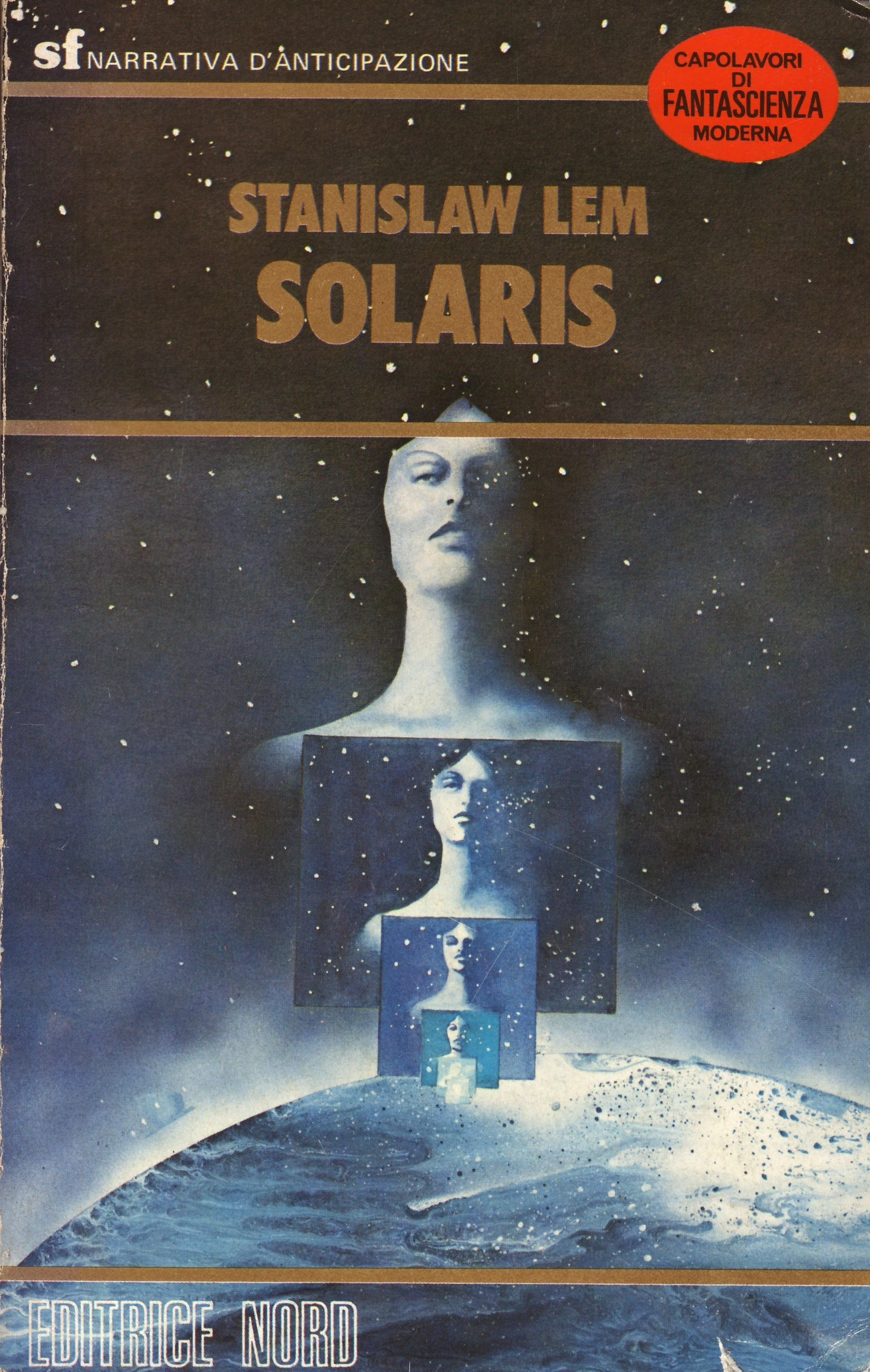
Solaris


Image result for solaris stanislaw lem book coversSolaris is a science fiction novel published in 1961 [later turned into movies in 1972 and 2002] by eastern [Polish] European science fiction writer Stanislaw Lem. It's a very thoughtful and philosophical novel in the SF genre. I would go so far as to say that this is one of the best science fiction novels I've read this year [so far]. 

The story starts with a psychologist named Kelvin. He goes up to the Solaris space station. Solaris is this planet with two suns, a red sun, and a blue sun. Scientists have been studying the place for years, coming up with all kinds of theories, that are all mostly speculation. 

It turns out that the entire planet's ocean is alive and may or may not be sentient. There's a sense of mysticism when Kelvin starts to see and experience strange phenomena on the space station. This possibly sentient ocean affects the human psyche to the extreme. For example, when he first gets there he meets his co-worker, Snow, and the guy looks like he's scared shitless most of the time, mad as a hatter. Kelvin goes into his room and becomes fearful when he sees a big black woman roaming around. Where did she come from? Who knows.

It turns out that although these scientists might be studying the sentient ocean, it is actually the sentient ocean that is studying them. The other character's experiences are mostly just alluded to. However, our main character Kelvin's experience is told first hand. 

Somehow the ocean creates a human simulacrum of Kelvin's long-dead wife, who committed suicide. He blames himself for the suicide and he can't handle the situation at all. He tries his best but by the end, the psychological trauma has changed him for the worst, forever. But perhaps it is only bad if seen in that one-dimensional view.  Racked by psychological trauma, Kelvin tries to do his job by observation and working with Snow. 

One of the main themes I picked up from Solaris is that no matter what you did in the past and what you're doing now, anything that happened in between can and may come back to haunt you in some form or another. It's basically a classic gothic horror theme in a science fiction skin. However, to just call it as such would be a disservice to Stanislaw Lem. After all, Lem amazes here. What amazes me is how he uses the idea of 'first contact', the alien being a benign ocean, and somehow turning into a thoughtful understanding of the human experience. It's very difficult to explain but Lem pulls that off in this novel.

There are other more philosophical themes as well. In the end, we have a dialogue about an imperfect god. Could this ocean be an imperfect God? After all, the God of the Old Testament was an imperfect God. He must've been because he got jealous of golden calves and demanded sacrifices when he wanted it. The dialogue mentions this. 

The great thing about this novel is that you're expecting some kind of resolution to all this madness and philosophical SF ideas. But in the end all we get is a guy who is sort of in shell shock, not unlike a soldier who experiences war for the first time. Yes, he could go back home and live a happy, normal life, but can he really? Perhaps he'll always be longing for his long-dead wife, even if his dead wife on Solaris was just an alien ghost. It will haunt him forever.  Maybe not.

My favorite thing about this novel is that it sort of reads like a madhouse. Not much really happens. Kelvin only leaves the space station to check out the ocean at the very end. It's a pure adrenaline rush in terms of the fear within the characters. I was sitting at the edge of my seat wondering what would happen next, only to find that not much happened throughout the entire thing. However, Lem makes it a rewarding experience because the way he explains everything is quite wonderful. He's a much more thoughtful science fiction writer, capable of interesting philosophical ideas. This is literary science fiction. Something like Ursula K LeGuin's The Left Hand of Darkness is literary science fiction as well. I could compare it to something like that. 

The English translation I read was a very smooth read. The book reads fast, moving along with action and dialogue. It isn't until perhaps the last 50 pages that the book is littered with tons of fancy science fiction exposition. The exposition is highly enjoyable but I found it to be my least favorite part of the book. However, I do think it was necessary to fully explain Solaris itself. Plus every great science fiction novel has to have some great exposition [imho]. The way Lem uses the end of the book for exposition is interesting. I would compare it to when a book is over but the author wants to add more information to help resolve things, an afterword if you will. This is commonplace in classic science fiction so I'm used to seeing it. 

This was the best Lem novel I've ever read and I plan on reading more of his work. Definitely read this book if you're a serious science fiction fan. Also make sure to check out the 1972 Tarkovsky movie Solaris, as its one of the best science fiction movies I've ever seen. 

Check out my review for Stanislaw Lem's novel Eden below:
https://ofigueroamusic.blogspot.com/2019/02/eden.html

Saturday, June 8, 2019

Islands in the Net


Islands in the Net is a science fiction novel from 1988 written by the cyberpunk master himself [second only to William Gibson imho] Bruce Sterling. I found this book on a whim. I randomly typed in best cyberpunk novels on google and it showed up on a couple of lists. So I figured I'd order the book from the library and give it a shot. Risky!

This book isn't what I was expecting. The introduction starts with a woman running on the beach and tripping onto the sand, bruising herself. A walking, talking robot comes to her aid. That first impression is important. I thought the talking robot was such a great first impression. I figured the rest of the book would have science fiction elements like that. I was dead wrong. 

Now, it's not that this isn't true science fiction. It's just downplayed super hard in favor of plot and dialogue. It is, in fact, true science fiction, maybe even cyberpunk if you want to call it that. However, the science fiction aspects of this book are very minimal. Although IITN was written in '88, Bruce Sterling was actually able to predict where the technology would go. Hence drones. This is where the plot lies. 

A civilian corporation called Rizome gets involved with data pirate terrorists. They're trying to get the data pirates to come together and stop bombing each others' countries, stop stealing each others' data and money, etc. They deploy drones a lot to kill people, even causing mini genocides and such. This is a prediction of the future because today we live in a world where drones kill people every day [in the middle east]. We have a female protagonist named Laura, who's married and has a baby daughter. Laura decides to be the lead negotiator between these data pirate groups. She wants to be the 'female man', the woman who does it all, risks it all, and comes back home safely, forever changed, but a glorious welcome home, a legend. 

The plot is actually very innovative and grandiose. The whole time I was reading it I kept thinking to myself, is Sterling going to pull this one off? After all, this is my sixth Sterling novel so I know when he writes a mediocre novel [Zeitgeist]. When great science fiction writers try to write what I think of as contemporary thrillers I am not into it. Think William Gibson's All Tomorrow's Parties. I couldn't even get through ten pages of that. Anyways, I actually really like the plot here. It's cutting edge. However, the way the plot and characters work is mediocre. 

The plotting is done mostly through dialogue. One of the best things I can say about this novel is that all the 'boring narration' is actually quite exciting. I liked to see what happened next in terms of pure action. There was a dog breathing fire, a president of Singapore calling Africans the n-word on national television [which reminds me so much of the Trump White House adminstration], two years of imprisonment, Laura's best friend from college marrying her husband while she was locked up, lotion that turns white people black [and they love it, prediction of tanning] and lots of explosions, which included nude women. Sounds pretty great right? Well, it is. 

But then you notice that Sterling is making you work for all that exciting stuff. In between all the action scenes, there's tons of wooden dialogue. It's not that it's terrible writing, on the contrary this is still decent writing. But there's a sense of just riding the breeze with the dialogue. There's little if any character development throughout the entire novel until the very last twenty pages. That's only because Sterling is obliged as a writer to resolve all tension throughout the narrative.

So yes we have a great ending but it takes you 350 pages to get there. Which I find super long given that it's not very much of a science fiction story, feels so contemporary that its modern, and has wooden dialogue. I didn't care for Laura until the very last twenty pages where she has an epiphany and resolves all her problems, comes to grip with reality through much hardship. She even meets her Optimal Persona while in prison. Don't ask. It's a California thing. 

In conclusion, this book had a very inspiring idea but is poorly executed. Sometimes even the great masters of science fiction miss the mark. In fact, I should've known this wasn't that great of a book because I'd never even heard of it. When I told my dad [an old school science fiction aficionado] that I was reading it he told me that it was almost contemporary. And that's my whole problem with it. 

Worth the read only if you're a hardcore Bruce Sterling fan. Not science fiction enough. The best thing I can say about this novel is that it is very ambitious. Sometimes Sterling hits the mark spot on with the way the world works [economies, organizations, countries, mercenaries, data, etc], even today, some 40 years later. That is remarkable but doesn't justify me thinking of this as a great science fiction novel. However, this cover with the woman on the cover in the 'matrix' is pretty damn cool. Unfortunately, that only tells a small fragment of the actual story. 

Check out my other Bruce Sterling novel reviews below:
https://ofigueroamusic.blogspot.com/2019/01/schismatrix-plus.html
https://ofigueroamusic.blogspot.com/2018/11/the-difference-engine.html
https://ofigueroamusic.blogspot.com/2018/12/holy-fire.html
https://ofigueroamusic.blogspot.com/2019/02/artificial-kid.html
https://ofigueroamusic.blogspot.com/2019/01/zeitgeist.html

Thursday, May 30, 2019

The Epic of Gilgamesh

The epic of Gilgamesh is a trip. Dating back to Mesopotamia around 2112 BC, it's one of the oldest works of writing in human history. Older than anything I've ever read. Of course, the original story was written on clay tablets in Akkadian, but today we have these English translations that may or may not be a direct translation. This makes for interesting reading for the modern reader like myself. 

The story is about a ruthless king named Gilgamesh. This guy is such an asshole that he rapes any woman he wants, and even rapes a woman on her wedding day. Gilgamesh is on the war path, treating his subjects like crap. The old Babylonian gods are mad at Gilgamesh, who happens to be 2/3's god but still a mere mortal. So they decide to create an equal to go up against him and show him whats up. Nobody is equal to Gilgamesh in strength or wit until the gods create Enkidu from clay. Enkidu is first a wild man, living with the animals in nature. Eventually, a hunter finds him and takes him to the city, where he joins civilization. After he realizes that the animals don't like him anymore he sees that he has become apart of mankind. 

Enkidu hears about the bad stuff Gilgamesh does so he challenges him to a fight. They wrestle for a long time until Gilgamesh gets the upper hand and defeats him. After that, they see each other as equals and become fast friends. Sounds like the fight I had between my first bully in middle school.

Later, they decide to take up the mantle of heroes. The two embark on a voyage to this forest that is forbidden to mortals. They just want some trees and show off that they are heroes for going where mortals aren't allowed. They go there and find the guardian of the forest, a monster that guides the forest for the gods. They kill the monster, take some trees, and build a boat out of it and go back home to Uruk as heroes.

Later, the goddess Ishtar attempts to seduce Gilgamesh but he's not interested. She gets mad and has her father, Anu, the god of the sky, creates a monster called the Bull of Heaven to fight Gilgamesh but together, Gilgamesh and Enkidu slay the beast. However, as punishment for killing the Bull of Heaven the gods decide that one of our two heroes must die. Enkidu draws the shortest straw. Enkidu gets sick and tells Gilgamesh of visions of the afterlife before he croaks.

Enkidu's death causes Gilgamesh grief, something he had never experienced before, experiencing the death of a loved one. This causes Gilgamesh to seek out a way to cheat death and live forever. Gilgamesh goes through many trials on his own but finds his way to  Utnapishtim. Utnapishtim is the first Noah as in Noah's ark. The gods created a flood that destroyed all of mankind but Utnapishtim ended up creating an ark that housed two [male/female] of every animal, to save life after the Deluge. After the gods saw that he did this and ended up living after the flood they granted him eternal life. Utnapishtim offers to give Gilgamesh the gift of eternal life but he has to do one thing first: He has to stay awake [without sleeping] for an entire week. Gilgamesh foolishly attempts to do it only to fail spectacularly. He prepares to go home in shame and sorrow. But then Utnapishtim's wife feels sorry for Gilgamesh and has Utnapishtim tell Gilgamesh where he can find this plant that will restore life back to its vibrant youth [pretty much eternal life sort of]. Gilgamesh finds the plant easily, but when he's sleeping a snake comes and steals it [echoes of Satan of the Bible], sheds its skin, and regains its youth, leaving Gilgamesh defeated. 

The story ends with Gilgamesh going back to Uruk and coming to terms with his mortality. He realizes that the city he has will be his everlasting legacy. He realizes that although he and the city may be forgotten the human race will live forever [sort of].  

Well, where do we start? In terms of themes, there's a lot going on here. There's love, friendship, and loss once Gilgamesh becomes best friends with Enkidu, and then Enkidu ends up dying. This is a theme that continues throughout literature even today. When Enkidu becomes a best friend Gilgamesh changes, starts to feel compassion for others. In fact, he had changed so much that when he got the plant that restores youth, he was planning on giving it to the elders of Uruk. I did not see that coming.

Another major theme is the inevitability of death. This is a theme that continues throughout literature today as well. Here we have a guy who tries to overcome death but inevitably realizes that he's a mere mortal like all of us. He comes to grips with reality and sees that the life he has is the only life he will ever have so he should make the most of it and live a fulfilling life. Although Gilgamesh is part god he's still mortal too after all. 

It should also be noted that there are parallels here between Gilgamesh and the Bible. The flood story [called the Deluge here] is completely identical to the story of Noah's ark in the Bible exempting the fact that God didn't make Noah immortal for doing that in the Bible. Also, the poem makes a serpent the thief of eternal life [the youth-restoring plant]. This is identical to when Satan takes the form of a snake and persuades Eve to eat the apple from the forbidden area of the Garden of Eden. It's remarkable that Gilgamesh and the Bible are so similar especially because they were separated by so much time. This shows the legacy of literature. Once something is written down it may last forever [or 4000 years in this case]. And that really shows how important the epic of Gilgamesh is.

Closing thoughts 

This is a fast read but an interesting adventure. It's a classic because it's one of the oldest surviving works of fiction and its themes are still being rehashed today. The gods of these ancient times are still talked about today [usually in conspiracies] and they resonant with the Greek/Roman/Norse gods as well. You see a pattern here with the way the gods behave here as well as in the Iliad, Odyssey, and Aeneid. You see a pattern with the savage violence of monsters here as you do in say, Beowulf. However, I'm just comparing these things to each other because I read them all in one fell swoop. They are all very different of course. I think I would understand Gilgamesh better if I knew more about those ancient times but for now, the long introduction of the translation I had [Penguin Classics] will have to suffice. This is a grand tale worth your attention and time. If you like epics, poetry, fiction, and classics then this will definitely take up space on your bookshelf. You don't forget a tale like this easily because it's just that damn good. 

Sunday, May 5, 2019

The Iliad


Image result for the iliad book coverThe Iliad is one of those majesterial works. It's an all-time classic Western masterpiece, maybe THE classic Western work of fiction. I read Robert Fagles' translation, released in 1996. It's one of the best books of 1996. Fagles brings the archaic ancient fiction story into the modern age with his translation. Sure, it isn't 100% what it is in Greek BUT it stays faithful to it AND reads like beautiful epic poetry. Rather than write my typical book review blog post, I'm going to explain the story itself just a bit and then point out things about it.

I'm familiar with epic poetry. I've read John Milton's Paradise Lost, Dante's Inferno, and the King James Bible. However, Homer's meter and verse are much different, of an older time period, a dramatic, emotive, precursor to all that Renaissance stuff in Europe after the Dark Ages. Homer portrays the Trojan War in a brutalist manner, complete with brains and entrails flying over the battlefield. One thing that Homer makes clear is that once a man is dead, he is dead. Nothing becomes of him. Later in the European Rennaissance, orators, writers, and poets would use Christianity as justification for salvation or damnation after death. Interesting little tidbit.

There's this big Homer debate. Was he blind? Could he write? Was he illiterate? The Iliad is some 2,700 years old and there's evidence that supports that the story was altered, changed over hundreds of years. Homer was the Shakespeare of his time. It doesn't really matter if he was a blind oral poet or one of the very early Europeans who could write on stones or papyrus. In his day you didn't write unless you were of the upper class. Most people were illiterate. So it goes. 

The story itself is about Helen of Troy. The Trojans are safeguarding her in Troy. Meanwhile, the Acheans are coming to kill them, take back Helen, and the city. The fighting description and imagery are so raw, visceral that I joked with my friends that the violence in the Iliad makes me want to throw up. Some of it is pretty gut-wrenching. At times it can be a bit much. But fictional death can't be all that bad, right? Well...

At some point, Patroclus, Achilles' friend [and people have also said that Patroclus was Achilles' lover] gets killed by Hector, son of Priam, king of Troy. Achilles responds by going to war. Thus the Iliad is about the Rage of Achilles. Rage is definitely what it was. He goes on a massive murder spree, even chasing Trojans into the river and killing them there. The gods get involved in all the fighting. This war takes place over multiple years by the way, so this really is epic in proportion, even more, epic than Avengers End Game [review here].  

This is a battlefield where men give speeches, telling their life story and taunting to their enemies before they duke it out in a blaze of glory and honor. A lot of times both sides are fighting harder and harder every time an enemy gets a leader or champion's corpse and tries to defile it, stabbing at it, mashing it up, etc. This leads to both armies gaining fighting strength in order to preserve said dead allies' body so that it can be brought to their family for a proper burial. Not to mention Poseidon's war cry, making troops gain sudden strength and will. 

The gods intervene a lot. They seem to have a big stake in this. Achilles is destined to die if he fights in the Trojan War-a prophecy from his goddess mother Thetis. Hera and Artemis work to undermine the Trojans. Poseidon fights on the actual battlefield for a large portion of the story. Gods shield certain champions from certain death. Zeus makes sure Hector's body gets back to Priam, back to Troy, because Hector was a much-loved champion who always praised Zeus and sacrificed the right amount of goats and pigs in Zeus' honor. This shows that the gods will always be involved in mortal human life. They all have their reasons. But maybe they just don't have anything better to do? 

Achilles kills Hector and defiles his corpse by dragging it around the battlefield, three times around Patroclus' grave. Now satisfied, Achilles holds the greatest games, the last chapter entitled Funeral Games For Patroclus [perhaps a precursor to the Olympic Games]. There are all kinds of contests in honor of Patroclus, fighting to the death even. And there's a huge bbq party, and Priam, Hector's father comes. 

When Priam comes to get Hector's body for Achilles, Achilles goes from rampaging god-like creature to a mere mortal when he realizes that Priam's love for Hector reminds him of his father. You could say that at that moment he is humanized, no longer the raging invincible monster, angry because Agamemnon, lord of men stole his girl. His rage is hard to justify.  Because he didn't fight until the end of the war he caused a lot of death amongst his comrades. 

So what is the Iliad about? Generally speaking its about a city about to get sacked. But in between, we have the making of the origin story of tragedy. The Iliad is usually described as the Rage of Achilles but it can also be thought of as the Tragedy of Hector. Although Achilles was a master warrior and a much better fighter than Hector, Hector, in fact, was much more loved, more loving, and a better man to his family and comrades. No wonder Zeus brought his body back to his family. The caveat is that Priam [Hector's father] had to get the body personally from Achilles, who might have killed him if not for the threat of Zeus looming overhead. Very dangerous move for the King to go out and meet with the enemies, especially right before your city is about to get sacked. 

This story has everything: love, war, death, honor, love, sex, gods, mortals. Robert Fagles' translation is easy to understand. The lines all flow in a cohesive way. You have to read a good translation for the Iliad or any work of ancient fiction. A crappy translation will completely ruin the experience. I enjoyed the Iliad so much that now I'm reading the Odyssey, also the Robert Fagles translation. I've caught the ancient fiction bug all of a sudden. I have plans to read the Aeneid and Beowulf after.

You pick up this book and you realize its a 617-page behemoth. I was deep into it, reading it on and off for a while. I started on page 240 on Monday and by Wednesday I had finished the book on page 617. I managed to read 400 pages in three days in a wild burst of long and super enjoyable reading sessions. The language is simply beautiful. I can't explain the mechanics of the poetry at work here, the line, meter, verse and all that but there's overarching linearity to the prose here. It's like the entire work itself connected in such a way that it was all one long sentence. Like it was an oratory experience. This is one of those books I will definitely come back to. I would love to read other translations. 

How could you rate this book? It's a masterpiece, a complete 5 out of 5 stars. Anyone who disagrees either doesn't like epic poetry or just doesn't get it. That's fair too, to not get it. After all Greek mythology isn't for everybody. But I sincerely believe that this ancient fiction is so magnificent that most people would enjoy it. Especially Robert Fagles' version. Do check out this book, it's one of the best books ever.

Saturday, April 27, 2019

Gateway


GatewayNovel.JPGGateway is a science fiction novel by Frederik Pohl, written in 1977. This is part of a five book series, called the Heechee Saga, comprised of five books altogether. However, I think I'm going to just settle for just this first one.

"Gateway won the 1978 Hugo Award for Best Novel, the 1978 Locus Award for Best Novel, the 1977 Nebula Award for Best Novel, and the 1978 John W. Campbell Memorial Award for Best Science Fiction Novel. The novel was adapted into a computer game in 1992." [wiki] As you can see this was a very important, very good book when it was released back in the '70s.

The book follows a young man with the unusually feminine name of Robinette Broadhead. He's a filthy rich bastard but he's a crybaby. He's sad and depressed even though he has sex all the time, he's filthy rich, and he has new body parts that will give him an extended human life, wow! 

Why is Robinette sad? Why's he an asshole? How did he get rich? Where's the science fiction in this? Why read it? The book unravels like a good mystery. One. Clue. At. A. Time. Just like that, the book keeps you reading by giving you little snippets of information that reveals the why of the story.

The MC [main character] is sad because he had a terrible childhood working in food mines back on Earth. His mother never told him he loved him, and he felt close to her when he was a kid when she would stick a thermometer up his ass to check his temperature when he was sick. [this is why Robinette's homophobic] His father died and he was a nobody until he won a lottery. Enter Gateway. 

Robinette won a lottery ticket that got him to Gateway. Gateway is this space station of an alien race. They left behind all these ships but humans have no idea how to control them, or where they will go, meaning that many people die just to experiment with the aliens' ships. Sometimes they go to other universes, other galaxies. The purpose of Gateway is to learn all the rules, get a crew, and take Heechee spaceships [aliens here are called Heechee, great name, sounds cute] to wherever it will take them, to somewhere where they will hopefully find Heechee artifacts. Hopefully you don't die along the way. The organization running Gateway pays top dollar for artifacts once crews come back from their trips. The thing is that most crews don't come back. Or they come back splattered all over the ship.

So we have an unsympathetic character and a myriad of other characters, most of which don't have nearly as much personality [or lack thereof] in contrast to Robinette. His girlfriend that he meets on Gateway becomes very important to the story. But eventually, Robinette finds out that she's been sleeping with a bisexual guy, which gets Robinette upset. There's a confrontation about it. Robinette responds by beating the shit out of her, knocking out some of her teeth. It's a super brutal confrontation. Domestic abuse, in a science fiction novel, blasphemy, right? Well, I've actually seen worse in other novels, it's just that this type of thing doesn't happen often in science fiction. In Floating Worlds by Cecelia Holland, the main character gets raped. And in The Stars My Destination by Alfred Bester the main character rapes a woman who eventually becomes his wife. So science fiction has tackled these sorts of difficult issues before. I think we have to look back at the time period that it was written to understand why it would be put into the book. Also, we should look at the age of the writer when they wrote it. What were they trying to say? Of course, Robinette apologizes and things are okay, but its that's just because it's written that way. In real life, the woman would've put a restraining order against him.

There's a side story within the main plot that features Robinette having therapy sessions with a robot called Sigfrid Freud. It's all mostly psychobabble but I can understand a lot of what went into those sessions because I've read a little bit of Freud. There's all the typical stuff. It isn't that interesting but it gives you the bird's eye view of Robinette's mind. Why is he so ungrateful even though he has everything? This gives us some reasons why. 

The science fiction elements here aren't super strong but it's good enough for me. There aren't any spaceship battles, or firefights, or any space action until the very end. In fact, Robinette spends most of the book cowering in fear, deciding when and if he should go out on an expedition. After all, a lot of people don't make it back alive, as humans don't even know how any of the Heechee ships work! However, it is that penultimate ending of the book that finally gave me my science fiction fix-at least until I finish reading the Iliad. At the end of the story, we find out that our main character has survived his space expedition only by killing off nine other people, coming back alive as the sole survivor with tons of artifacts, making him one rich, lucky, son of a bitch. Technically he didn't kill them. They're stuck in a blackhole out in the middle of space. But, he's madly depressed now because, in order to be the last one to survive, he had to 'kill' off his girlfriend. Gateway is one hell of a drug. 

The great thing about this book is that you look at the cover and expect some grand space opera adventure. Or a pulp science fiction novel. What you actually get is a psychoanalytical story that involves alien technology. The writing isn't amazing but writing a science fiction story about psychology and alien tech can take you places if you're Frederik Pohl. It's not as good as Man Plus but its worth the read. I haven't completely given up the idea of reading the series, you never know what the future has in store. The novel was short enough for me to read in a few days, definitely worth the read if you're on a science fiction book hunt. I don't think it's necessary to read the full series, as I think this first book works well as a standalone novel.

On AI, Existential Threat, and the Collapse

Good evening ladies and gents. Hope you all had a good Sunday. I wanted to write here a bit more about AI, existential threat, and the Colla...