Showing posts with label aliens. Show all posts

Wednesday, August 6, 2025

Liu Cixin's Three Body-Problem


The Three-Body Problem took the western science fiction world by storm when it was translated from Chinese into English in 2014. Liu Cixin not only wrote an amazing science fiction [and he's the most critically acclaimed Chinese science fiction writer] novel but the novel is also the first eastern novel to earn the prized historic Hugo Award [the best award for science fiction novels], thus becoming a bridge between western and eastern science fiction. 

The Three-Body Problem challenges the western conceptions of science fiction, thus introducing us to different ways of seeing science fiction writing, and showing us how very different the idea of Chinese science fiction can be. Science fiction from different cultures are all very different. British science fiction, French, Polish, German, Russian, and American science fiction are all different, well, Chinese science fiction might even surprise us even more than all of those, simply because we, as westerners have never read any Chinese science fiction. 

Keep in mind that I'm an avid science fiction reader, having read all the golden age science fiction short stories [starting with the 1950s stuff], and all the important sf writers of the 60s, 70s, and 80s. And The Three Body Problem is much different from all of that. This book is great because it is different, it introduces us to a new cultural genre. The Three-Body Problem is just the first part of Cixin's series, there are two other books in this series after, The Dark Forest, and Death's End. 

The story begins with the Chinese Cultural Revolution and follows with protagonist Wang Miao's investigation in a list of suicides. There's this mysterious video game where you have to wear a haptic suit and its virtual reality. The game is connected to an alien civilization facing extinction. The story takes place throughout different points in space and time that keeps the readers engaged to the end. The characters in the game have to dehydrate their bodies in order to survive these great periods of draught and darkness, a unique feature of the game. 

There are a lot of hard science elements. Liu Cixin is an engineer, uses complex astrophysics in an accessible way for the modern average reader, in order to dive deep into the philosophical nature of man's place in the universe. The novel explores how first contact with aliens would go, alongside the ethical dilemmas if Earth was destroyed by the aliens or other humans. 

The story opens with the turbulent violent era of the Chinese Cultural Revolution, which is much different from the western American Cultural Revolution of the 1960s. However, because of the history of America's Revolution in the 1960s, we can see/compare/contrast that with the Chinese Cultural Revolution and learn something from it. There's a deep Chinese cultural connection to this novel that transcends most Americanisms in American science fiction. Liu Cixin loves China, and its easy to see that even from the first page's violence of the Chinese Cultural Revolution, which, by the way, gets you hooked right in from the get-go. We can learn from the way Cixin uses the Chinese Revolution as a way to explore deeper elements of science fiction in an emotional way. 

The book is very strong from the get-go. It keeps your curiosity high and the element of the virtual reality video game is sort of like an anime, another eastern import. The only weakness I can see here is that the English translation may or may not be as strong as how the book really is in Chinese. A lot of people have critiqued the translation and said that it feels wooden, but I think this is how Cixin actually writes and sounds. He wouldn't have wanted a wooden translation put out into the west, and The Three-Body Problem would not have earned a Hugo Award if the translation was off. 

However, I do think that because some of the elements of science fiction aren't your traditional hard American/western science fiction elements, I do think some people will simply not like it. But it's their loss, as the book shows you how different and how great Chinese science fiction can be. While Western science fiction often frames humanity as exceptional and destined for the stars, The Three Body Problem humbles us with cosmic indifference, suggesting we may be merely insignificant players in a universe governed by forces beyond our comprehension or control.

Tuesday, June 18, 2019

Solaris


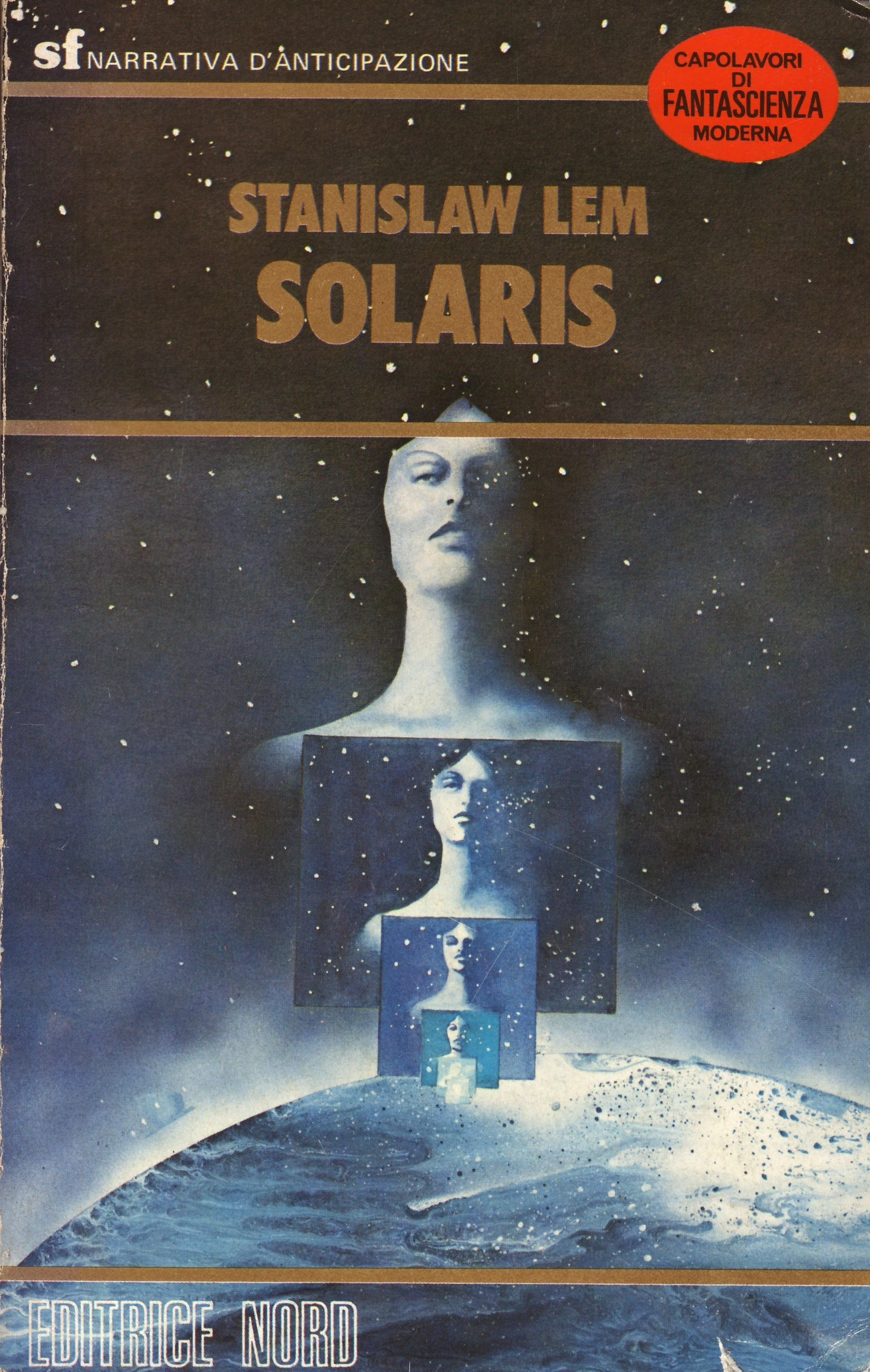
Image result for solaris stanislaw lem book coversSolaris is a science fiction novel published in 1961 [later turned into movies in 1972 and 2002] by eastern [Polish] European science fiction writer Stanislaw Lem. It's a very thoughtful and philosophical novel in the SF genre. I would go so far as to say that this is one of the best science fiction novels I've read this year [so far]. 

The story starts with a psychologist named Kelvin. He goes up to the Solaris space station. Solaris is this planet with two suns, a red sun, and a blue sun. Scientists have been studying the place for years, coming up with all kinds of theories, that are all mostly speculation. 

It turns out that the entire planet's ocean is alive and may or may not be sentient. There's a sense of mysticism when Kelvin starts to see and experience strange phenomena on the space station. This possibly sentient ocean affects the human psyche to the extreme. For example, when he first gets there he meets his co-worker, Snow, and the guy looks like he's scared shitless most of the time, mad as a hatter. Kelvin goes into his room and becomes fearful when he sees a big black woman roaming around. Where did she come from? Who knows.

It turns out that although these scientists might be studying the sentient ocean, it is actually the sentient ocean that is studying them. The other character's experiences are mostly just alluded to. However, our main character Kelvin's experience is told first hand. 

Somehow the ocean creates a human simulacrum of Kelvin's long-dead wife, who committed suicide. He blames himself for the suicide and he can't handle the situation at all. He tries his best but by the end, the psychological trauma has changed him for the worst, forever. But perhaps it is only bad if seen in that one-dimensional view.  Racked by psychological trauma, Kelvin tries to do his job by observation and working with Snow. 

One of the main themes I picked up from Solaris is that no matter what you did in the past and what you're doing now, anything that happened in between can and may come back to haunt you in some form or another. It's basically a classic gothic horror theme in a science fiction skin. However, to just call it as such would be a disservice to Stanislaw Lem. After all, Lem amazes here. What amazes me is how he uses the idea of 'first contact', the alien being a benign ocean, and somehow turning into a thoughtful understanding of the human experience. It's very difficult to explain but Lem pulls that off in this novel.

There are other more philosophical themes as well. In the end, we have a dialogue about an imperfect god. Could this ocean be an imperfect God? After all, the God of the Old Testament was an imperfect God. He must've been because he got jealous of golden calves and demanded sacrifices when he wanted it. The dialogue mentions this. 

The great thing about this novel is that you're expecting some kind of resolution to all this madness and philosophical SF ideas. But in the end all we get is a guy who is sort of in shell shock, not unlike a soldier who experiences war for the first time. Yes, he could go back home and live a happy, normal life, but can he really? Perhaps he'll always be longing for his long-dead wife, even if his dead wife on Solaris was just an alien ghost. It will haunt him forever.  Maybe not.

My favorite thing about this novel is that it sort of reads like a madhouse. Not much really happens. Kelvin only leaves the space station to check out the ocean at the very end. It's a pure adrenaline rush in terms of the fear within the characters. I was sitting at the edge of my seat wondering what would happen next, only to find that not much happened throughout the entire thing. However, Lem makes it a rewarding experience because the way he explains everything is quite wonderful. He's a much more thoughtful science fiction writer, capable of interesting philosophical ideas. This is literary science fiction. Something like Ursula K LeGuin's The Left Hand of Darkness is literary science fiction as well. I could compare it to something like that. 

The English translation I read was a very smooth read. The book reads fast, moving along with action and dialogue. It isn't until perhaps the last 50 pages that the book is littered with tons of fancy science fiction exposition. The exposition is highly enjoyable but I found it to be my least favorite part of the book. However, I do think it was necessary to fully explain Solaris itself. Plus every great science fiction novel has to have some great exposition [imho]. The way Lem uses the end of the book for exposition is interesting. I would compare it to when a book is over but the author wants to add more information to help resolve things, an afterword if you will. This is commonplace in classic science fiction so I'm used to seeing it. 

This was the best Lem novel I've ever read and I plan on reading more of his work. Definitely read this book if you're a serious science fiction fan. Also make sure to check out the 1972 Tarkovsky movie Solaris, as its one of the best science fiction movies I've ever seen. 

Check out my review for Stanislaw Lem's novel Eden below:
https://ofigueroamusic.blogspot.com/2019/02/eden.html

Saturday, April 27, 2019

Gateway


GatewayNovel.JPGGateway is a science fiction novel by Frederik Pohl, written in 1977. This is part of a five book series, called the Heechee Saga, comprised of five books altogether. However, I think I'm going to just settle for just this first one.

"Gateway won the 1978 Hugo Award for Best Novel, the 1978 Locus Award for Best Novel, the 1977 Nebula Award for Best Novel, and the 1978 John W. Campbell Memorial Award for Best Science Fiction Novel. The novel was adapted into a computer game in 1992." [wiki] As you can see this was a very important, very good book when it was released back in the '70s.

The book follows a young man with the unusually feminine name of Robinette Broadhead. He's a filthy rich bastard but he's a crybaby. He's sad and depressed even though he has sex all the time, he's filthy rich, and he has new body parts that will give him an extended human life, wow! 

Why is Robinette sad? Why's he an asshole? How did he get rich? Where's the science fiction in this? Why read it? The book unravels like a good mystery. One. Clue. At. A. Time. Just like that, the book keeps you reading by giving you little snippets of information that reveals the why of the story.

The MC [main character] is sad because he had a terrible childhood working in food mines back on Earth. His mother never told him he loved him, and he felt close to her when he was a kid when she would stick a thermometer up his ass to check his temperature when he was sick. [this is why Robinette's homophobic] His father died and he was a nobody until he won a lottery. Enter Gateway. 

Robinette won a lottery ticket that got him to Gateway. Gateway is this space station of an alien race. They left behind all these ships but humans have no idea how to control them, or where they will go, meaning that many people die just to experiment with the aliens' ships. Sometimes they go to other universes, other galaxies. The purpose of Gateway is to learn all the rules, get a crew, and take Heechee spaceships [aliens here are called Heechee, great name, sounds cute] to wherever it will take them, to somewhere where they will hopefully find Heechee artifacts. Hopefully you don't die along the way. The organization running Gateway pays top dollar for artifacts once crews come back from their trips. The thing is that most crews don't come back. Or they come back splattered all over the ship.

So we have an unsympathetic character and a myriad of other characters, most of which don't have nearly as much personality [or lack thereof] in contrast to Robinette. His girlfriend that he meets on Gateway becomes very important to the story. But eventually, Robinette finds out that she's been sleeping with a bisexual guy, which gets Robinette upset. There's a confrontation about it. Robinette responds by beating the shit out of her, knocking out some of her teeth. It's a super brutal confrontation. Domestic abuse, in a science fiction novel, blasphemy, right? Well, I've actually seen worse in other novels, it's just that this type of thing doesn't happen often in science fiction. In Floating Worlds by Cecelia Holland, the main character gets raped. And in The Stars My Destination by Alfred Bester the main character rapes a woman who eventually becomes his wife. So science fiction has tackled these sorts of difficult issues before. I think we have to look back at the time period that it was written to understand why it would be put into the book. Also, we should look at the age of the writer when they wrote it. What were they trying to say? Of course, Robinette apologizes and things are okay, but its that's just because it's written that way. In real life, the woman would've put a restraining order against him.

There's a side story within the main plot that features Robinette having therapy sessions with a robot called Sigfrid Freud. It's all mostly psychobabble but I can understand a lot of what went into those sessions because I've read a little bit of Freud. There's all the typical stuff. It isn't that interesting but it gives you the bird's eye view of Robinette's mind. Why is he so ungrateful even though he has everything? This gives us some reasons why. 

The science fiction elements here aren't super strong but it's good enough for me. There aren't any spaceship battles, or firefights, or any space action until the very end. In fact, Robinette spends most of the book cowering in fear, deciding when and if he should go out on an expedition. After all, a lot of people don't make it back alive, as humans don't even know how any of the Heechee ships work! However, it is that penultimate ending of the book that finally gave me my science fiction fix-at least until I finish reading the Iliad. At the end of the story, we find out that our main character has survived his space expedition only by killing off nine other people, coming back alive as the sole survivor with tons of artifacts, making him one rich, lucky, son of a bitch. Technically he didn't kill them. They're stuck in a blackhole out in the middle of space. But, he's madly depressed now because, in order to be the last one to survive, he had to 'kill' off his girlfriend. Gateway is one hell of a drug. 

The great thing about this book is that you look at the cover and expect some grand space opera adventure. Or a pulp science fiction novel. What you actually get is a psychoanalytical story that involves alien technology. The writing isn't amazing but writing a science fiction story about psychology and alien tech can take you places if you're Frederik Pohl. It's not as good as Man Plus but its worth the read. I haven't completely given up the idea of reading the series, you never know what the future has in store. The novel was short enough for me to read in a few days, definitely worth the read if you're on a science fiction book hunt. I don't think it's necessary to read the full series, as I think this first book works well as a standalone novel.

Monday, March 25, 2019

Slaughterhouse-Five


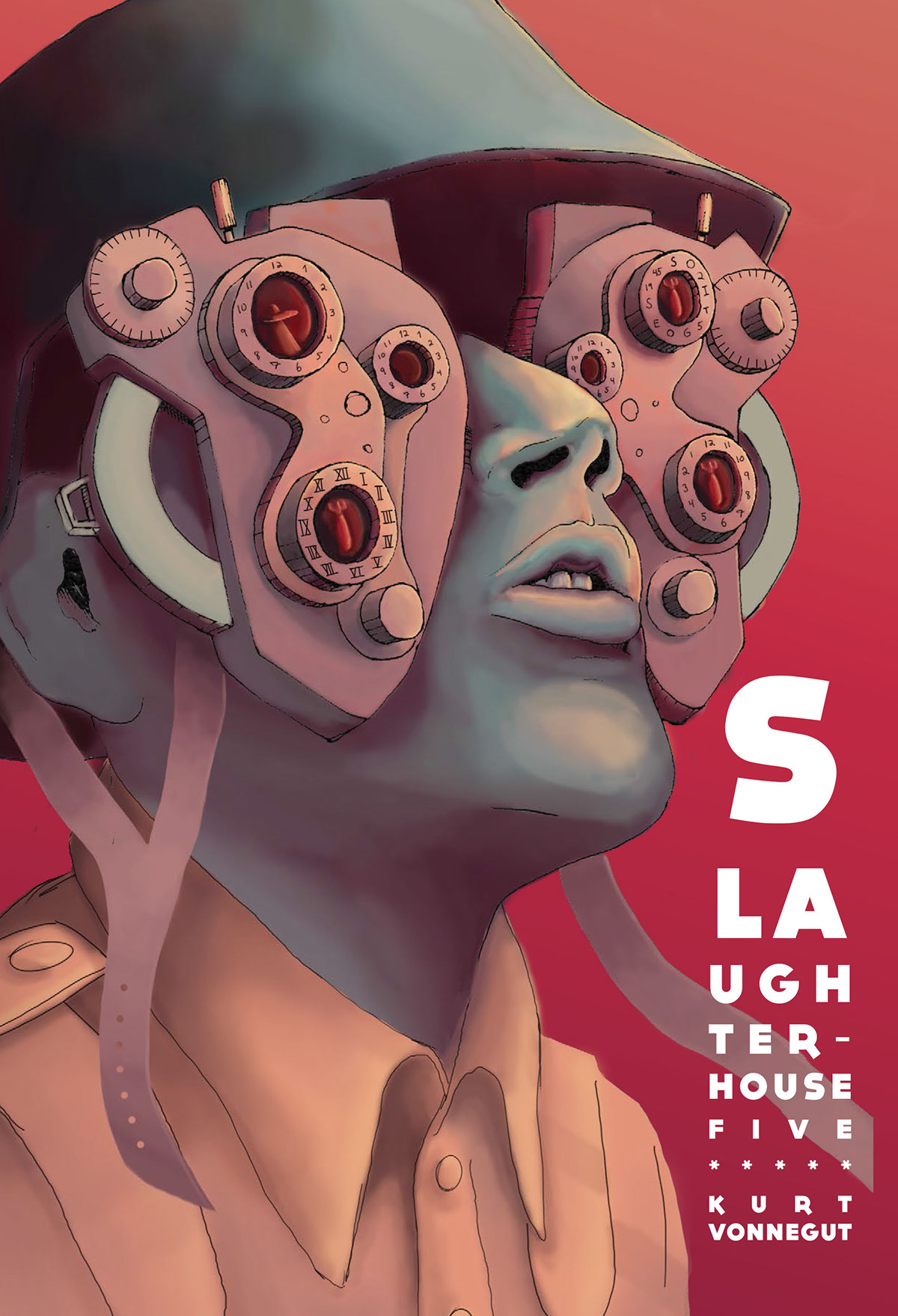
Image result for slaughterhouse-five book cover"All this happened, more or less." [opening line]


Slaughterhouse-Five, or The Children's Crusade: A Duty-Dance with Death (1969) is a science fiction anti-war book about World War 2, written by Kurt Vonnegut. The main character, Billy lives through the Allies' Firebombing of Dresden as a prisoner of war. Vonnegut was actually there in real life, and the book is semi-autobiographical. SH-V is Vonnegut's most influential and popular work, capturing the American zeitgeist in 1969, capturing the spirit of anti-war during Vietnam. Since then its become a classic statement of anti-war, dark humor, science fiction, and satire. 

The book is told in a non-linear way. Flashbacks going backward and forward in time. There's the science fiction element that Billy Dresden experiences. He has been abducted by aliens and now he sees everything in his life through time all at the same time, flashbacks and time travel experiences. On the alien planet, he's in a zoo and forced to mate with a movie star actress. He's 'unstuck in time'. 

Billy was a soldier who refused to fight. A real letdown of an American soldier. He gets captured and is forced to labor at a Dresden slaughterhouse, "Schlachthof-fünf," "slaughterhouse five". Hence the name of the title. The other part of the title's name [The Children's Crusade] comes from a section in the opening of the book about how children are always the ones to fight wars. 

Billy suffers from post-traumatic stress disorder, something not commonly known about back in 1969 but nowadays we are all familiar with because of Iraq and the war in Syria. Billy gets taken under the wing of these aliens, who see in four dimensions, observing all points in the space-time continuum [real science fiction elements, there's also a laser gun]. They adopt a fatalistic worldview. So it goes. That line so it goes is in the book some 106 times. You get used to seeing it. I saw it as dark humor. Your parents died? So it goes. You won a million dollars? So it goes. Nothing happened? So it goes...ad infinitum. 

The style is simplistic. This is probably the easiest book I've read in three months. Its a very enjoyable experience. I finished the book in two days because I couldn't put it down. It was thoroughly entertaining even though the plot isn't linear, its all over the place. 

Coincidentally I'm writing a memoir about myself, growing up in the midwest in the early 2000s with my single parent mother, and I'm writing in a style very similar to this. Although I'm nowhere near as good a writer as Vonnegut. I mean to say that my novella [so far] is kind of non-linear, and the writing style is purposely simplistic. 

It's a very attractive style, it makes you want to read more of the author's work. Another important detail is the fact that the novel reads as part fact [nonfiction] part fiction. Not to mention a lot of dark humor and satire. Initially, when I read the introduction I immediately thought of Voltaire's Candide and Micromegas. However, I find SH-V to be much more emotional than those mostly satirical works from the 1700s, France. Vonnegut manages to combine dark humor, satire, a spirit of the moment [flower power] anti-war message, science fiction, and his own life into a smorgasbord of a novel, and lo and behold, it works somehow.

No doubt there's a lot going on in this novel. In that way, it's not unlike Bruce Sterling's second novel, Artificial Kid, which tries to do everything, but in the end, fails to measure up to its ambition. However, with SH-V we have a work that is highly ambitious and is a winner, not just to me, but to the general reading public today, and from the readers of yesteryear [thank god for online newspaper archives]. This book is considered a classic, deservedly so. 

It's sad, funny, tough, delightful, and it all somehow fits into its own thing, a success. Even if you don't like science fiction I think you as a reader would get a lot out of this book. Its a classic for good reason. 

Recommended if you like classics, science fiction, and war novels.  

Check out my reviews for Voltaire's Candide and Sterling's Artificial Kid.
http://ofigueroamusic.blogspot.com/search?q=candide
http://ofigueroamusic.blogspot.com/search?q=artificial+kid

Monday, March 18, 2019

The War of the Worlds [novel]


Image result for the war of the worlds book coverThe War of the Worlds is a novel written in 1898 by H.G. Wells. The novel has been overshadowed by movies, a record album, and a broadcast in 1938 by Orson Welles, which made people angry because it was never said that the broadcast story was fictional, leaving some people to probably believe that it was true. Or maybe they just didn't like to hear it. The novel was originally written in serial format Pearson's Magazine in the UK and by Cosmopolitan magazine in the US. 

The story is told in the first person. Its told from the narrator's point of view and then tells his brother's account of the invasion. Nothing is known about the characters personally. In fact, here is a novel where hardly anything is known about the characters other than that he's a philosophical writer and married. The aliens land in London and all hell breaks loose, literally. The Martians have a Heat-Ray gun that they use to burn down everything in sight. Not only that, but they have a black poisonous cloud that kills humans too.

The Martians are described first as not having chins. They have small bodies, round heads. They have these tripod mechanical vehicles they use to lay waste to London. They eat kill humans and inject their blood, sort of like zombies.  The narrator spends a lot of time not unlike the nuclear video game Fallout, hiding out in houses, searching for food, and avoiding contact with the Martians with fear for his life, believing his wife to be dead.

The writing style here is formal. Old school. In fact, I could see high schoolers reading this novel back in the 50s or 60s, but today's millennials would not like this in the least bit. They would find the prose wooden. In fact, if I wasn't such a fan of classical books, having gone as far back as Voltaire's Micromegas, Sir Tomas More's Utopia, Cavendish's Blazing World, Francis Bacon's New Atlantis, Jules Verne's From the Earth to the Moon, and Shelly's Frankenstein, I might find this prose to be a bit wooden. 

However, it is precisely because I am familiar with these works of antiquity that I can see how great Well's prose really is. I must admit that some of the words, phrases, and sentences were lost in translation to me. But that only happened a few times, and if I couldn't interpret what Wells was saying, I could always look up the old school phrases online. That's how I got through all those old classical works. Wells knows how to describe things, with a lot of detail. There's tons of exposition, dialogue between characters, but only just bits and pieces of action here and there. In a way he makes you work for all the alien destruction, with tons of exposition. But in the end, you realize that it's worth it. It's a good read. A fun read. 

The War of the Worlds is only science fiction in retrospect. Because science fiction has had such an immense influence on pop culture this book will never be forgotten. Although like I said, the prose doesn't age well. Kids today would not enjoy this novel. Again, this is just my thinking but from what I know about high schoolers today, they would hate this novel. Much in the same way that they would hate Frankenstein. Too many classical words and phrases, that would bewilder them and leave them disliking the book. 

The book touches on a couple of themes that have become commonplace. Invasion, space travel, total war, weapons, natural selection, human evolution, colonialism and imperialism, social Darwinism, and religion and science. Did you get all that? All that basically just means that although this is a thin book with only 194 pages, it is quite a heavy book thematically. 

Lastly, the influence upon other books, movies, TV shows, and music are immense. Edgar Rice Burroughs wrote A Princess of Mars in 1912, not too long after Wells wrote this. It is because of this book that we use the term 'martian' to describe something unknown or otherworldly. This is a great 'scientific romance' [a term used for science fiction back in Wells' and Jules Verne's' day] novel that will continue to influence. As a science fiction reader, I'm obligated to read it. It was an enjoyable experience.

Recommended if you enjoy classical literature and science fiction.

Friday, March 15, 2019

Captain Marvel [film]


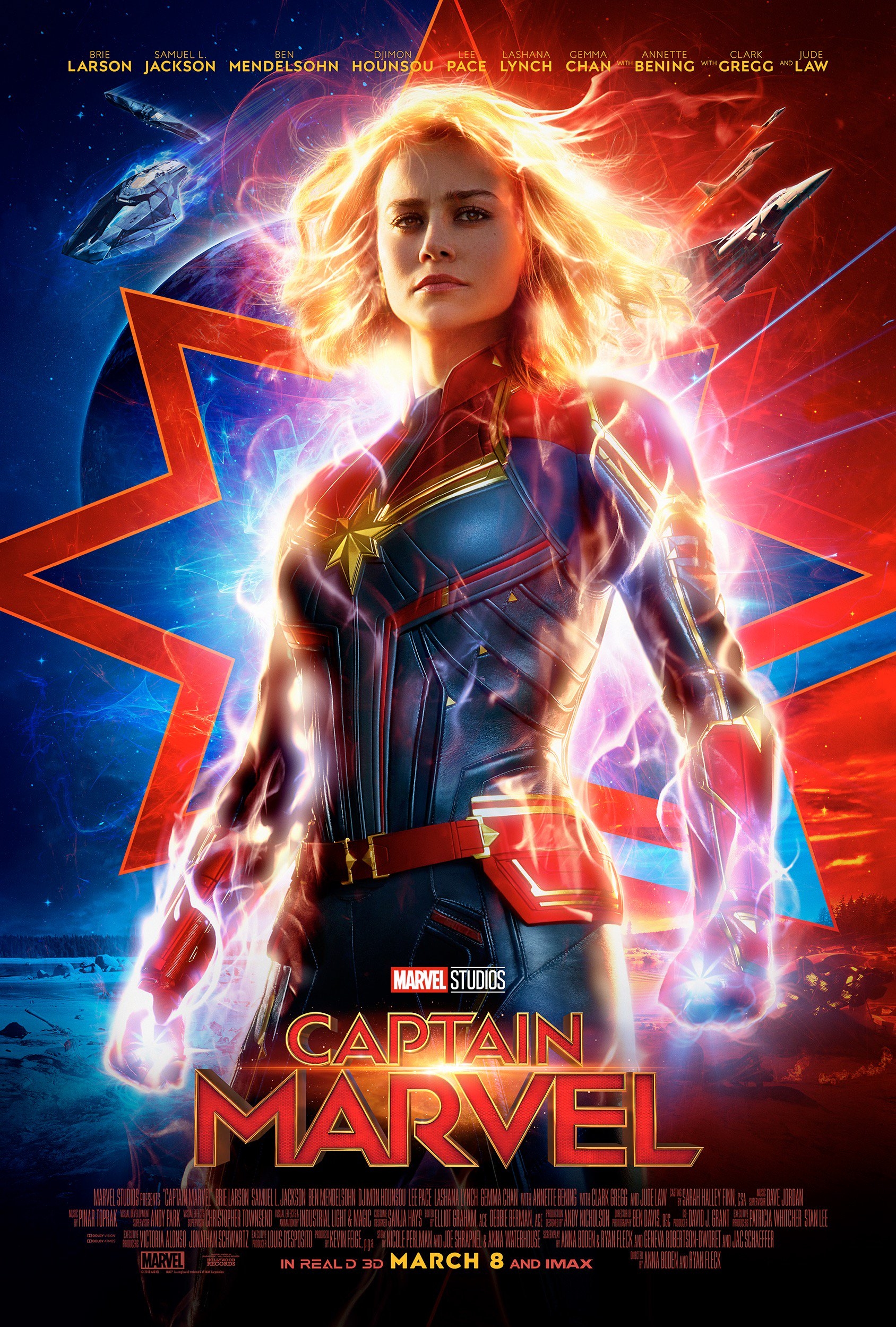
Image result for captain marvel movie posterCaptain Marvel is the latest Marvel superhero flick [2019] about the character Carol Danvers, from the comics. Produced by Marvel Studios and Walt Disney Motion Pictures, it is the 21st film in the Marvel Cinematic Universe. "The film is written and directed by Anna Boden and Ryan Fleck, with Geneva Robertson-Dworet also contributing to the screenplay. Brie Larson stars as Danvers, alongside Samuel L. Jackson, Ben Mendelsohn, Djimon Hounsou, Lee Pace, Lashana Lynch, Gemma Chan, Annette Bening, Clark Gregg, and Jude Law. Set in 1995, the story follows Danvers as she becomes Captain Marvel after Earth is caught in the center of a galactic conflict between two alien worlds." [wiki] 

Captain Marvel has some feminist overtones. But for who and why? I would say Captain Marvel is a female superhero movie for young adult males. Its a movie for fanboys that want to see a girl kick ass. Be a badass. Or something like that. Brie Larson smashes her way through every obstacle in the movie, just like any other male superhero would. No thinking involved. No surprise there.

What makes a female superhero different from a male superhero? Of course, I would have to say feelings, emotions, empathy. This movie has just a little bit of that. I really enjoyed the scenes where Brie Larson wasn't smashing her way through everything, where she could just be herself, a young woman dealing with complicated issues. The most emotional moment of the film for me was when Captain Marvel's best friend, a young female black pilot, and mother, tries to remind her of who she was, before she became a Kree, before Captain Marvel, to remember her past life. That scene was so real, visceral, it felt like something real, not a superhero movie. I actually smiled during that scene because it felt so real. That was some good acting. 

The young Samuel L. Jackson with the CGI young face was pretty cool. He gives the film a 90s Pulp Fiction vibe, minus the afro. The introduction of the Skrulls to the Marvel universe was interesting, as well as the Kree. The Flerkin cat sometimes acted out by a CGI cat was a real treat. Brie Larson does a fine job of being the latest and greatest Marvel superhero. But my 'bro' friends didn't quite agree.

We spent quite some time arguing about the film at lunch. They seemed to think the film had some overt feminist sjw [social justice warrior] vibes and that was a bad thing to them. I agreed but said that was a good thing. Let's put it this way, in today's day and age you can't have a female superhero that isn't a social justice warrior. You're never going to see a female superhero who is alt-right, extreme or anything of that nature. We're still in the middle of the Me Too Movement, where women are making headway in terms of status. The original feminists are much different from the feminists of today. Mostly in the fact that today's feminists will never get everything that they want. However, when it comes to Captain Marvel, Brie Larson does certainly bring a feminist charm. She's an attractive blonde [although she has a flat ass, as my friends complained], and she's used her platform as an actress to speak out against the lack of diversity amongst film reviewers. She even said of one of her films, "if you're a forty-year-old white dude, this movie wasn't made for you." That is such an explicit statement and I commend her for using her power to say whatever the fuck she wants. Most women don't do that because they're not allowed too, because some old white man is in charge of them or their work. What my friends fail to realize is that feminism is here to stay. It's alive and well. Thriving in fact. Brie Larson makes Captain Marvel a powerful female protagonist. I think what Brie Larson represents [sjw's, feminism, more female superhero movie directors, more female superheroes] is more important than her actual acting job done here as Captain Marvel. The RottenTomatoes fiasco was a big part of it. People won't forget about her or this movie. I think it will help her career. She'll find more appealing, better-acting roles, and be respected for it in the long run.

Larson's personality as Captain Marvel isn't captivating but it's still something. Her incredible power isn't some rare occurrence. She isn't a young Rei from The Force Awakens, who suddenly has more power than a Sith Lord out of nowhere. Rather, Captain Marvel is powerful because she got her powers from the Tesseract, an object linked to the Infinity Stones, making her one of the most powerful superheroes in the Marvel universe. When we see Brie Larson beating the crap out of an army of Skrulls, with dead weight chains over her arms, we realize that she's a complete badass. That's what the fans what, a woman who's a badass. Of course, being a woman who's badass gets old, just as it gets old when guys do it. When you pour the beer in the cup and let the foam dissolve, so to speak, you realize that this movie is just another beat-em-up Marvel superhero flick, devoid of anything meaningful or memorable. At the end of the day, it's just another goofy Marvel movie with trained actors running around in funny outfits. However, that doesn't mean that I didn't enjoy it. At least it was better than The Ant-Man and the Wasp, which was totally forgettable. 

Check out my other Marvel movie reviews below. I've seen so many of these superhero flicks. Luckily I saw all these movies free because I have a friend who works at AMC Theatres as a team member. 
 
Antman and the Wasp https://ofigueroamusic.blogspot.com/2018/07/antman-and-wasp.html
Avengers Age of Ultron https://ofigueroamusic.blogspot.com/2015/05/avengers-age-of-ultron-thoughts.html
Avengers Infinity War https://ofigueroamusic.blogspot.com/2018/05/avengers-infinity-war.html
Guardians of the Galaxy 2 https://ofigueroamusic.blogspot.com/2017/05/guardians-of-galaxy-2.html
Spiderman Into the Spiderverse https://ofigueroamusic.blogspot.com/2019/01/spiderman-into-spiderverse.html
Deadpool 2 https://ofigueroamusic.blogspot.com/2018/06/dead-pool-2.html
Thor Ragnorak https://ofigueroamusic.blogspot.com/2017/12/thor-ragnarok.html
Doctor Strange https://ofigueroamusic.blogspot.com/2016/11/time-will-tell-how-much-i-love-you.html
Deadpool I https://ofigueroamusic.blogspot.com/search?q=deadpool
Venom https://ofigueroamusic.blogspot.com/2018/10/venom.html 

Thursday, March 14, 2019

Dawn [from Octavia Butler's Xenogenesis trilogy]

Dawn is the first installment of science fiction writer Octavia Butler's Xenogenesis trilogy. Dawn was written in 1987. In 2000, a collection of the trilogy was released in an omnibus entitled Lilith's Brood, which thanks to my brother I have a copy of. I found out about this novel through Wikipedia's timeline of science fiction. I've read a lot of novels on the list, including some obscure archaic sci-fi like Sir Tomas More, Francis Bacon, and Margaret Cavendish, Kepler's Somnium, which goes back to the 1500s. However, I saw Dawn at the bottom of the list and thought it was worth reading because Octavia Butler is a great writer and I should read more of her work. 

Dawn is an incredibly raw and heavy book. Not for the weak minded. An African American woman wakes up in a room, locked inside these alien walls. She has these captors who turn out to be aliens. The aliens are planning on having our female protagonist Lilith, lead a group of humans onto the Earth, after it was destroyed by nuclear war. They're going to go back to the planet and repopulate and live on the Earth if they can learn how. In the meantime, they have to get along and hopefully not kill each other. The fact that the aliens make Lilith in charge of the human enterprise makes her into some kind of quasi-Messiah figure, meanwhile, the other humans hate her for being more than human, after she'd been tampered with genetically by the aliens.

That plot seems so simple. Hardly. There's not really any action at all in the entire novel. Most of its psychological, scary stuff regarding sexuality, reproduction, DNA, cloning, rape, colonialism, psychology, rights to your body and others' bodies, and freedom. These ideas are also prescient in modern society, for women, and women of color especially. Think about slave times when the white slavemasters used to rape the slave women and there would be mixed kids running around the plantations. There's a lot of serious themes going on here. Themes that are overtly female, that even science fiction gods like William Gibson and Bruce Sterling can't write about well. This is where Octavia Butler shines. Because although the themes are gut-wrenching and uncomfortable as all hell, the writing is so inspired and good, that I have to recommend this book to anyone interested in science fiction. It's such a good read that I couldn't put it down. I finished the book in only two days, two hundred and fifty pages read very easily. 

Butler's prose is quite unique. Although the writing isn't difficult, there's a sense of single-mindedness throughout the novel. Deliberate. It seems that she had a good editor, or edits well herself because no parts seemed to anything, nothing was too long, too short, everything seemed to have been given proper detail and time. Sometimes the sentences can get busy and colorful but again, nothing ever loses its place. Everything seems to fit. The beginning of this book reminded me of Margaret Atwood's Handmaid's Tale, but only in the sense that both novels start with a woman in a cage, in a sense. However, in reality, Octavia Butler is a much more powerful, visceral writer than Atwood. And in fact, Dawn is a much better book than Handmaid's Tale.

This is a great book. So great that it demands your attention to read the next books in the trilogy: Adulthood Rites [1988] and Imago [1989]. Thankfully, I already have a copy of the omnibus Lilith's Brood, so I already have my copy ready when I am ready to read. Definitely check out Octavia Butler's Xenogenesis trilogy. Every book in the trilogy was nominated for the Locust Award, but it was the short story "Bloodchild" that ended up winning the award.

Recommended to science fiction fans and feminists. It goes without saying that Octavia Butler should be read because she's a black female science fiction writer of the new wave of science fiction. As a black woman outside of the genre, she has important things to say about being black and female, that the other new wave science fiction writers can't get away with, no matter how hard they try. There's only one Octavia Butler. 

Check out my review for Octavia Butler's novel Kindred, where a black woman goes through a portal to the antebellum south, reliving the slavery era, https://ofigueroamusic.blogspot.com/2018/01/kindred.html

Next on my list is H.G. Wells' The War of the Worlds. It's a short read, also on the Wikipedia timeline of science fiction page. Looking forward to it. At some point soon I'll continue Butler's Xenogenesis trilogy. 

Sunday, February 24, 2019

Floating Worlds

Image result for floating worlds cecelia hollandFloating Worlds is a terrific science fiction novel from 1975. Written by historical fiction writer Cecilia Holland, this is her first and only science fiction novel. The book is about a biracial woman named Paula Mendoza, who at the beginning of the book gets tired of her lame boyfriend, dumps him, and gets a job working for The Committee, a group of Anarchists who help manage Earth's government. This all happens thousands of years into the future by the way, where pollution has decimated the Earth, resulting in humans living protected in domes. 

Enter Styths. Paula's job is to get the Styths to agree to a treaty, which lasts ten years. The Styths are descendants of the first humans on Uranus, except they've changed, they're mutated. They're eight feet tall mutated humans [aliens], that speak a different language, live in a patriarchal society, are disgustingly racist [use the n-word all the time], and are complete savages who raid Mars and enslave thousands of people. They are described as black skinned mutants with long mustaches. Paula's means of getting the Styths to sign the treaty is a bit scandalous. She seduces their leader, Saba, and has a Styth baby by him, goes to live with him on his home planet, and engages in the politics from there.

Saba is a brutal alien. He beats Paula and at one point even rapes her. However, Paula comes back to him in order to do what she wants, which is whatever she wants, whenever she wants it. She's the idea of the female man, she's the perfect anarchist because although she's working for the Committee, she's also working for herself, and for the Styths, all at the same and sometimes different points in the novel. In a sense, we never get to know whats going on in Paula's head, but we can infer from the prose.

Floating worlds has two very important quirks. First, the prose is very short and simple sentences. Second, Holland never explains anything. There's no legendary or epic grand science fiction exposition here. This isn't Man Plus, with its eloquent and long exposition, a book I read recently. She doesn't explain how any of the technology works, the world of the space opera itself, the psychological state and/or feelings of the characters. Instead, we get a point of view of the character told from these short simple sentences that explain whats going on, and the dialogue between the different characters. It's a unique way to write, a very inspiring one as well when you realize that sometimes all you need is to be simple and straight to the point. In a way, this book taught me a new way to approach writing. I realized that technically, I don't have know the scientific facts that exist in the world of science fiction. You could just have incredible technology and just have it work, that's what Holland does here. None of the tech is explained, the characters just use these advanced computers and they work fine without any fine details.

There's space combat, tribal duels to claim the Styth throne, romance, lesbian sex, lots of sex in general, seduction, betrayal, politics regarding gender, race, and class, war, a fallout Earth that feels like the 1970s, contemporary. The ending itself is almost the same as the ending for Schismatrix, which came out ten years later, which is the main character walking away from the entire space opera in a state of experienced zen-bliss? Perhaps something like describes it.

There are many reasons why this novel is important. The biggest reason is that this is a science fiction novel with a powerful female protagonist. Another important female protagonist I can think of is Lady Jessica, of the Bene Gesserit Order, from Dune. Also, this is a space opera on a grand scale that takes place over twenty years. You're going to be going through long reading sessions to finish this novel [465 pages]. However, you get in a rhythm, pacing if you will, when you learn to enjoy the simpleness of the sentences, and the uniqueness of the prose. I can see how the 80's of writers like Bruce Sterling may have been influenced by this. If not influenced then at least definitely aware. Schismatrix Plus comes to mind especially. Lastly, because of the writing style and lack of psychological detail and exposition, this is a very unique science fiction novel, which makes it worth reading, dusting off the 1970's dust and brought into the light of 2019.

I liked this book so much that I ended up buying a used copy from a third party on Amazon for eight bucks. This is going to be one of my prized SF novels on my book shelf. It's so good that I'm planning on reading Holland's historical fiction at some point in the future too. This is a work of great lost art from the '70s, it deserves to be on anyone's book shelf. 

[my copy has this book cover, the original book cover, pictured top]

Monday, January 21, 2019

Schismatrix Plus

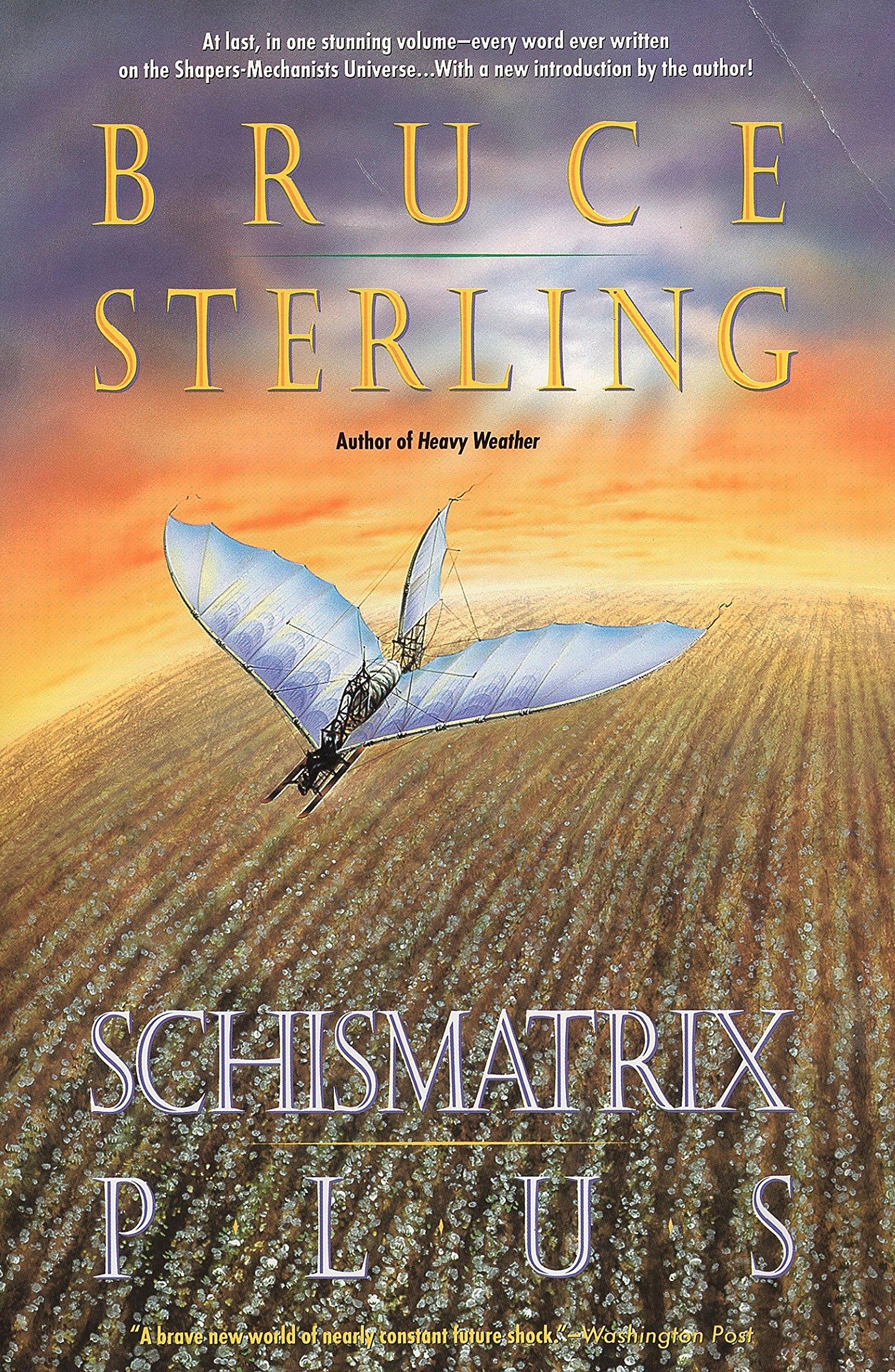
Image result for schismatrix book cover originalSchismatrix Plus is a science fiction novel by Bruce Sterling, written in 1985. Schismatrix was nominated for the Nebula Award for Best Novel in 1985, and the British Science Fiction Award in 1986. This story is set in Bruce Sterling's fictional Mechanist/Shaper universe. Five short stories that preceded the novel are apart of the Schismatrix Plus edition. The novel by itself without the short stories is simply titled Schismatrix. 

What can I say about this novel? It is simply fantastic and got me more interested in the cyberpunk genre. Sometimes you read a book and something hits you in the head. Bang! This is one of those books. This is an important book. Even a week after finishing the novel I still think about it, the themes and concepts, and especially the ending. 

There's a universe of potential, Lindsay, think of that. No rules, no limits.  

The world of Schismatrix is transhuman. There are Shapers, who use biotechnology and psychology to enhance human potential and then there are Mechanists, who apply AI, and mechanical parts to enhance themselves and become more than human. The Shapers/Mechanists are colonizing the solar system, divided in their two distinct philosophies. 

The book follows the life of a sundog [wanderer, ronin] named Ableard Lindsay, a Shaper with diplomatic training and a brilliant liar, which he uses to great effect. "Before the end of the novel his careers have included being a revolutionary, a theatre producer, a space pirate, a xenodiplomat, a scholar and a prophet." [https://www.aleph.se/Trans/Cultural/Art/schismatrix.html] 

"Politics pulls us together, technology pulls us apart".

Throughout the book changes in technology, habitat, economics, and politics change the dynamics of the entire narrative and discourse. There's a similarity here to the Cold War. This was written in 1985 after all, in a different era from mine [2019]. This similarity is shown when the Shapers/Mechanists have problems when they start colonizing neutral zones. 

The changes force people to adapt, their life styles as well as their philosophies. Some people turn to Zen Serotonin, something of a religion where people get high off neurochemical implants. Others are Cataclysts, who think radical change is a good way to open ones' eyes, whether you want it or not. 

The one theme that repeats throughout the novel is that nothing goes as planned. A plan might work out for a little while, but you have to always be prepared to move on, do something else, just in case. 

He mourned mankind, and the blindness of men, who thought that the Kosmos had rules and limits that would shelter them from their own freedom. There were no shelters. There were no final purposes. Futility, and freedom, were Absolute. [From the short story Ten Evocations]


Futility is freedom could be seen as the overarching mood of Schismatrix. Its impossible to plan for the future because the everything's always changing. But the chaos is also affected by our actions. 

In the short story Swarm, we find have a group of symbiotic non-sentient species living in a hive society. Through this story we find out that intelligence isn't needed for long-term survival, and sometimes it might not even be desirable.  

Sterling makes me think a lot about what transhumans would really be like. Transhumanism is one thing but when its mixed with politics, ideology, and power it becomes something else. Its not a cheerful thing. The flaws in ideology is the price paid for continued evolution. 

One thing I'd like to say that this book made me feel like a kid again. The Investors [tall, big, reptilian-like aliens, who are more interested in business than anything else] were really cool and I could see aliens really looking and acting like them. The ending where Lindsey becomes one with the Presence was pretty great too. Although the actual writing in the novel is a bit dense the mind-set of the novel is tough-minded, and never lets you down. 

The ideas here are thought provoking and would do well to be explored further by Sterling himself [not gonna happen] or others with similar ideas for the science fiction canon. Sterling seems to suggest that there wont be one posthumanity, but many and tremendously diverse posthumanities. Our greatest enemy might be our inability to handle infinite possibilities. [https://www.aleph.se/Trans/Cultural/Art/schismatrix.html]

Wednesday, December 27, 2017

The Day the Earth Stood Still

Day the Earth Stood Still 1951.jpg

The Day the Earth Stood Still is a science fiction film from 1951 (in black and white), 20th Century Fox, produced by Julian Blaustein, and directed by Robert Wise. The movie stars Michael Rennie, Patricia Neal, Billy Gray, Hugh Marlowe, and Sam Jaffe. The film was inspired by a short story called Farewell to the Master by Harry Bates. The score was composed by Bernard Herrmann. 

The film is about this humanoid alien named Klaatu. He comes to earth in a spaceship accompanied by an eight-foot robot named Gort. He has an important message for the entire human race. Klaatu only gets to speak through a few sentences before some lunatic shoots him down, blood oozing out of his shoulder. 


Klaatu goes to a hospital where he's treated by doctors ("He makes me look like a third world witch doctor!") but the doctors eventually learn that Klaatu has healed himself with some sort of futuristic healing salve. He gets himself out of there, mysteriously. The government was not going to let Klaatu go off and do his own thing. Their primary directive was to keep him imprisoned for a while, maybe even do some experiments on him (the dark side of political and scientific research). They don't show on-screen how he leaves the hospital, as it was surrounded by army personnel. In the next scene we find him on the streets, at a dry cleaners. He takes a suit with the name Mr. Carpenter on it, his new human identity. 


He finds lodging in a sort of boarding house, using the name Mr. Carpenter. There's a boy and her mother there that Klaatu becomes involved in. He babysits the son while the mother is off with a guy (boyfriend, businessman) who wants to marry her. While exploring the city Klaatu asks the kid who the most important person in the world is. He says some scientist. So off they go the scientists's house. 


Klaatu tells the scientist that he needs to bring together all the greatest minds of Earth to the spaceship and there he will give a speech outlining a message for the future of human civilization. There's some political and relationship stuff that happens in between that happening. For example the mother's boyfriend suspects Klaatu is the alien (who everybody is looking for) and he informs the authorities. Consequently the mother dumps her boyfriend and goes off with our alien main character. 


In the end Klaatu ends up getting shot (again!). But this time Gort (the eight-foot tall robot) comes to his rescue, doing a lot of damage in the meantime. Klaatu had told the mother some alien language words that she needed to say to Gort if anything was to happen to him. So she ends up saying the magick alien words and the robot calms down and stops destroying everything. 


Gort picks up the mother and they go in the spaceship. Gort places Klaatu is some sort of plasma beam generator healing tank and it makes a bunch of melodious beeping and tea-pot kettle-esque sounds. My friends really liked that sound effect and scene in particular, although I found it to be quite jarring. Klaatu starts breathing again and the gun wound is but a blood spot on his suit.


He puts on his alien clothes, this sort of chrome sports suit and goes to address the greatest minds of Earth. He warns them about their tendency to war and violence. And that if they keep it up Earth will be blown asunder. He doesn't really explain much beyond this, its almost as if his entire being for going to Earth was more of a warning, which the Earthlings could construe as a sort of threat. 


After that he goes back into the ship, which causes the smartest Earthlings to run in fear, ironic. Klaatu and the mother fly off into space. The End in cool science fiction letters. Cool movie. 


A movie like this is quite stylized for its time period, the 50's. Its a sort of old school science fiction when science fiction was still in the ghetto. The characters are sympathetic, understanding, and realistic. The idea of an alien coming to warn Earthlings about their nature and future is a popular idea. The movie does a great job of developing Klaatu and the ways in which he learns to work with humans from a different civilization from his own. I think I got a lot out of that idea from the movie. 


The film can be found on Netflix. 

Klaatu: I must admit I'm a little confused. 

Monday, December 18, 2017

Eifelheim


Eifelheim is a book written by Michael Flynn that came out back in 2006. Flynn is a notable third wave science fiction writer that's won some prestigious awards. This book is ancient by today's memelord society (because it came out in 2006). Its a science fiction novel about aliens that visit human civilization in medieval Germany (1340s AD). Meanwhile, in the future these physicists are trying to decipher what happened to the town because it seemed the town of Eifelheim just disappeared right off the map. Its an interesting idea and noteworthy because of how prolix the writing is.

The writing in this book is hard to get around. Difficult. Unrewarding throughout the entire book until the very end. However, that doesn't mean its a terrible novel. Rather, you get to notice how much work went into this projeckt. This isn't just a book. Its about a historical narrative, science and physics, metaphysics, and spiritual searching and reformation. All great ideas rolled into one book. Something like Star Wars could never compete with something like this. Although the book is 'difficult' (for lack of a better term) you get a sense that you are learning about something, all the things I just mentioned.

The book starts with the aliens crash landing in medieval town Eifelheim and this priest named Dietrich is the first human to meet with them. He eventually comes to befriend these demons from the sky and he realizes that they aren't so bad. They crashed and their ship was wrecked. Now they were stuck and had nowhere to go. They needed to get supplies to fix the ship and fly back to their home planet. Simple enough.

Dietrich learns to converse with these grasshopper-like creatures and he comes to the conclusion that these creatures must be saved in the name of Christ. So he tells them about Jesus and converts them. Can humans convert aliens? Michael Flynn says yes you can. Why not, right? Its a novel idea and something I've never seen before in science fiction. That alone constitutes reading the book. If anything its a great idea. Of course it makes you wonder if that's really possible why is it that sometimes we can't even convert ourselves? But I digress.

The aliens steal some steel wire somewhere and Dietrich gets upset. But in the end the aliens fix their ship and fly home. However, some aliens stayed in Eifelheim. The Black Plague was purging the entire region and it had reached Eifelheim. Those remaining aliens that stayed helped to take care of the sick, as they were immune to the disease. What a wonderful part of the story. You help me and I help you, what a great intergalactic Utopian moment for the book.

At one point Dietrich is accused of being a heretic for converting demons but he gets out of it through politics and knowing the right people, mostly knights in the army. The book ends with Dietrich fleeing the Black Plague-infested Eifelheim. Meanwhile in the future the physicists had worked out the idea of how the aliens used time and space travel to get there and leave. The idea that aliens had been there was ruled out until the very end of their findings. There was talk (earlier in the book) that these demons might have even been Chinese.

They decide to go to Eifelheim and look for themselves. They dig up the town's graveyard and find skeletons of the grasshopper aliens and even their German names written down on plaques. Knowing that they discovered something of lasting importance to the human race and civilization they revel in their discovery, and that ends the book.

Pretty great idea ain't it? I think so. I haven't read science fiction like this before and I'm not sure there's really any other books out there that are like this one. It got me interested in the Dark Ages and I've even got Barbara Tuchman's A Distant Mirror checked out. History can be science fiction too. Its so foreign to me that it might as well be from another planet.

Long live the Devil home!

Tuesday, May 23, 2017

Alien Coveant


Alien Coveant is a good movie. Not as interesting as Prometheus was but still a fun ride with some great acting by Michael Fassbender. He was the best actor throughout the movie, showcasing a complex android capable of homoerotic scenes. Let's go over the plot-line. Spoilers incoming. 

The story is similar to the original. There's a space colonization ship carrying 2000 humans (in cryostasis) with 15 crew members. The ship gets hit by a random solar flare in space and it messes up the ship. Walter (our good AI, played by Fassbender) wakes them up and has them fix the ship. They realize that they have to go back to cryostasis for 7 years before they reach their colonization planet destination. They hear a human voice through a transmission and they pinpoint where its coming from. Turned out there was a planet capable of sustaining life that they didn't know about (somehow, mysteriously) so the captain decides to go there. You know what happens next.

They land on the planet, walk around and touch a bunch of plants and go in the caves where Elizabeth Shaw was last seen in (the main character from Prometheus). This was the planet where David (our evil ai, also played by Fassbender) was last at in Prometheus. So some crew members get infected by the xenomorph toxin (virus like subsatance) and they get sick. Then the xenomorphs rip them apart and all hell breaks loose.

They're fighting a xenomorph at night when all of a sudden a guy in a hood (with long locks) shoots a flare out into the sky. The xenomorph gets scared and runs off. It turns out to be David. What happens next is the best part of the entire movie. David meets Walter. We find out that David has been genetically engineering xenomorphs and that when he came to the planet he killed all the primitive humans that lived there with the xenomorph virus. Back then it was in an almost infant-like state so it didn't create xenomorphs, we just see a scene of it just killing the inhabitants of this human-like planet.

There's some homoerotic stuff between David and Walter. David kisses Walter at some point. He shows him how to play the recorder and he says,"I'll do the fingering". Kind of funny that they gave an android some sexual elements. There's also a scene where David is trying to kill the female lead role and she asks,"what are you going to do with me"? And he responds,"the same thing I did with her". And then he pushes her on the table, gets on top of her, and then starts to kiss her. What was that implying?

There's a fight between David and Walter. We see Walter about to smash David's head in with a rock but then it ends scene. We don't see Walter kill him so its up to the viewer to make of it what they will. Walter ends up back on the ship with the remaining living crew and they find out an alien infected a guy who got attacked by a face attaching xenomorph. He didn't die but his face was badly burned. Somehow this strain of xenomorph still infects you even if it doesn't kill you. So they have to kill this xenomorph and it turns out to be the standard alien we all know and love. Tall, black, sharp pointy tail, second mouth to feed with. All that jazz.

Our last two living crew members end up shutting it down by releasing it into space. They actually shoot out a giant truck with a spear-like front end and it ends up cutting the xenomorph right through its body, ending the madness.

Then Walter puts the pilot (Tennessee, played by a guy who's shown up in more comedies than science fiction films) into cryostasis. Its the lead actress's turn to go into cryostasis. She's right about to be put to sleep but then at the last second she realizes that something is wrong. What did she realize? Still not too sure about that one. She starts panicking super hard and starts pounding on the class of her chamber. But its too late. Walter puts her to sleep, and then goes to the human embryo compartment. He takes out four xenomorph embryos from his mouth and puts them in there. Good luck with your colonization humans.

The main question is the obvious one. When David was sent out by Weyland corp did he have an objective or did he simply become a crazed android that wanted to evolve the universe and create perfect beings because humans were not that? Another thing to point out that's never been explored before in an Alien movie is that when a xenomorph attacked a crew member David talked to it and said,"calm down, breathe". The xenomorph actually stopped and breathed, talking in its language. Then David said something like,"once you get them to trust you they'll do anything you want for the rest of their life". Boy, so these things can be trained like pets? Mommy, I want one too!

Quite a wild ride of a movie. Everybody pretty much dies and its implied that all 2000 people (in cryostatis) aboard the ship are probably going to get killed by those xenomorph embryos. Who knows, maybe in a another Alien movie we'll see Walter or some other android controlling them like his pets. Like a summoner character in a video game. That would be fun. The blood frenzy was real in this movie too. You should definitely check it out if you haven't seen it!

September Sweater Weather

Good evening ladies and gentlemen, hello world. How are you?  It's good to be writing on a good day off work today on a Saturday. Here, ...