Here's our rendition of the Cole Porter standard entitled "Every Time We Say Goodbye." Definitely gonna add this one to the songlist.
Enjoy!
https://soundcloud.com/orlando-figueroa-17/every-time-we-say-goodbye-cole-porter
Tuesday, August 20, 2019

Aldous Huxley's Doors of Perception and Heaven and Hell
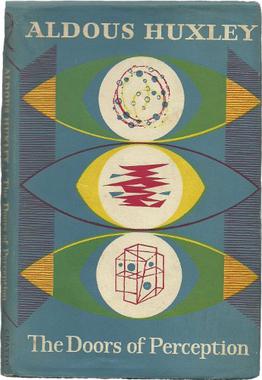
I've picked up a lot of books over multiple library book sales. These are first-come, first-serve sales of mostly paperback but sometimes you can find handsome editions of hardcover novels. I picked up The Doors of Perception because I'm been inspired by the counterculture hippie movement since high school. The Doors was one of my favorite rock bands as a kid.
That's my paradigm. I'm mostly inspired through rock and roll rather than experimentation of drugs. But even as a youngster I was familiar with the Merry Pranksters, Timothy Leary, LSD, Sgt. Pepper, and "turn on, tune in, drop out." And of course, all my favorite American hippie rock bands supported all that stuff. The Doors named themselves after Huxley's Doors of Perception. This edition comes with a separate book entitled Heaven and Hell. Both of these short books explores the mind's remote frontiers and the unmapped areas of human consciousness.
For starters, one of the main problems with these books is that its no longer apart of the zeitgeist or discourse. The idea of taking psychedelics in order to gain some insight into the spiritual self is no longer apart of the current paradigm. Native Americans were known to use peyote/mescaline for spiritual purposes. But do even they still do that today?
The young people I know who have experimented with heavy drugs like LSD, mushrooms, cocaine, and heroine are using it in order to escape from their reality. Much like the quote above. They use drugs as a backlash against the real world because they feel they are suffering. Any release into paradise will suffice. Even if it only for but a moment. Drugs and alcohol relieve them from their suffering. Albeit only for a short while until they come down from the high. Knowing that, it's very difficult for millennials to truly understand anything that Huxley is talking about here. But I like a challenge.
This isn't really a book. Rather its a dialogue of Huxley containing his trip on mescaline. Ironically the trip takes place in the world's largest pharmacy during the early stages of the trip. A bit of comedy for his mescaline trip. What happens to someone under the influence of mescaline?
a) Ability to think straight is little if at all reduced. You don't become stupid.
b) Visual impressions are greatly intensified and the eye recovers some of the perceptual innocence of childhood when the sensum was not immediately and automatically subordinated to the concept. Interest in space is diminished and interest in time falls almost to zero.
c) Though the intellect remains unimpaired and though perception is enormously improved, the will suffers a profound change for the worse. The mescaline taker sees no reason for doing anything in particular and finds most of the causes for which, at ordinary times, he was prepared to act and suffer, profoundly uninteresting. He can't be bothered with them, for the good reason that he has better things to think about.
d) These better things may be experienced (as I experienced them) "out there," or "in here," or in both worlds, the inner and the outer, simultaneously or successively. That they are better seems to be self-evident to all mescaline takers who come to the drug with a sound liver and an untroubled mind. [Doors of Perception]
Time meant nothing. Huxley mentions there was plenty of time. Not a concern. He also wasn't concerned by spatial forms. This could mean the distance between me to my computer screen as well as the matter of me writing this review and then finishing it. Neither mattered anymore.
What really is important to him is experiencing and observing. Looking around the room takes on a new perception and/or concepts of the things we see. Mescaline strips down concepts but allows you to see them for the first time, the beauty of it.
Man-made art had little effect on him. He was humored by the fact that humans tried too hard to symbolize things. "How dare they?" "The audacity?" This goes alongside paintings as well as classical music composers. He was more mesmerized by nature than by human-made things.
Heaven and Hell go into religious aspects. Huxley notes that in the middle ages Christians would beat themselves until wounds would fester [flagellants] and starve themselves until they literally saw visions. They would literally see the devil. The festering wounds would cause hallucinations. How about that?
My favorite concept that Huxley mentions in heaven and hell is a simple one. If you are a mystic/artist, you must learn from the scholar. If you are a scholar you must learn from the mystic/artist. It makes perfect sense. Why isn't the world like that? Why aren't more people across different discipline working together and learning from each other? It makes me wonder what could have been.
The truth is that I would never do any hallucinatory drugs and this book doesn't make a convincing argument for me to find a dude off the street and buy some mescaline off him. Rather, I'm impressed with Huxley's experience. I'll take his word for it and agree that the experience changed him for the better. Even if it only changed him for that day I can see from his writing that it had a profound spiritual effect on him. None of these drugs should be used for recreational purposes. Hell, at this point I don't even believe marijuana should be used recreationally. Maybe I'm getting too old. Maybe I'm a square. Maybe drugs are good for people sometimes.
In the end, we are all riders on the storm.
Monday, August 12, 2019
Blue Monk
Here's our rendition of Thelonious Monk's Blue Monk.
Orlando Figueroa Guitar
Jason Thomas Alto Saxophone
https://soundcloud.com/orlando-figueroa-17/blue-monk-thelonious-monk
Orlando Figueroa Guitar
Jason Thomas Alto Saxophone
https://soundcloud.com/orlando-figueroa-17/blue-monk-thelonious-monk
Impressions
Here's our rendition of John Coltrane's modal classic Impressions.
Orlando Figueroa Guitar
Jason Thomas Alto Saxophone
https://soundcloud.com/orlando-figueroa-17/impressions-trane
Orlando Figueroa Guitar
Jason Thomas Alto Saxophone
https://soundcloud.com/orlando-figueroa-17/impressions-trane
Wednesday, August 7, 2019
Jazz Band Projekt Tracks
Here are some latest tracks from my jazz project, which consists of myself on guitar, Orlando Figueroa, and Jason Thomas on alto saxophone. We met back in January 2019 and we've played with seven different third members including bass players, a guitar player, and a trumpet player but we've always enjoyed just playing as a duo the best.
Straight ahead!
https://soundcloud.com/orlando-figueroa-17/the-gentlemen-minor-blues
https://soundcloud.com/orlando-figueroa-17/mr-pc-paul-chambers
https://soundcloud.com/orlando-figueroa-17/bluesmen
Straight ahead!
https://soundcloud.com/orlando-figueroa-17/the-gentlemen-minor-blues
https://soundcloud.com/orlando-figueroa-17/mr-pc-paul-chambers
https://soundcloud.com/orlando-figueroa-17/bluesmen
Monday, August 5, 2019
The Silmarillon

Where do I start with this? In the beginning, the Illuvatar [the gods of Middle Earth] created the elves, men, and dwarves. The beginning of the story is what kept me reading all 365 pages. I started reading the book on Tuesday and I finished the book on Sunday.
The Ultimate Supreme Badass of Middle Earth is detailed in the first ten pages. His name is Melkor, later called Morgoth Bauglir, aka the Supreme Mother Fucker of Middle Earth. Why is he so angry? Why is he a monster? Well, you see it turns out that Morgoth was a musician, like all the other children of Illuvatar, he was apart of the Valar. Most of the children played the harmonious music of the Ainur, singing sweet songs. However, Morgoth played his own original music. Being a drama queen band leader, he created music of discord, aka death metal complete with blast beats and shrieking vocals. Basically, I see the arrogant evil side of Morgoth in musicians. Even myself but mostly in others. Musicians are real arrogant assholes sometimes. And I thought that was so interesting psychologically that I would say Morgoth is one of my favorite villains I've come across in fiction. He was a disturbance in the music before it is explained that he wised to be called Lord by others. Morgoth is really cool and the way that Tolkien starts his epic history of the elves is described thus: In the beginning there was music and eventually the music turned to discord, eventually leading to the battles that would go on for hundreds of years in Middle Earth.
The truth about the Silmarillion is that its very thorny. I found it difficult to actually finish reading this book. In fact, I listened to all twelve hours of the audiobook version but it was so difficult to follow that I decided that I should go ahead and read the actual book if I wanted to truly understand the narrative, thus actually 'completing' the book. I had a biased attitude towards fantasy despite reading Harry Potter, The Hobbit, and the Lord of the Rings in middle school. In recent years I've been such a science fiction afionado that I sort of look down upon fantasy as a children's genre. Although this is a heavy book that you could knock someone out with it is still a children's novel after all. Young adult if you will.
The book reads like a manuscript history of everything that could, would, and ever happen in Middle Earth. But mostly the Silmarillion is about the Silmarils, these jewels that the elves created that had infinite power. They're very similar to the Rings of Power that Sauron creates later but more beautiful and the elves will die for them. They proceed to fight over them for hundreds of years. This happened here, this happened there, and these are the people who did it, up to the 39th line [Aragon, called Strider later, Lord of men] of this family name and that family name. There is so much going on and it's so hard to follow that most people who attempt to read this book either stop reading it at some point and give up or take a very long time to finish it. Luckily I finished the book in a few days through some very intense reading sessions. Dedication I guess.
There are certain aspects of fantasy writing that I learned are very important to the genre. Here are a few. First, you have to create your own language for your original fantasy universe. If you have interesting names of characters, places, things, and events that in itself will keep people reading. Tolkien was a master philologist, a master of language and it really shows. Even the most boring parts of the Silmarillion contain a mastery of language. Not only did I learn a lot of new words but I was able to pronounce his own made-up words in my own mind in my own accent but because I listened to the audiobook I already knew how the words were supposed to sound, at least according to the British voice actor. However, I found that my own phonetics in my mind were even better and easier to prounouce. Remember that this book starts with a clash of sound and music. Language is apart of that. In addition, I would say that in a great fantasy novel the dialogue between characters shouldn't be overbearing, but rather that they only say what they need to say, the meat and potatoes of dialogue if you will. That is on display here as well.
Next, if you want to write fantasy you have to have things happening all the time. And you have to explain it. Sometimes it could be simple things like explaining family lines and other times it will be epic battles taking place between dark lords, elves, and men. The fact that something is happening all the time in the Silmarillion makes it more enjoyable. Although as I said the prose is very dry I can't deny that there is always something happening even if it is just the explanations of this, that, and the other. It can get tedious but the creative imagination is powerful at work here.
Lastly, you need epic battles of struggle, strife, and discord. This book is 365 pages and the climax hits at the 180-page mark. It is a one-on-one duel to the death between an Elvish Lord and Morgoth, a melee duel. Morgoth ends up killing the Elf Lord but not without getting his ass kicked. He gets slashed in the face with a sword seven times. During the entirety of the fight, I imagined epic heavy metal music in the background. Sometimes I didn't imagine it because there were times when I would read the book with music in the background. Most of the time it was heavy rock and roll bands like Black Sabbath and Deep Purple. Now you see why these battles were so much fun. Sometimes the background music was Richard Wagner. Again this is a book about language, music, and sound despite the fact that most of the time reading is a quiet experience except for the turning of pages fast or slow.
There's a lot of fun facts about Middle Earth here. My favorite is that the orcs are actually bred from elves. There's a love story between two elves who later find out they are brother and sister. You can guess how that ends up. Men were created way after the elves and are called the Followers. Dwarves were created second. The Dwarves played a great role in the battle against Morgoth. Men lived short lives in comparison to the elves and in the end, it was men who helped build Sauron's power through their evil lust for power. Sauron was Morgoth's protege who went on to become the second great dark lord after Morgoth was trapped in the sky [or something] after hundreds of years battling elves, dwarves, and men. Sauron is the main villain in the Lord of the Rings. Learning about his rise to power was fun but he's no Morgoth. He didn't destroy the music of the Ainur.
Some of the things Sauron is into is very dark. Maybe a little satanic? He builds this temple to serve the dark lord Morgoth and men bring him, people, to burn alive as a tribute. That was quite morbid. He has an epic one-on-one hand-to-hand combat duel but in the end, he loses and flees his body, leaving nothing but a spirit. He is able to take the form of many things. He is able to take the guise of a beautiful person, charming and deceiving his foes. The Eye of Sauron watches over all of Middle Earth, haunting all living things, the Dark Tower presiding over all. Men quake in terror.
In the end, we have a conclusion to the entirety of Middle Earth that is somewhat more satisfying that the end of the Lord of the Rings trilogy [at least from what I remember from middle school]. We find out how the three great wizards of men came to be and how they created the White Council [of elves and men] to counter and watch over all that Sauron does. We have Radagast who is pure of heart and loves animals, who controls and watches over nature. We have Gandalf who is a great leader and friend to men and the half-lings, aka the Hobbits. We have Sauraman who is evil but pretends to work with the good guys while he admires Sauron from afar, seeking all his power and destruction. Gandalf didn't trust Saruman for he already suspected that Sauraman sought the power of the One Ring. And silly Radagast was so sweet that he helped Sauraman find the One Ring by sending all the creatures of Middle Earth in search for it, thinking that it was just part of the plan to keep watch over Sauron. Lastly, we have the pen-ultimate conclusion that it wasn't actually the White Council, elves, men, nor dwarves that ended up saving Middle Earth from Sauron's evil. Rather it was a half-ling, a hobbit named Frodo who, with his friend ended up completing the task that no one else could achieve. Knowing that is very satisfying. But of course, it's written that way.
What a read. If you like fantasy you're going to love this book.
Monday, July 15, 2019
Pirate Utopia

However, here Sterling chose not to write science fiction, but rather an alternate history satire, something he calls dieselpunk which turns out is a lot like steampunk and cyberpunk. Sterling considers this as a subgenre of science fiction. It's related to science fiction but its also rooted in history and makes use somewhat of real facts. He's using history, elements of science fiction and satire to create something that would appeal to more popular culture. In this case, catering to the European general public more so than the American science fiction crowd.
Sterling quotes this line from the manifesto of Despero and Giacomo in 1915:
We will find abstract equivalents for all the forms and elements of the universe, and then we will combine them with the caprice of our imagination. This just about sums up the motives of the characters in this novel.
The book is about a group of pirates around 1920, WWI era. They've taken control of this village called Fiume, now present-day Rijeka. They believe in the Futurist Manifesto. They steal everything they can including a communist controlled armored vechicle in the beginning of the novel. Their enemies are the communists, the rich, and the fascists, whom they are not entirely unsympathetic towards. They engage in Freemasonry, free love, equal pay and rights for women, they love jazz music, ceremonial rituals, etc. Kids today would say they are "extra". As you can see this gets pulpy very fast.
Our main cast is comprised of the Ace of Hearts, a military leader of the secret police and the Pirate Engineer [lots of nicknames in this book] Secondari, a guy with a chip on his shoulder who lost an ear in the war but because he's an amazing weapons engineer he's given complete control to take over the means of production concerning weapons. There's even a Prophet, a warrior poet who runs a harem and the principle leader behind their ideology but deep down hates himself and his life.
Secondari becomes "Minister of Vengeance Weapons" [what a great title!] He revitalizes a weapons factory and starts developing torpedoes and even a death ray [very cyberpunk and reminiscent of Nazi technology conspiracies]. Soon other governments become interested and Spymaster Colonel House from President Wilson's government sends Houdini and his assistant H.P. Lovecraft under the guise of a magic show to work out a secret deal. Along the way, Hitler gets killed by jumping into a bullet to save his friend and Mussolini gets shot to death in the dick by some girls that wandered into his office. That's where the book ends.
This is all very fun and funny material but where's the meat and potatoes to it? The thing is that this book has a lot of exposition but everything else is mostly left up to the imagination of the reader. The characters themselves are only interesting to a point. Secondari is a mediocre villain. He lives only to serve his ideology, for the cause of the Pirate Futurist Utopia. But when Frau Pfeiffer [an industrial factory owner] throws herself at him he denies her. He only loves her daughter, because Frau Pfeiffer was the one woman that nursed him back him to health when he was at his worst. Even his own family didn't to do that for him. So he loved Frau Pfeiffer's daughter and made sure that she would never be harmed. However, this actually made him a worse person as a result. He vowed to kill anyone who ever harmed her. At all costs.
The Prophet seemed like a cool cat. I mean he runs a harem and he's a warrior poet. Sounds like a real hippie awesome free love guy. But when Secondari sees him for the first time he realizes that this man, the Prophet is broken, lifeless. Because Secondari doesn't hear very well [one of his ears was blown off in the war] he has this intimate ability to see into a person's soul. He looked at the Prophet and somehow knew right away that he was completely wasted, drained of life. So I guess having a ton of girls to fuck all the time can be a drag sometimes. It's an interesting observation.
On a side note, there's the Art Witch, one of the Prophet's women. I actually liked her a lot because she reminds me of the typical bohemian girl, of any race, although of course here she's Italian. She's into the occult, does spiritual seances, wears weird kinky outfits with probably no underwear, she's a fixture of the art scene, and of course she's rich because that way she has the time to do all this goofy stuff. She's one to remember. Actually, if you hang around the music and art scenes for a while you'll find girls like this. I've run into plenty in the music crowds I've chilled with at parties and such. It can get weird but its always fun.
The characters themselves are quite eloquent. But they aren't the focus of the story. A lot of it is actually exposition. The first thirty pages are exposition but the fact that the novel is so short [only 170 pages] it makes the beginning very slow. After a while, the writing seems to get into a flow that is very easy to continuously read and enjoy. That's the magic of this book. The writing style is very breezy, satirical, and entertaining. I wasn't reading so much as to find out the plot but more so out of the sheer fun and joy of just turning the pages and being amused by it all.
There are some funny moments. Before the book officially starts there's a real H.P. Lovecraft quote that I love. "I fear my enthusiasm flags when real work is demanded of me." Well, that's just terrific. Not only is it true but the fact that Lovecraft said it makes it hilarious because he's known more for his horror than anything else.
There's a lot of funny moments. Adolf Hitler dies by jumping into a bullet to save his friend. He's actually a great guy it turns out. Mussolini is in charge of a newspaper and gets killed by some girls who wandered into his office with a gun. How did they kill him? They shot him in the dick. The fact that our main villain here gets Hitler and Mussolini out of the way without realizing it makes it a true cosmic comedy.
Then there's the Prophet who runs a harem but is completely devoid of life. It's sort of funny. Maybe too much sex could be bad for you? Houdini's magic trick at the end was definitely quite comical as well. For his last trick, he ends up sticking needles into his face and then eating them after he pulls them out. Sounds horrifying but at the same time realistically I'd probably be laughing my ass off if I saw someone do that. This is, after all, a satire not unlike something the gentlemen of the old days would write. Think Voltaire and Dante, but 80's cyberpunk version.
At the back of the book, there's a great appendix and interview with Sterling. Why did he write this book? Because he felt that he had to tell the young people in Europe about what really happened back then because they don't know much about those times. In particular he wanted to remind people about how fascism got imported from Europe [Italy and Germany] to Britain and America where its still alive and well today. When he said that I thought to myself, "yeah, I get it." It's a joke, a complete joke but you have to understand history and its long-lasting impact on society to get it. It was a great Aha! moment.
At the same time, I would also say that Sterling is at the end of his ropes regarding science fiction. He mentioned in the interview that he had a different writing persona, a European one, with a European name [Bruno of all names], even writing in a different voice. When I read that part I thought to myself, "oh god, don't do it." So yes that was very cringing for one of my favorite writers who helped duo-create the cyberpunk genre with William Gibson but hey what can you do? There was once a time where Gibson and Sterling were the best science fiction writers [the 80's] but now I see that the genre has moved away from them. They realized that and they have tried to become mainstream. Gibson has been writing graphic novels as of late [Arcangel] and now Sterling is writing stuff like Pirate Utopia. It's fun but it will never be the grand, serious, science fiction space operas that they wrote in the beginning of their careers. It's a shame because I believe if they went back to writing that sort of stuff the science fiction community would take notice. However, once you write something as great as The Difference Engine or Schismatrix Plus there's too much pressure on you keep putting out masterpieces for the rest of your life. I'll settle for Pirate Utopia because I'm a true fan and reader of Sterling but for other people, they might say,"this doesn't cut it." For one thing, the plot isn't revaled until the very end and it ends on a cliffhanger. A lot of people would hate that. But I'm such a Sterling initiate I say let him get away with it. Not a super important novel but relevant in today's political and historical climate. The most fun I've had reading a book in a long time. Because it's short and easy reading I would recommend it. A taste of pop culture from the cyberpunk legend himself.
On a side note, it should also be mentioned that there's terrific artwork in this book in between chapters. The cover was initially what spurred me on to pick it up and when I saw it was Sterling I checked it out from the library right then and there. The cover is great because it uses communist visual imagery to promote this Futurist ideology. The conceit is that they used communist propaganda visuals even though the characters in this book hate communists with a passion. It got me thinking more about futurist art and art movements in general like cubism. [I know nothing about art but I wish to learn more now]
Check out my other Bruce Sterling novel reviews
https://ofigueroamusic.blogspot.com/2018/12/holy-fire.html
https://ofigueroamusic.blogspot.com/2019/01/zeitgeist.html
https://ofigueroamusic.blogspot.com/2019/01/schismatrix-plus.
https://ofigueroamusic.blogspot.com/2018/11/the-difference-engine.html
https://ofigueroamusic.blogspot.com/search?q=artificial+kid
Subscribe to:
Posts (Atom)
September Sweater Weather
Good evening ladies and gentlemen, hello world. How are you? It's good to be writing on a good day off work today on a Saturday. Here, ...

-
The Difference Engine by William Gibson and Bruce Sterling is one of those all-time great 'hard' science fiction novels. Set in a ...
-
Man Plus is a science fiction novel written by Frederik Pohl in 1976. Pohl is one of those rare great writers who was not only a great wr...
-
Holy Fire is a great science fiction novel written by Bruce Sterling . It came out in 1996. It was nominated for the British Science Fi...

