Monday, July 15, 2019
Pirate Utopia
Pirate Utopia is an alternate history satire written by Bruce Sterling. It was published in 2016 but somehow I completely missed it as I was sidetracked by that shit show of an Presidential election. As my readers would know, I've written quite a few reviews of books written by Bruce Sterling. I would go so far as to say that Sterling and William Gibson are my favorite science fiction writers. They created the cyberpunk genre, helped develop steampunk, and were the cream of the crop of science fiction writers during the entire 1980s.
However, here Sterling chose not to write science fiction, but rather an alternate history satire, something he calls dieselpunk which turns out is a lot like steampunk and cyberpunk. Sterling considers this as a subgenre of science fiction. It's related to science fiction but its also rooted in history and makes use somewhat of real facts. He's using history, elements of science fiction and satire to create something that would appeal to more popular culture. In this case, catering to the European general public more so than the American science fiction crowd.
Sterling quotes this line from the manifesto of Despero and Giacomo in 1915:
We will find abstract equivalents for all the forms and elements of the universe, and then we will combine them with the caprice of our imagination. This just about sums up the motives of the characters in this novel.
The book is about a group of pirates around 1920, WWI era. They've taken control of this village called Fiume, now present-day Rijeka. They believe in the Futurist Manifesto. They steal everything they can including a communist controlled armored vechicle in the beginning of the novel. Their enemies are the communists, the rich, and the fascists, whom they are not entirely unsympathetic towards. They engage in Freemasonry, free love, equal pay and rights for women, they love jazz music, ceremonial rituals, etc. Kids today would say they are "extra". As you can see this gets pulpy very fast.
Our main cast is comprised of the Ace of Hearts, a military leader of the secret police and the Pirate Engineer [lots of nicknames in this book] Secondari, a guy with a chip on his shoulder who lost an ear in the war but because he's an amazing weapons engineer he's given complete control to take over the means of production concerning weapons. There's even a Prophet, a warrior poet who runs a harem and the principle leader behind their ideology but deep down hates himself and his life.
Secondari becomes "Minister of Vengeance Weapons" [what a great title!] He revitalizes a weapons factory and starts developing torpedoes and even a death ray [very cyberpunk and reminiscent of Nazi technology conspiracies]. Soon other governments become interested and Spymaster Colonel House from President Wilson's government sends Houdini and his assistant H.P. Lovecraft under the guise of a magic show to work out a secret deal. Along the way, Hitler gets killed by jumping into a bullet to save his friend and Mussolini gets shot to death in the dick by some girls that wandered into his office. That's where the book ends.
This is all very fun and funny material but where's the meat and potatoes to it? The thing is that this book has a lot of exposition but everything else is mostly left up to the imagination of the reader. The characters themselves are only interesting to a point. Secondari is a mediocre villain. He lives only to serve his ideology, for the cause of the Pirate Futurist Utopia. But when Frau Pfeiffer [an industrial factory owner] throws herself at him he denies her. He only loves her daughter, because Frau Pfeiffer was the one woman that nursed him back him to health when he was at his worst. Even his own family didn't to do that for him. So he loved Frau Pfeiffer's daughter and made sure that she would never be harmed. However, this actually made him a worse person as a result. He vowed to kill anyone who ever harmed her. At all costs.
The Prophet seemed like a cool cat. I mean he runs a harem and he's a warrior poet. Sounds like a real hippie awesome free love guy. But when Secondari sees him for the first time he realizes that this man, the Prophet is broken, lifeless. Because Secondari doesn't hear very well [one of his ears was blown off in the war] he has this intimate ability to see into a person's soul. He looked at the Prophet and somehow knew right away that he was completely wasted, drained of life. So I guess having a ton of girls to fuck all the time can be a drag sometimes. It's an interesting observation.
On a side note, there's the Art Witch, one of the Prophet's women. I actually liked her a lot because she reminds me of the typical bohemian girl, of any race, although of course here she's Italian. She's into the occult, does spiritual seances, wears weird kinky outfits with probably no underwear, she's a fixture of the art scene, and of course she's rich because that way she has the time to do all this goofy stuff. She's one to remember. Actually, if you hang around the music and art scenes for a while you'll find girls like this. I've run into plenty in the music crowds I've chilled with at parties and such. It can get weird but its always fun.
The characters themselves are quite eloquent. But they aren't the focus of the story. A lot of it is actually exposition. The first thirty pages are exposition but the fact that the novel is so short [only 170 pages] it makes the beginning very slow. After a while, the writing seems to get into a flow that is very easy to continuously read and enjoy. That's the magic of this book. The writing style is very breezy, satirical, and entertaining. I wasn't reading so much as to find out the plot but more so out of the sheer fun and joy of just turning the pages and being amused by it all.
There are some funny moments. Before the book officially starts there's a real H.P. Lovecraft quote that I love. "I fear my enthusiasm flags when real work is demanded of me." Well, that's just terrific. Not only is it true but the fact that Lovecraft said it makes it hilarious because he's known more for his horror than anything else.
There's a lot of funny moments. Adolf Hitler dies by jumping into a bullet to save his friend. He's actually a great guy it turns out. Mussolini is in charge of a newspaper and gets killed by some girls who wandered into his office with a gun. How did they kill him? They shot him in the dick. The fact that our main villain here gets Hitler and Mussolini out of the way without realizing it makes it a true cosmic comedy.
Then there's the Prophet who runs a harem but is completely devoid of life. It's sort of funny. Maybe too much sex could be bad for you? Houdini's magic trick at the end was definitely quite comical as well. For his last trick, he ends up sticking needles into his face and then eating them after he pulls them out. Sounds horrifying but at the same time realistically I'd probably be laughing my ass off if I saw someone do that. This is, after all, a satire not unlike something the gentlemen of the old days would write. Think Voltaire and Dante, but 80's cyberpunk version.
At the back of the book, there's a great appendix and interview with Sterling. Why did he write this book? Because he felt that he had to tell the young people in Europe about what really happened back then because they don't know much about those times. In particular he wanted to remind people about how fascism got imported from Europe [Italy and Germany] to Britain and America where its still alive and well today. When he said that I thought to myself, "yeah, I get it." It's a joke, a complete joke but you have to understand history and its long-lasting impact on society to get it. It was a great Aha! moment.
At the same time, I would also say that Sterling is at the end of his ropes regarding science fiction. He mentioned in the interview that he had a different writing persona, a European one, with a European name [Bruno of all names], even writing in a different voice. When I read that part I thought to myself, "oh god, don't do it." So yes that was very cringing for one of my favorite writers who helped duo-create the cyberpunk genre with William Gibson but hey what can you do? There was once a time where Gibson and Sterling were the best science fiction writers [the 80's] but now I see that the genre has moved away from them. They realized that and they have tried to become mainstream. Gibson has been writing graphic novels as of late [Arcangel] and now Sterling is writing stuff like Pirate Utopia. It's fun but it will never be the grand, serious, science fiction space operas that they wrote in the beginning of their careers. It's a shame because I believe if they went back to writing that sort of stuff the science fiction community would take notice. However, once you write something as great as The Difference Engine or Schismatrix Plus there's too much pressure on you keep putting out masterpieces for the rest of your life. I'll settle for Pirate Utopia because I'm a true fan and reader of Sterling but for other people, they might say,"this doesn't cut it." For one thing, the plot isn't revaled until the very end and it ends on a cliffhanger. A lot of people would hate that. But I'm such a Sterling initiate I say let him get away with it. Not a super important novel but relevant in today's political and historical climate. The most fun I've had reading a book in a long time. Because it's short and easy reading I would recommend it. A taste of pop culture from the cyberpunk legend himself.
On a side note, it should also be mentioned that there's terrific artwork in this book in between chapters. The cover was initially what spurred me on to pick it up and when I saw it was Sterling I checked it out from the library right then and there. The cover is great because it uses communist visual imagery to promote this Futurist ideology. The conceit is that they used communist propaganda visuals even though the characters in this book hate communists with a passion. It got me thinking more about futurist art and art movements in general like cubism. [I know nothing about art but I wish to learn more now]
Check out my other Bruce Sterling novel reviews
https://ofigueroamusic.blogspot.com/2018/12/holy-fire.html
https://ofigueroamusic.blogspot.com/2019/01/zeitgeist.html
https://ofigueroamusic.blogspot.com/2019/01/schismatrix-plus.
https://ofigueroamusic.blogspot.com/2018/11/the-difference-engine.html
https://ofigueroamusic.blogspot.com/search?q=artificial+kid
Monday, July 1, 2019
Politics in 2019
"If Trump turns progressives into intolerant agents of incivility, then we have lost our souls."
That line got me thinking a lot about politics in America circa 2019. The op-ed was written by a NYTimes columnist and can be viewed here.
There is definitely a giant gaping divide between the Democrats these days. Of course I identify as a Democrat and in the past [and now] I've supported socialist policies [and still do], things like social security [it should be increased every so years imo], abortion rights for women, same-sex rights for LGBTQ community, anti-war stance, anti-trade war, anti-tariff, cheaper college, cheaper housing, and better opportunities for poor/working class communities. But I am most definitely not a flaming liberal or progressive.
Progressives of my father's era [he came to America from China during the Eisenhower administration] are more old school progressives. Fairly accepting and respectful of other people who don't happen to agree with them. The NYTimes op-ed that inspired me to write this blog mentions that the old school progressives follow Voltaire's quote for the most part.
Voltaire: “I disapprove of what you say, but I will defend to the death your right to say it.”
However, the millennial progressives of today are different. For young progressives, the priority is to stand up against racism, misogyny, Islamophobia, and bigotry. It can be a real in-your-face-affair but they get their point across. The main conflict here is how to live life with liberal values in an illiberal age.
It is almost impossible to balance because it requires intellectual humility. Something most people lack severely. Especially with the liberals and conservatives that I run into daily at work and online. One of the problems is that liberals are quick to embrace anyone that doesn't look like them but only if they think like them too. We progressives should have the intellectual curiosity to read, review, and better understand conservative policy and values. Do you, as a progressive and/or democrat really understand how Trump won the 2016 election? Do you understand real conservatives? Real Republicans? Do you read conservative news outlets to better understand their views?
The bottom line is that we have to stop the hate. Sometimes conservatives are right on certain issues [secure borders, defense budget] and sometimes Democrats are more right on certain issues [all the things I mentioned above]. As I come to understand conservative ideology through alternate news outlets I can understand why some people voted Trump in 2016 and will vote for him again in 2020. The turning point for me when I realized, "I disagree with these conservatives but I don't have to dislike or hate them." And I realized that when I saw how there were 20 Democrats running for President I got super excited. Anyone of them could realistically demolish Trump in 2020 easily. But I also listen to them talk about their alternative paths to fix/change what Trump has done and it's very half-assed. They say all the right things to the right people but realistically they've run out of steam. Their ideas just don't have that much meat or potatoes to it. Progressives say college should be free for everyone. With what money? They want to fix immigration and get kids out of cages. How are they going to do that? Are they going to hire more staff to work at these facilities? Create more facilities? They don't have it figured out. They want to be more anti-war and save money on the defense budget. But how are we going to tackle the ongoing threat of nation-wide terrorism and nuclearization if we spend less on our military budget? I don't want hippies running the government.
If you can't understand the opposing party then you have no business trying to belittle your political enemy because you don't know what you're talking about. On the other side, nobody should feel they have to defend themselves to the death just because they disagree with somebody politically.
At the end of the day, we are all Americans. The extremists aren't the only problem. It's also the collective hivemind itself, picking off anyone that doesn't fit into their mold. The only way we're going to make it through this era alive [politically] is if we realize that winning debates won't bring Americans together. Stop the hate. Understand your enemies. You might realize that you have a lot more in common than you think. The American dream is at stake right now. And it's not just Republicans that are holding it ransom. I'm looking at you too, Democrats.
Love and peace! https://www.youtube.com/watch?v=tmjFIR5AZL8
That line got me thinking a lot about politics in America circa 2019. The op-ed was written by a NYTimes columnist and can be viewed here.
There is definitely a giant gaping divide between the Democrats these days. Of course I identify as a Democrat and in the past [and now] I've supported socialist policies [and still do], things like social security [it should be increased every so years imo], abortion rights for women, same-sex rights for LGBTQ community, anti-war stance, anti-trade war, anti-tariff, cheaper college, cheaper housing, and better opportunities for poor/working class communities. But I am most definitely not a flaming liberal or progressive.
Progressives of my father's era [he came to America from China during the Eisenhower administration] are more old school progressives. Fairly accepting and respectful of other people who don't happen to agree with them. The NYTimes op-ed that inspired me to write this blog mentions that the old school progressives follow Voltaire's quote for the most part.
Voltaire: “I disapprove of what you say, but I will defend to the death your right to say it.”
However, the millennial progressives of today are different. For young progressives, the priority is to stand up against racism, misogyny, Islamophobia, and bigotry. It can be a real in-your-face-affair but they get their point across. The main conflict here is how to live life with liberal values in an illiberal age.
It is almost impossible to balance because it requires intellectual humility. Something most people lack severely. Especially with the liberals and conservatives that I run into daily at work and online. One of the problems is that liberals are quick to embrace anyone that doesn't look like them but only if they think like them too. We progressives should have the intellectual curiosity to read, review, and better understand conservative policy and values. Do you, as a progressive and/or democrat really understand how Trump won the 2016 election? Do you understand real conservatives? Real Republicans? Do you read conservative news outlets to better understand their views?
The bottom line is that we have to stop the hate. Sometimes conservatives are right on certain issues [secure borders, defense budget] and sometimes Democrats are more right on certain issues [all the things I mentioned above]. As I come to understand conservative ideology through alternate news outlets I can understand why some people voted Trump in 2016 and will vote for him again in 2020. The turning point for me when I realized, "I disagree with these conservatives but I don't have to dislike or hate them." And I realized that when I saw how there were 20 Democrats running for President I got super excited. Anyone of them could realistically demolish Trump in 2020 easily. But I also listen to them talk about their alternative paths to fix/change what Trump has done and it's very half-assed. They say all the right things to the right people but realistically they've run out of steam. Their ideas just don't have that much meat or potatoes to it. Progressives say college should be free for everyone. With what money? They want to fix immigration and get kids out of cages. How are they going to do that? Are they going to hire more staff to work at these facilities? Create more facilities? They don't have it figured out. They want to be more anti-war and save money on the defense budget. But how are we going to tackle the ongoing threat of nation-wide terrorism and nuclearization if we spend less on our military budget? I don't want hippies running the government.
If you can't understand the opposing party then you have no business trying to belittle your political enemy because you don't know what you're talking about. On the other side, nobody should feel they have to defend themselves to the death just because they disagree with somebody politically.
At the end of the day, we are all Americans. The extremists aren't the only problem. It's also the collective hivemind itself, picking off anyone that doesn't fit into their mold. The only way we're going to make it through this era alive [politically] is if we realize that winning debates won't bring Americans together. Stop the hate. Understand your enemies. You might realize that you have a lot more in common than you think. The American dream is at stake right now. And it's not just Republicans that are holding it ransom. I'm looking at you too, Democrats.
Love and peace! https://www.youtube.com/watch?v=tmjFIR5AZL8
Sunday, June 30, 2019
Coders
Coders is the latest book I read. Its about computer programmers. What it takes to be a programmer, what programmers actually do, which could be blue-collar work, hackers, etc. The book takes a much darker tone at the ending chapters about the rise of AI in modern society.
Coders is written by Clive Thompson, a longtime contributing writer for The New York Times Magazine and a monthly columnist for Wired. A tech writer.
The book starts out with a chapter titled The Software Update That Changed Reality. This, of course, is Facebook. Clive goes on to talk about how the Like button feature came to be. Its interesting but the Like feature itself is kind of a dumb feature. Then there are The Four Waves of Coders which basically tells the history of coders starting from the female lead 1960s to the rise of the nerdy male dominated field programmer in the 1980s, to today, where the field is being filled with just slightly more women and minorities.
Myspace is mentioned as an important happening in the early 2000s but isn't given nearly enough attention. Likewise, gaming is only mentioned in the Neopets context until the very end of the book. Not saying much about gaming makes this book a little lacking, because for the most part gaming has become the most popular entertainment system in the world, surpassing movies even in revenue and sales. That makes it worthy of a entire chapter in this book.
There's a great chapter called 10x, Rock Stars, and the Myth of Meritocracy which basically states that there's a myth of the rock star programmer, who by himself, is better than 10 or 20 coders. Surprising some of the best programs and software have been written by only a one or two person team. This rock star myth can be true but Thompson goes to lengths to state that this "better than thou" attitude 'great programmers' are hard to deal with, and besides, most companies need a team of programmers to do their work. Sometimes its difficult to get these rock stars to work well with the less sophisticated co-worker.
The last couple of chapters gets more philosophical. The Rise of AI, Scale, Trolls, and Big Tech. These are the more dystopian aspects of the book. How Facebook got used by Russian bots to swing American perceptions during the 2016 election, possibly swaying favor to Trump. How Twitter is used by white nationalists to spread hate. Machine learning algorithms have taken a big role in modern society but there are inherent biases in therein. When Google tried to create a face recognition software it scanned a picture of a black person and labeled it as 'gorilla', which is, of course, laughable because you realize how incredibly machines and people are but its also horribly racist. There are some leaders in tech who think if the real world is racist then shouldn't these things reflect that? Of course, this brings a lot of ethics into the equation. Which is the reason why we need more women and minorities in tech. The general consensus is that having white programmer dudes create everything we use is a bad idea because they've made mistakes like not thinking of the rise of hate on their platforms, like how Twitter ended up being used by white nationalists and such. Programmers tend to be pretty mixed with their political beliefs. Some are libertarian but for the most part, accept the democratic policy. There aren't many conservative programmers. A lot of them think government should get out of the way but still apply social policies. They see through their work that a person shouldn't be shunned because of their race, gender, sexuality, rather by the strength of their code. This is a good thing.
The book ends with Blue-collar Coding. At the very end, he mentions how the creators of the videogame Minecraft wanted to create a game that was fun. But kids were doing more interesting things with Minecraft than what the creators expected. Kids were learning how to build all kinds of grand buildings and displays using the game's lego block-style engine. At the end of the day the coders of the future might not all come from 4-year college institutions, but rather milennials/middle age folks looking to change their careers, young gamer nerds that want to code their own games, and people who do it a lot in their spare time for fun. In some ways, the programmer of the past resembles that of the programmer today because in both contexts the programmer's credentials don't matter, only great coding skills. It's one of the only jobs where you can find an employee with a college degree working with another employee who has no degree. Of course, if a programmer was trying to get a job at Google that college degree wouldn't hurt.
No doubt this is a pretty boring nonfiction book not nearly as exciting as my science fiction novels I go through. However, this book got me more interested in programming, learning some programming languages, maybe trying to create my own games and apps, or find a job where I can tinker around writing code in whatever context. There's a future in programming and I'm in front of the computer a lot anyways so I might as well look into it. I also find it fun and exciting. Another book that is similar to this one is Steven Levy's Hackers, a very good book about the early computer revolution going back to the 1950s and into the 1980's Apple II computer and it even has extensive chapters on videogames like the first MMO [massively multiplayer online game], Richard Garriott's Ultima Online. That book was very engaging and exciting whereas this one was more informational. Now I have a very good idea of what it takes to be a programmer: good knowledge and experience of the languages and error messages, logical thinking skills, patience, ability to deal with frustration, and the ability to find and fix bugs, an act known as debugging.
This is a new book from 2019 May. Definitely worth the read if you're into tech and interested in programming.
Tuesday, June 25, 2019
The initmitable competitive gaming spirit: 3 years later
Greetings! This is a post about competitive gaming. I used to write a lot of posts about PC games, even going to the excruciating details of Blizzard Tuesdays patch updates. It's been a while since I've written anything like that so I figured I'd do an update from when I wrote about this stuff back in 2016. I've been a competitive PC gamer since 2010 when Starcraft 2 Wings of Liberty came out. I was so addicted I used to play team matches with my college classmate in the middle of class. We were a great Terran/Zerg combo. However, I also played a lot of Smash Bros Melee against all my friends in middle school, Halo 3 multiplayer in high school, and a lot of Starcraft Brood War [also middle school].
I was also really into single player jrpgs since grade school. To this day some of my favorite gaming moments have been from playing Xenogears, Final Fantasy 7, and Final Fantasy Tactics.
Anyways, I'm still a big gamer today. Last Thursday I was at my first Smash Ultimate tournament at Fire and Dice [local hobby shop] and I did pretty well for my first tournament. I beat a really good Lucina player in bracket and did pretty well [but still lost] against two other players. It was a good exhibition for me and my friend Neal, a Yoshi player. I played Samus and Dark Samus most of the time but I did two matches [where I almost won both] as Fox.
I still play some of the old games I used to play three years ago. I've found that I'm not only much better at them, but that I'm getting better and better each day, exponentially. It was a very slow, gradual change that took me three years.
Part of it was that in the past I didn't have as much confidence. Also, I didn't have the right mindset. I would go into a competitive game with the mindset that I just want to have fun and losing didn't matter. Now I go in with the mindset that I will have fun AND win. That's a huge difference.
When I play certain games like Ovewatch and Team Fortress 2 [my personal favorite fps games of all time] there's actually a lot going on in my head, especially as I play the healer role most of the time. 250 of my 600 hours on Overwatch are on Mercy, the best healer in the game. And 65 out of my 200 hours on Team Fortress are on medic, the only healer in the game.
Anyways, there's a lot going on in my head when I play. In every given scenario I'm running subroutines in my head: If I follow this person will that lead to a successful frag? If we're outnumbered and my allies die fast and I fall back and let my teammates die will I be able to live and regroup with them out of spawn before the enemies kill me? If I take out the syringe gun and shoot down an enemy soldier/scout/demo/pyro/spy will I be able to live/run away back to safety? Its endless really.
Its like a puzzle. There are endless variations of what could really happen. You could play the perfect game and your team can still lose because of your allies' inefficiencies. The main reason why I lose certain Team Fortress games [I always play Control Point] is because my allies will run in fast, get killed, and get backcapped [killed as they run to the point out of spawn] before I can get to them. That's a very common way to lose a game in Team Fortress. Probably the most common.
These same 'subroutines' apply to fighting games. I recently became friends with a guy I met through work that plays a lot of fighting games. And he's very good at all of them. He was surprised as heck and applauded me when I was able to figure out how to play all these technical fighting games and after 2 matches where he'd win, I had figured it out and starting defeating him in loops. The reason I was able to figure it out is because I'm playing with this same logical thought processes.
It takes a lot of practice to get to the point where you don't have to run through the endless variations/variables. Anything can happen really. But then again if you can make what you want happen and it comes to pass, that is where the power of the smart, thoughtful gamer comes in place.
It took me a while to understand games. For the longest time I just played games to relive stress. But at some point I realized I wanted to be great and 'git gud' [Kranky's advice] at every game I would ever pick up. Although I'm no e-sports champion I would say that I'm a damn good gamer at the games I play: Heroes of the Storm, Starcraft, Overwatch, Team Fortress, Smash Bros, and Marvel Vs Capcom 2. I've even gotten to the point where I see single player games as extremely relaxing and enjoyable. Its good to find out that you don't need to always have that competitive mindset to have a great time.
Gamers take their gaming very seriously. You're always going to run into those toxic people that will talk shit about your gameplay and hurl insults/slurs, harassing people, etc. You might even become one of those people during some of your matches. The thing you gotta realize is that even when you're so good you're at the point where most people you play against/with are scrubs, in the end its all just a game. If you can't understand that then you should stick to the single player arena. Rage will only hurt your gameplay and your mindset. To be a winner you have to think like a winner.
"Experience transcendence."
Original post from 2016 here: https://ofigueroamusic.blogspot.com/2016/07/the-inimitable-competitive-gaming-spirit.html
Tuesday, June 18, 2019
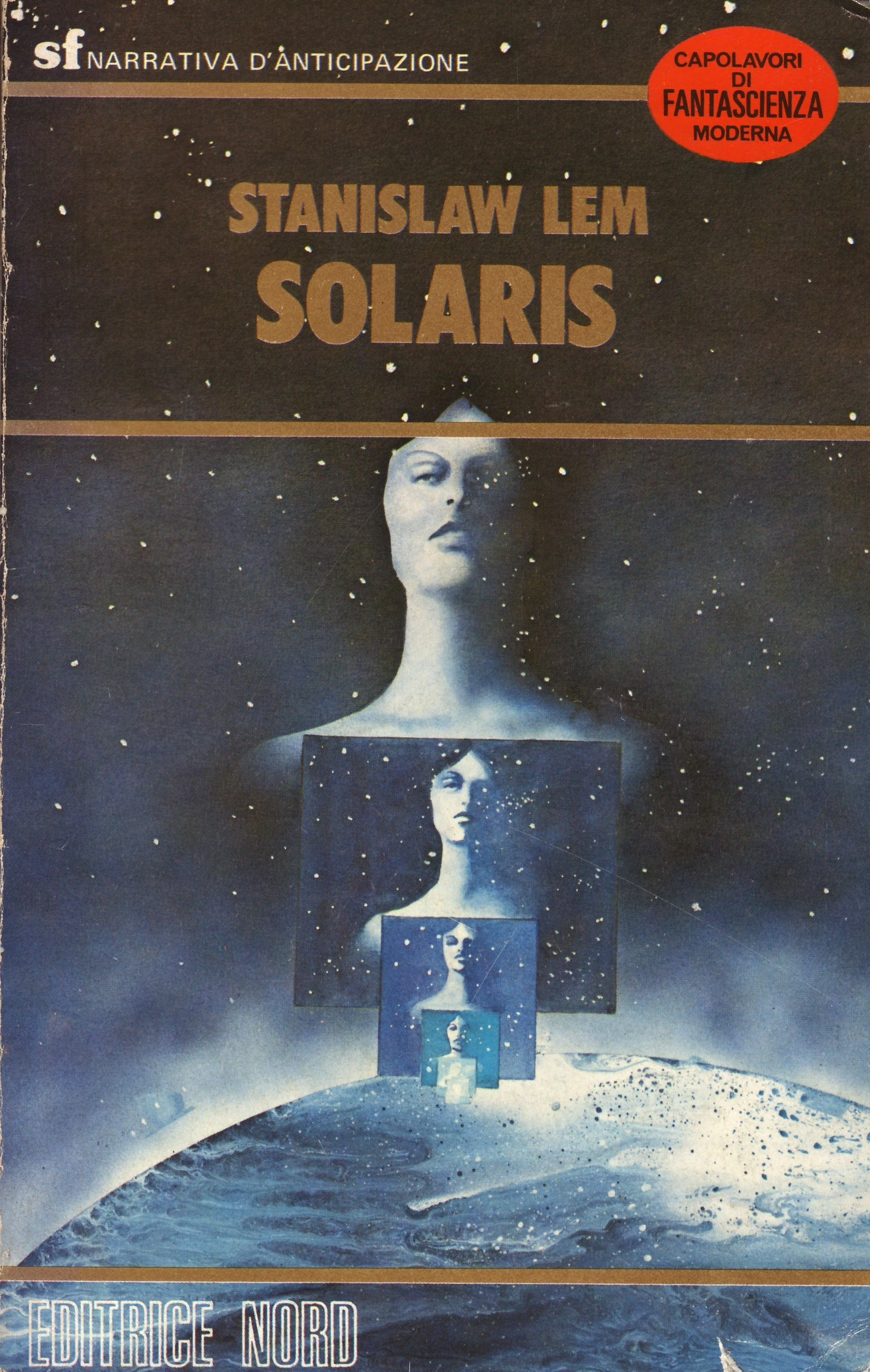
Solaris
Solaris is a science fiction novel published in 1961 [later turned into movies in 1972 and 2002] by eastern [Polish] European science fiction writer Stanislaw Lem. It's a very thoughtful and philosophical novel in the SF genre. I would go so far as to say that this is one of the best science fiction novels I've read this year [so far]. The story starts with a psychologist named Kelvin. He goes up to the Solaris space station. Solaris is this planet with two suns, a red sun, and a blue sun. Scientists have been studying the place for years, coming up with all kinds of theories, that are all mostly speculation.
It turns out that the entire planet's ocean is alive and may or may not be sentient. There's a sense of mysticism when Kelvin starts to see and experience strange phenomena on the space station. This possibly sentient ocean affects the human psyche to the extreme. For example, when he first gets there he meets his co-worker, Snow, and the guy looks like he's scared shitless most of the time, mad as a hatter. Kelvin goes into his room and becomes fearful when he sees a big black woman roaming around. Where did she come from? Who knows.
It turns out that although these scientists might be studying the sentient ocean, it is actually the sentient ocean that is studying them. The other character's experiences are mostly just alluded to. However, our main character Kelvin's experience is told first hand.
Somehow the ocean creates a human simulacrum of Kelvin's long-dead wife, who committed suicide. He blames himself for the suicide and he can't handle the situation at all. He tries his best but by the end, the psychological trauma has changed him for the worst, forever. But perhaps it is only bad if seen in that one-dimensional view. Racked by psychological trauma, Kelvin tries to do his job by observation and working with Snow.
One of the main themes I picked up from Solaris is that no matter what you did in the past and what you're doing now, anything that happened in between can and may come back to haunt you in some form or another. It's basically a classic gothic horror theme in a science fiction skin. However, to just call it as such would be a disservice to Stanislaw Lem. After all, Lem amazes here. What amazes me is how he uses the idea of 'first contact', the alien being a benign ocean, and somehow turning into a thoughtful understanding of the human experience. It's very difficult to explain but Lem pulls that off in this novel.
There are other more philosophical themes as well. In the end, we have a dialogue about an imperfect god. Could this ocean be an imperfect God? After all, the God of the Old Testament was an imperfect God. He must've been because he got jealous of golden calves and demanded sacrifices when he wanted it. The dialogue mentions this.
The great thing about this novel is that you're expecting some kind of resolution to all this madness and philosophical SF ideas. But in the end all we get is a guy who is sort of in shell shock, not unlike a soldier who experiences war for the first time. Yes, he could go back home and live a happy, normal life, but can he really? Perhaps he'll always be longing for his long-dead wife, even if his dead wife on Solaris was just an alien ghost. It will haunt him forever. Maybe not.
My favorite thing about this novel is that it sort of reads like a madhouse. Not much really happens. Kelvin only leaves the space station to check out the ocean at the very end. It's a pure adrenaline rush in terms of the fear within the characters. I was sitting at the edge of my seat wondering what would happen next, only to find that not much happened throughout the entire thing. However, Lem makes it a rewarding experience because the way he explains everything is quite wonderful. He's a much more thoughtful science fiction writer, capable of interesting philosophical ideas. This is literary science fiction. Something like Ursula K LeGuin's The Left Hand of Darkness is literary science fiction as well. I could compare it to something like that.
The English translation I read was a very smooth read. The book reads fast, moving along with action and dialogue. It isn't until perhaps the last 50 pages that the book is littered with tons of fancy science fiction exposition. The exposition is highly enjoyable but I found it to be my least favorite part of the book. However, I do think it was necessary to fully explain Solaris itself. Plus every great science fiction novel has to have some great exposition [imho]. The way Lem uses the end of the book for exposition is interesting. I would compare it to when a book is over but the author wants to add more information to help resolve things, an afterword if you will. This is commonplace in classic science fiction so I'm used to seeing it.
This was the best Lem novel I've ever read and I plan on reading more of his work. Definitely read this book if you're a serious science fiction fan. Also make sure to check out the 1972 Tarkovsky movie Solaris, as its one of the best science fiction movies I've ever seen.
Check out my review for Stanislaw Lem's novel Eden below:
https://ofigueroamusic.blogspot.com/2019/02/eden.html
Tuesday, June 11, 2019
Untitled Tune
Here's an Untitled Tune my friend and I have been playing in our jazz duo format. It's basically a minor blues, but I use the Freeze pedal to sustain some notes over a melody in the beginning and outro. The Freeze pedal is basically a piano sustainer pedal for electric guitar. I used my Jackson Dinky 7-string guitar in addition with the Digitech Whammy Pedal here and there. Enjoy the music.
https://soundcloud.com/orlando-figueroa-17/untitled-tune
Saturday, June 8, 2019
Islands in the Net
Islands in the Net is a science fiction novel from 1988 written by the cyberpunk master himself [second only to William Gibson imho] Bruce Sterling. I found this book on a whim. I randomly typed in best cyberpunk novels on google and it showed up on a couple of lists. So I figured I'd order the book from the library and give it a shot. Risky!
This book isn't what I was expecting. The introduction starts with a woman running on the beach and tripping onto the sand, bruising herself. A walking, talking robot comes to her aid. That first impression is important. I thought the talking robot was such a great first impression. I figured the rest of the book would have science fiction elements like that. I was dead wrong.
Now, it's not that this isn't true science fiction. It's just downplayed super hard in favor of plot and dialogue. It is, in fact, true science fiction, maybe even cyberpunk if you want to call it that. However, the science fiction aspects of this book are very minimal. Although IITN was written in '88, Bruce Sterling was actually able to predict where the technology would go. Hence drones. This is where the plot lies.
A civilian corporation called Rizome gets involved with data pirate terrorists. They're trying to get the data pirates to come together and stop bombing each others' countries, stop stealing each others' data and money, etc. They deploy drones a lot to kill people, even causing mini genocides and such. This is a prediction of the future because today we live in a world where drones kill people every day [in the middle east]. We have a female protagonist named Laura, who's married and has a baby daughter. Laura decides to be the lead negotiator between these data pirate groups. She wants to be the 'female man', the woman who does it all, risks it all, and comes back home safely, forever changed, but a glorious welcome home, a legend.
The plot is actually very innovative and grandiose. The whole time I was reading it I kept thinking to myself, is Sterling going to pull this one off? After all, this is my sixth Sterling novel so I know when he writes a mediocre novel [Zeitgeist]. When great science fiction writers try to write what I think of as contemporary thrillers I am not into it. Think William Gibson's All Tomorrow's Parties. I couldn't even get through ten pages of that. Anyways, I actually really like the plot here. It's cutting edge. However, the way the plot and characters work is mediocre.
The plotting is done mostly through dialogue. One of the best things I can say about this novel is that all the 'boring narration' is actually quite exciting. I liked to see what happened next in terms of pure action. There was a dog breathing fire, a president of Singapore calling Africans the n-word on national television [which reminds me so much of the Trump White House adminstration], two years of imprisonment, Laura's best friend from college marrying her husband while she was locked up, lotion that turns white people black [and they love it, prediction of tanning] and lots of explosions, which included nude women. Sounds pretty great right? Well, it is.
But then you notice that Sterling is making you work for all that exciting stuff. In between all the action scenes, there's tons of wooden dialogue. It's not that it's terrible writing, on the contrary this is still decent writing. But there's a sense of just riding the breeze with the dialogue. There's little if any character development throughout the entire novel until the very last twenty pages. That's only because Sterling is obliged as a writer to resolve all tension throughout the narrative.
So yes we have a great ending but it takes you 350 pages to get there. Which I find super long given that it's not very much of a science fiction story, feels so contemporary that its modern, and has wooden dialogue. I didn't care for Laura until the very last twenty pages where she has an epiphany and resolves all her problems, comes to grip with reality through much hardship. She even meets her Optimal Persona while in prison. Don't ask. It's a California thing.
In conclusion, this book had a very inspiring idea but is poorly executed. Sometimes even the great masters of science fiction miss the mark. In fact, I should've known this wasn't that great of a book because I'd never even heard of it. When I told my dad [an old school science fiction aficionado] that I was reading it he told me that it was almost contemporary. And that's my whole problem with it.
Worth the read only if you're a hardcore Bruce Sterling fan. Not science fiction enough. The best thing I can say about this novel is that it is very ambitious. Sometimes Sterling hits the mark spot on with the way the world works [economies, organizations, countries, mercenaries, data, etc], even today, some 40 years later. That is remarkable but doesn't justify me thinking of this as a great science fiction novel. However, this cover with the woman on the cover in the 'matrix' is pretty damn cool. Unfortunately, that only tells a small fragment of the actual story.
Check out my other Bruce Sterling novel reviews below:
https://ofigueroamusic.blogspot.com/2019/01/schismatrix-plus.html
https://ofigueroamusic.blogspot.com/2018/11/the-difference-engine.html
https://ofigueroamusic.blogspot.com/2018/12/holy-fire.html
https://ofigueroamusic.blogspot.com/2019/02/artificial-kid.html
https://ofigueroamusic.blogspot.com/2019/01/zeitgeist.html
Subscribe to:
Posts (Atom)
On AI, Existential Threat, and the Collapse
Good evening ladies and gents. Hope you all had a good Sunday. I wanted to write here a bit more about AI, existential threat, and the Colla...
-
Holy Fire is a great science fiction novel written by Bruce Sterling . It came out in 1996. It was nominated for the British Science Fi...
-
The Difference Engine by William Gibson and Bruce Sterling is one of those all-time great 'hard' science fiction novels. Set in a ...
-
Zeitgeist is a pop thriller by science fiction [cyberpunk especially] mastermind Bruce Sterling . It has no science fiction elements per s...